After nearly six weeks of testimony and seven days of deliberations, the long-running murder trial of Lindsay Clancy has ended without a verdict.
On Friday, September 4, a Massachusetts judge declared a mistrial after the 12-member jury told the court it could not reach a unanimous decision on whether Clancy was criminally responsible for the deaths of her three young children.
The decision leaves one of the most closely watched criminal cases in Massachusetts unresolved — and raises a new question that could determine what happens next: Will Lindsay Clancy face another trial?
Clancy, 36, was charged in connection with the January 2023 deaths of her children, Cora, 5, Dawson, 3, and Callan, 8 months, at the family’s home in Duxbury, Massachusetts.
The case has never centered on whether Clancy caused the children’s deaths. Her defense acknowledged the killings occurred but argued that she was suffering from severe postpartum psychosis and therefore was not criminally responsible for her actions.
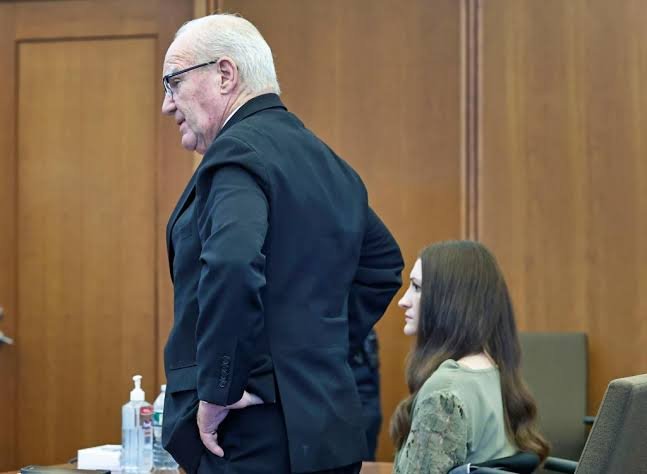
Prosecutors took a fundamentally different position.
They argued that Clancy understood what she was doing and deliberately killed the children, portraying the deaths as the result of a planned act rather than an episode in which she had lost contact with reality. The competing explanations became the central question for the jury.
After weeks of emotionally difficult testimony, however, the jurors could not agree.
Seven days of deliberation ended in deadlock
The jury consisted of nine women and three men.
They began deliberating after the lengthy trial and continued for approximately seven days, repeatedly telling Plymouth Superior Court Judge William Sullivan that they were unable to reach a unanimous decision.
The judge eventually gave the jury additional instructions urging them to continue working toward a verdict.
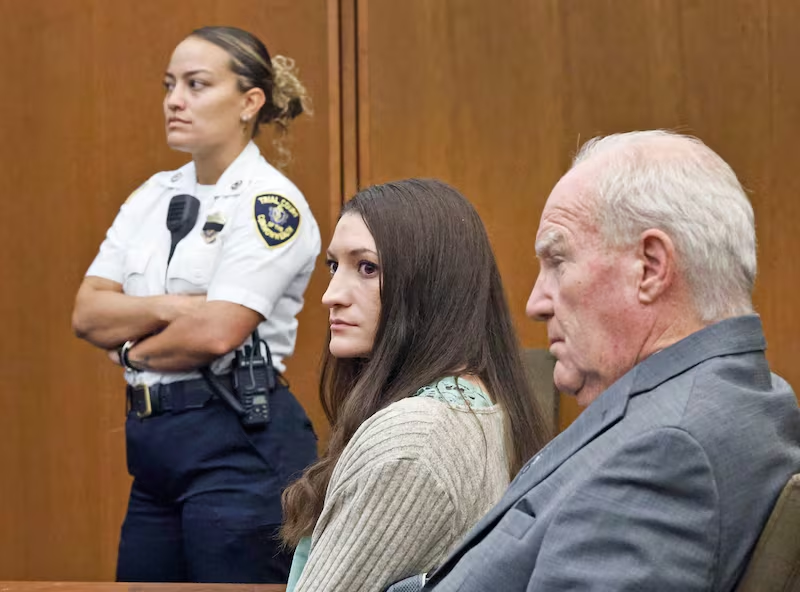
But the disagreement did not disappear.
On Friday, the jury sent another message to the court indicating that it remained unable to reach unanimity. The judge ultimately concluded that the panel was hopelessly deadlocked and declared a mistrial.
The jury’s final message said it was making the decision “with a heavy heart” because it could not reach a unanimous result.
That means the trial ended without either a conviction or an acquittal.
It is an important distinction.
A mistrial is not the same as Lindsay Clancy being found not guilty. It also does not mean prosecutors have proved their case.
Instead, the case remains unresolved.
A dispute over one juror became a major issue
The final days of deliberations were complicated by concerns raised by Clancy’s defense team about one juror.
According to reports from the courtroom, the jury’s foreperson sent a note indicating that one juror was preventing the panel from reaching a unanimous decision.
Clancy’s attorneys argued that the juror was not properly applying the legal standard of reasonable doubt and asked Judge Sullivan to investigate the juror’s conduct.
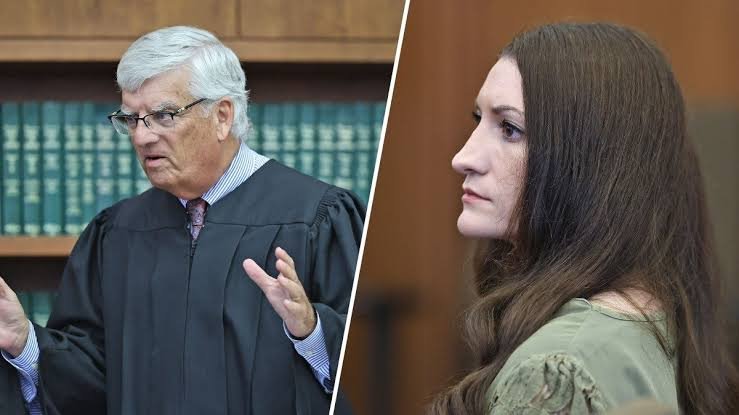
The judge declined to remove the juror.
Instead, he questioned whether the jurors could follow the court’s instructions and issued additional guidance before allowing deliberations to continue.
The defense then took the issue to Massachusetts’ highest court in an emergency effort to prevent the mistrial.
The Massachusetts Supreme Judicial Court declined to intervene.
With no unanimous verdict possible, Judge Sullivan declared the mistrial on Friday.
The dispute could become important if the case returns to court, particularly because Clancy’s defense may continue challenging how the jury impasse was handled.
The central question was Clancy’s mental state
From the beginning, the case has revolved around a difficult question of criminal responsibility.
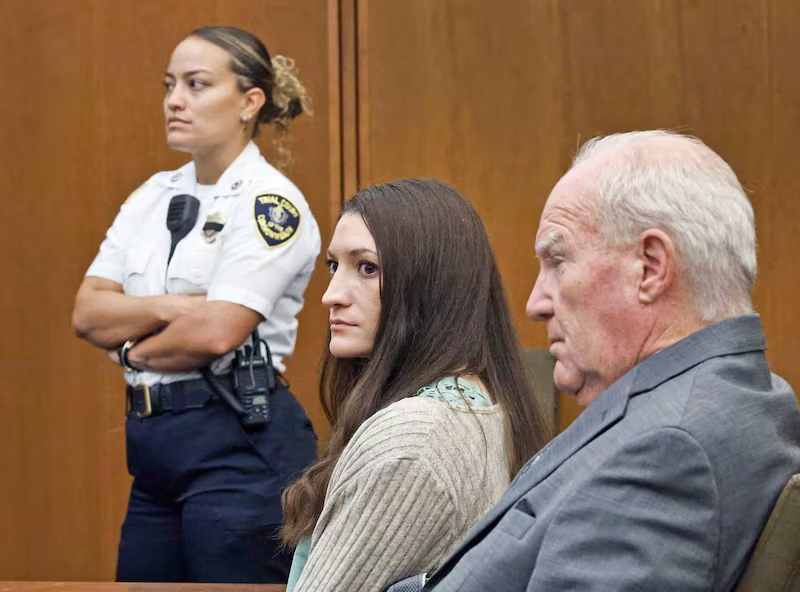
Clancy’s attorneys argued that she was experiencing severe postpartum psychosis around the time of the children’s deaths.
The defense presented evidence about her deteriorating mental health, psychiatric treatment and the medications she had been prescribed. They argued that her condition had progressed to the point where she could no longer properly understand reality or appreciate the wrongfulness of her actions.
The prosecution challenged that explanation.
Prosecutors argued that Clancy’s actions showed planning and awareness. They pointed to evidence they said demonstrated that she knew what she was doing and had taken steps before the deaths that were inconsistent with the defense’s description of an uncontrolled psychotic episode.
Expert testimony became one of the most closely watched portions of the trial, with competing interpretations of Clancy’s mental state.
That disagreement appears to have carried directly into the jury room.
The fact that the jury could not reach a unanimous conclusion suggests that the evidence did not produce a consensus about whether Clancy met the legal standard for criminal responsibility.
But the exact reasoning of individual jurors cannot simply be assumed from the deadlock.
What happened in January 2023
The deaths occurred on January 24, 2023, at the family’s home in Duxbury.
Clancy’s three children — Cora, Dawson and Callan — were found after Clancy’s husband, Patrick Clancy, returned home.
Clancy had also suffered serious injuries after attempting to take her own life by jumping from a second-story window.
She survived but suffered permanent physical injuries and has remained in medical and psychiatric care during the years since the incident.
Patrick Clancy became an important witness during the trial.
His testimony and the evidence surrounding Clancy’s mental-health struggles provided the jury with a deeply personal look at what happened inside the family before the children’s deaths.
The defense used that history to argue that Clancy’s condition had deteriorated dramatically and that she needed psychiatric intervention.
The prosecution, meanwhile, argued that mental-health problems did not eliminate her criminal responsibility.
The jury was ultimately left to decide between those competing interpretations.
It could not.
The case is not over
The mistrial does not automatically end the prosecution.
Plymouth County District Attorney Timothy Cruz has not announced a final decision about whether prosecutors will seek a new trial.
A status hearing has been scheduled for September 29, when the parties are expected to address the next stage of the case. Potential paths include a retrial, further litigation over the case or another resolution.
For prosecutors, a retrial would mean presenting the case to a new jury after an unusually long and emotionally demanding proceeding.
For the defense, it could provide another opportunity to argue that Clancy’s mental illness made her legally incapable of being held criminally responsible.
The mistrial also leaves the original criminal charges unresolved.
Clancy therefore remains accused rather than convicted.
A case that has reached far beyond the courtroom
The Clancy case has attracted national attention not only because of the deaths of three children, but because of the questions it has raised about postpartum mental illness and the ability of the healthcare system to recognize women experiencing severe psychiatric symptoms after childbirth.
Throughout the trial, supporters of Clancy gathered outside the courthouse, while others came to remember the children and demand accountability.
The case has also generated renewed discussion about postpartum psychosis, a rare but serious psychiatric condition that can involve hallucinations, delusions and a loss of contact with reality.
But the legal question before the jury was narrower.
The jurors were not simply being asked whether Clancy had suffered mental-health problems.
They had to determine whether those problems meant she should be considered not criminally responsible under Massachusetts law.
After seven days of deliberations, they could not agree.
What happens now?
For now, Lindsay Clancy remains in a psychiatric hospital as the legal process continues.
The September 29 hearing could provide the first significant indication of whether prosecutors intend to try the case again.
A second trial would likely revisit many of the same questions that dominated the first proceeding: Clancy’s mental-health history, the medical care she received, the events leading up to January 24, 2023, and whether her actions were the result of psychosis or a deliberate decision.
The defense could also continue challenging the circumstances surrounding the jury deadlock and the court’s handling of the disputed juror.
But no decision has yet been made about a retrial.
For Patrick Clancy and the families affected by the deaths of Cora, Dawson and Callan, the mistrial means that the painful legal chapter that began more than three years ago has not reached an ending.
There was no conviction.
There was no acquittal.
There was simply no verdict.
And after years of investigation, months of legal preparation and nearly six weeks inside the courtroom, the case now moves into another uncertain phase.
The next major date is September 29.
Until then, the central question remains unanswered: Will Lindsay Clancy face another jury, or will the mistrial become the final courtroom chapter in a case that has already changed the lives of everyone involved?