
The father of two-year-old Isabelle Rose Welsh is still asking difficult questions about the weeks leading up to his daughter’s final collapse, even after her mother and her mother’s boyfriend were sentenced to life in prison.
Isabelle’s mother, Alexandra Walker, and Walker’s partner, Harrison Simpson, were convicted following a five-week trial at Teesside Crown Court.
On July 28, 2026, Simpson was found guilty of murder, sexual assault by penetration and child cruelty. Walker was convicted of murder and child cruelty, while she was cleared of the sexual assault charge involving Isabelle.
Two days later, both were sentenced to life imprisonment.
Simpson received a minimum term of 27 years and 231 days, while Walker was given a minimum term of 21 years and 48 days, according to Cleveland Police. Other reports have described the sentence as approximately 28 years and six months for Simpson and 22 years for Walker, with time already spent on remand taken into account.
For Isabelle’s father, Josh Welsh, the verdict brought a measure of justice — but it did not answer every question surrounding what happened before his daughter was brought to hospital.
His concerns are centered on a series of events that took place only days before Isabelle’s final collapse.

Concerns had already been raised
According to evidence presented during the trial, Isabelle had suffered a serious leg injury approximately 11 days before she was taken to hospital following the later incident.
Her mother had reportedly waited around two weeks before seeking medical attention for the leg injury, telling medical staff that Isabelle had hurt herself when her leg became caught in her cot.
The injury raised concerns among some medical professionals.
Cleveland Police said Isabelle had sustained multiple fractures during the weeks before her final hospital admission, including injuries involving 21 bones.
The question that has continued to trouble her father is what happened after that medical visit.
Josh has said he was already worried about his daughter’s welfare and had previously raised concerns about the situation at her mother’s home.
He told The Sun that he believed authorities had been given opportunities to look more closely at what was happening.
The Sun reported that Josh said police and social services did not take action after he raised concerns. However, Cleveland Police later stated that they had received no reports from him, creating a significant disagreement between his account and the police account.
That difference is important because it means the claims should not be presented as an established fact that authorities simply ignored a report.
What is clear from the court proceedings is that concerns had been raised about Isabelle’s welfare before her final hospital admission.
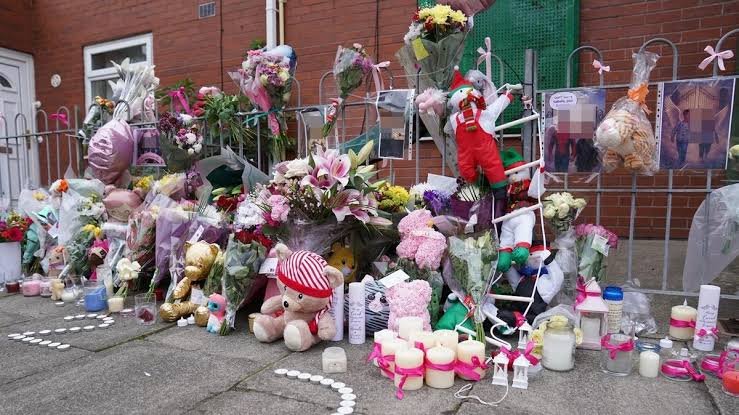
A hospital visit became a key moment
When Isabelle was taken to hospital with the leg injury, some medical staff reportedly had concerns about whether she should be returned home.
The trial heard that different medical teams had differing views about the circumstances surrounding her injury and whether further safeguarding action was necessary.
She was ultimately discharged back into her mother’s care.
The decision has since become one of the most closely examined parts of the case.
According to ITV News, the court heard that some hospital staff had concerns that could potentially have led to further intervention, but differences between the paediatric and orthopaedic teams resulted in Isabelle being discharged.
A health visitor later contacted Walker by phone.
According to The Sun, the health visitor was reassured that Isabelle was doing well and did not visit the home in person at that time.
For Isabelle’s father, these events represent missed opportunities that he believes should be examined more closely.
But the safeguarding agencies have also conducted their own review.
Cleveland Police said a multi-agency rapid review was carried out following Isabelle’s case, with the findings submitted to the National Child Safeguarding Practice Review Panel. The associated action plan was then implemented by the local safeguarding partnership.
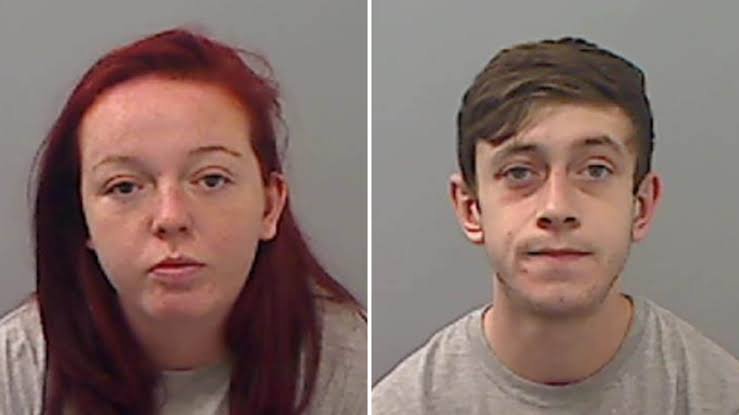
The final morning
On September 13, 2025, emergency services were called to a home on Hartington Close in Thornaby after concerns were raised about Isabelle.
Paramedics found the toddler in a collapsed condition.
She was taken to hospital, where doctors determined that she had suffered a catastrophic head injury.
Despite medical treatment, Isabelle could not be saved and her family was left facing an unimaginable loss.
Investigators later established that the head injury was consistent with a severe impact against a hard surface.
The court also heard evidence of extensive injuries sustained over the preceding weeks.
Cleveland Police said Isabelle had suffered multiple fractures and significant bruising before her final injury.
The prosecution argued that the final injury was not an isolated event, but the culmination of a sustained pattern of violence.
The jury ultimately accepted the prosecution’s case and found both Walker and Simpson guilty of murder.
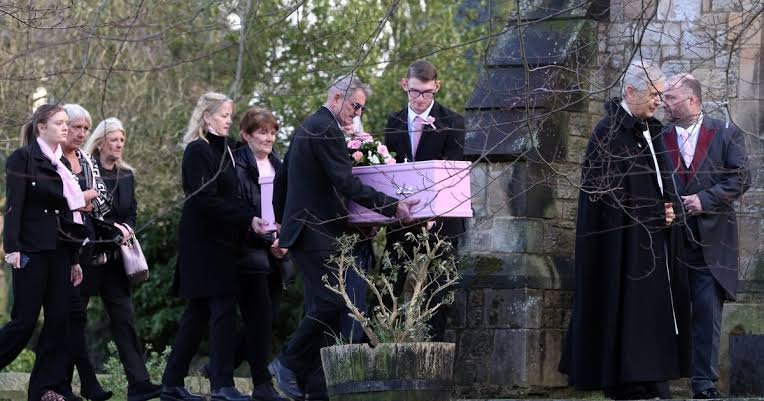
Questions surrounding the emergency call
One of the most significant pieces of evidence concerned the period immediately before emergency services were contacted.
The court heard that Walker had searched online for information about why her toddler was bleeding before making the emergency call.
Prosecutors argued that there was an unexplained delay before 999 was contacted.
The judge later said Walker’s lack of urgency was a significant factor in the case.
The court also heard that Walker had been suspicious of Simpson before Isabelle’s final injury.
According to evidence reported by Sky News, Walker had searched to find out whether Simpson was on the Sex Offenders’ Register and had questioned whether he could be a paedophile.
Despite those concerns, Simpson remained part of the household.
The court heard that the relationship had developed only months before Isabelle’s final collapse.
A previous arrest warrant is now under scrutiny
Another development emerged after the convictions.
Cleveland Police acknowledged that an arrest warrant issued for Simpson in March 2024 had remained outstanding for around 18 months before Isabelle’s case.
The warrant related to an alleged breach of a non-molestation order.
Police said multiple attempts had been made to locate Simpson, but those efforts were unsuccessful.
Following his arrest in connection with Isabelle’s case, Cleveland Police conducted a review and introduced changes to how outstanding warrants are monitored and managed.
That revelation has added another layer to the questions surrounding the case.
It does not establish that enforcing the warrant would have prevented what later happened to Isabelle. But it has prompted scrutiny of how authorities handled information about Simpson before he became involved in the events surrounding the toddler.

Isabelle’s life before the tragedy
Amid all the courtroom evidence, her family has continued to emphasize who Isabelle was before the final weeks of her life.
Family members described her as a happy, lively little girl.
Videos shown during the trial reportedly showed Isabelle smiling and playing before Walker began her relationship with Simpson.
Her father has remembered her as his “princess” and has spoken about the ordinary family life they once shared.
That contrast became particularly significant during the trial.
Prosecutors argued that Isabelle had been a healthy and thriving child before her circumstances changed dramatically.
The judge also referred to the difference between the child seen in earlier videos and the condition in which she was eventually brought to medical attention.
The verdict has now been delivered
After several weeks of evidence, the jury reached its verdict on July 28.
Simpson was convicted of murder, sexual assault and child cruelty.
Walker was convicted of murder and child cruelty but cleared of the sexual assault allegation.
The court then sentenced both to life imprisonment on July 30.
Cleveland Police said Simpson will serve a minimum of 27 years and 231 days, while Walker will serve a minimum of 21 years and 48 days.
The precise legal terms reported by different outlets vary slightly because of the way time already spent in custody is accounted for, but the central result is clear: both defendants received life sentences.
A father still looking for answers
For Josh Welsh, the conclusion of the criminal trial does not erase the questions he has carried since September 2025.
He has criticized what he believes were missed opportunities involving police, social services, healthcare professionals and safeguarding services.
Authorities have disputed parts of his account, including Cleveland Police’s statement that it had received no reports from him.
At the same time, an official safeguarding review has already examined the circumstances surrounding Isabelle’s case and led to changes within the agencies involved.
That distinction matters.
The criminal case has established the responsibility of Walker and Simpson for Isabelle’s murder through their convictions.
The separate question of whether earlier interventions could have changed what happened is a safeguarding issue that involves multiple agencies and requires its own evidence-based review.
For Isabelle’s family, however, both parts of the story remain connected.
They have lost a little girl who should have had decades ahead of her.
And they are left with the knowledge that, in the weeks before her final collapse, there were already signs that something was wrong.
Now that the criminal proceedings have ended with life sentences, attention is turning toward what can be learned from the case.
The local safeguarding partnership has said an action plan was put in place following its review, while Cleveland Police has introduced changes to the way outstanding arrest warrants are tracked and overseen.
For Isabelle’s father and the people who loved her, those changes cannot alter what happened to his daughter.
But they may help ensure that future concerns about vulnerable children receive the attention they need before another family is left asking the same questions.
Isabelle Rose Welsh was only two years old.
Her story is now part of a completed criminal case — but the wider questions about protection, communication and missed opportunities continue to matter long after the courtroom proceedings have ended.