
A major legal development has changed the direction of the Vinton County child endangerment case in Ohio.
Gary Siders Sr., the 73-year-old grandfather of 16 children who were removed from a Hamden-area home earlier this year, will no longer face the criminal charges that had been pending against him after a judge dismissed his case.
The decision came after Siders was found incompetent to stand trial following a psychological evaluation. Court records indicate that the judge determined he was not capable of participating meaningfully in his defense and that his condition was unlikely to be restored within the time allowed under Ohio law.
However, the dismissal does not mean the legal matter surrounding Siders has simply ended.
The case was dismissed without prejudice, meaning prosecutors could potentially bring the charges again in the future if the legal circumstances change. At the same time, the court said it would retain jurisdiction over Siders until proceedings for a possible civil commitment can be initiated through the probate court.
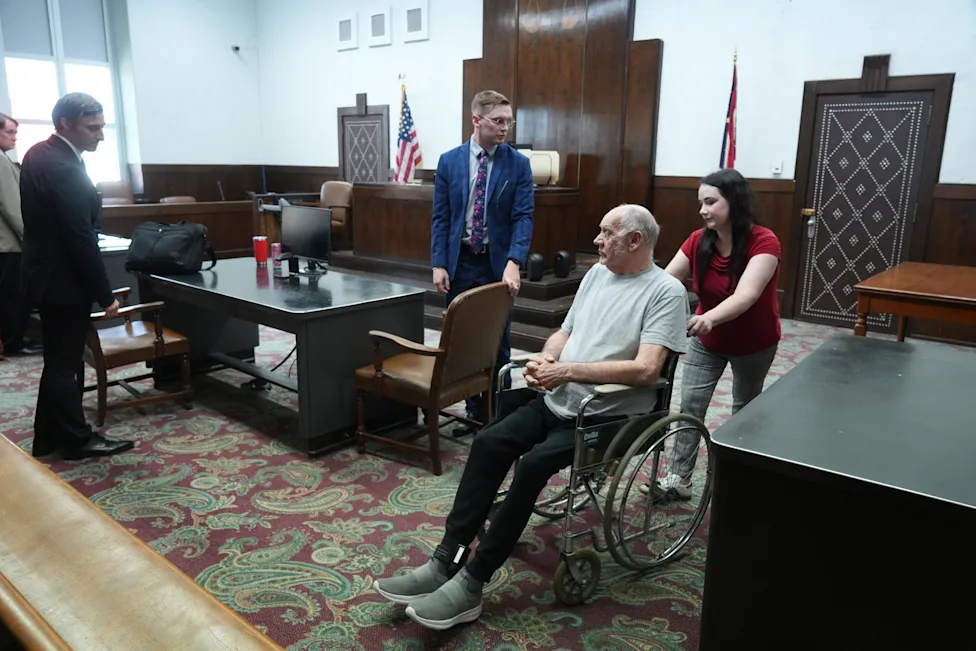
That distinction is important because the latest court decision was based on Siders’ competency rather than a trial that examined the underlying allegations before a jury.
Siders had originally faced 16 counts of endangering children, including 10 third-degree felony counts and six misdemeanor counts. He was one of four family members arrested after authorities discovered 16 children living in extremely poor conditions inside a home in Vinton County on June 30.
The other three adults — Siders’ wife, Christina Siders, his son Gary Siders Jr., and his daughter-in-law Elizabeth Siders — continue to face criminal charges connected to the children’s living conditions. Their cases are moving through separate legal proceedings.
The discovery began during an investigation that brought law enforcement to the Hamden residence. Authorities ultimately found 16 children ranging in age from approximately 18 months to 18 years.
Officials described the conditions inside the home as extremely concerning, and several of the children required medical evaluation after being removed. Two were transported to hospitals because of the severity of their conditions, according to officials.

The investigation also led authorities to examine allegations involving some of the adults in the household. Gary Siders Jr. and Elizabeth Siders were separately indicted on charges connected to alleged sexual misconduct involving minors, with authorities stating that those allegations involved victims who were not among the 16 children removed from the residence.
But the latest court development is centered specifically on Gary Siders Sr. and his ability to participate in a criminal proceeding.
During an earlier competency hearing, Siders’ attorney described significant cognitive difficulties. Reports indicated that Siders had trouble answering questions directly, experienced memory problems and struggled to understand the circumstances surrounding his case.
A psychological evaluation conducted by Dr. Daniel D. Hrinko also became central to the court’s decision. According to the judge’s order, the evaluator did not provide a definitive conclusion about whether Siders could eventually regain competency, but indicated that his condition could support a finding that restoration was not realistic within the applicable legal timeline.

That finding ultimately changed the course of the criminal case.
There was also a practical issue surrounding Siders’ medical care. Prosecutor William Archer previously warned that keeping Siders in county custody while he required specialized treatment could place a significant financial burden on Vinton County.
Siders had experienced serious medical problems while in custody and required ongoing hospital treatment. Officials said that if he remained incarcerated, the county could potentially be responsible for substantial medical expenses because of his condition.
Those circumstances contributed to changes in his release conditions.
Siders is now the only one of the four adults in the original child-endangerment case who has been released from jail. The court previously determined that his medical needs and circumstances did not make him a significant flight risk, while his bond was adjusted to address the issue of his continued treatment.
Still, his release does not mean the court has completely stepped away from the matter.
The judge’s latest order specifically keeps the court involved until the appropriate probate proceedings can begin. If a civil commitment is pursued, Siders could potentially be placed in a treatment facility rather than proceeding through the criminal court system.
Under Ohio law, an individual who is found incompetent can, under certain circumstances, remain subject to involuntary commitment for a period connected to the potential sentence associated with the highest offense charged.

Meanwhile, attention is turning toward the remaining defendants.
Christina Siders, who is the grandmother of the children, is also undergoing a separate competency review. Her attorney recently requested additional testing after an evaluation raised concerns about possible dementia and other cognitive issues. A more extensive neuropsychological evaluation has been requested to determine the nature and extent of her condition.
Gary Siders Jr. and Elizabeth Siders have also undergone competency evaluations, although hearings regarding those evaluations have not yet been scheduled.
That means the legal picture surrounding the family could continue to change in the coming weeks.
For now, the dismissal of Gary Siders Sr.’s criminal case represents a significant shift, but it does not resolve the broader investigation involving the other family members.
The 16 children remain at the center of the case, while prosecutors and defense attorneys continue dealing with separate legal questions involving competency, evidence and the future of each defendant.
The next major developments are expected to come from the competency proceedings involving the remaining adults and from any potential civil commitment action involving Siders Sr.
For Siders himself, the criminal case has been dismissed for now. But because the dismissal was without prejudice and the court has retained jurisdiction pending possible probate proceedings, his legal situation is far from completely settled.