
A Florida jury has found Leigha Mumby guilty following a high-speed crash that left her boyfriend, Daniel Waterman, with life-changing injuries before he passed away months later. The case has drawn renewed attention to the events of February 2025, when the couple were traveling along Interstate 95 during an argument that prosecutors said escalated into a dangerous driving incident.
Mumby, 25, was convicted on October 14, 2026, of vehicular homicide and reckless driving causing serious bodily injury. The verdict followed a two-day trial in Flagler County, where jurors considered witness testimony, vehicle data and competing explanations for how the crash occurred. She now faces up to 20 years in prison, with sentencing to take place at a later date.
At the center of the case was a difficult question: whether the crash was the result of reckless driving during an argument or whether, as the defense maintained, another force contributed to the vehicle leaving the highway.
An Argument Before The Crash
The incident happened on February 9, 2025, as Mumby and Waterman were traveling home after attending a Super Bowl gathering in Florida.
According to prosecutors, the couple had been arguing in the vehicle. Mumby had learned earlier that day that she was pregnant, and reports indicated that tensions had developed around the news and concerns about their relationship.
Prosecutors said the argument continued as Mumby drove northbound on Interstate 95 in Flagler County. Investigators determined that the vehicle was traveling at a high speed before it suddenly veered off the roadway and struck trees.
Authorities said the vehicle was moving at approximately 94 miles per hour when Mumby sharply turned the steering wheel. The crash left Waterman with a broken neck and severe spinal injuries.
The prosecution argued that the driving behavior demonstrated a disregard for the safety of both occupants. The defense, however, challenged the suggestion that Mumby had deliberately caused the crash and disputed the prosecution’s interpretation of the available evidence.
The jury ultimately found her guilty of the charges presented at trial.

Daniel Waterman Survived The Initial Crash
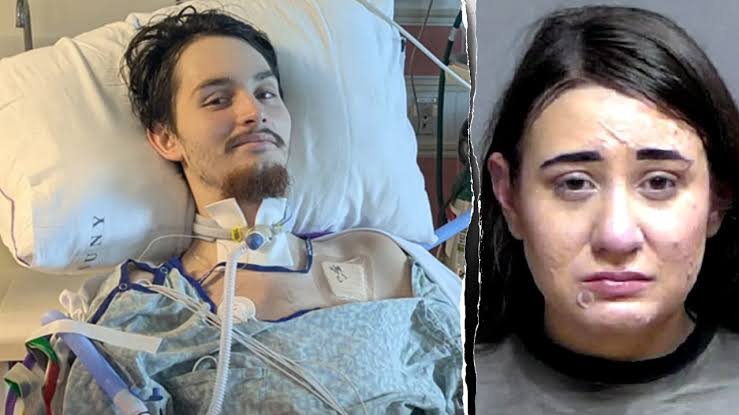
Waterman’s condition following the collision was severe. He suffered a broken neck that left him paralyzed from the neck down and required extensive medical care.
Although he survived the initial incident, his recovery remained complicated. According to court reporting, he later emerged from a coma but was unable to breathe independently.
Waterman remained alive for several months after the February crash. He passed away on October 8, 2025, after developing pneumonia.
Prosecutors presented evidence linking his later passing to the injuries he sustained in the collision. That connection was central to the vehicular homicide charge, which required the state to establish the legal relationship between Mumby’s driving and the outcome.
The case therefore involved more than reconstructing the moments on Interstate 95. It also required jurors to consider the medical consequences that followed and whether those consequences were directly connected to the crash.
What Investigators Found About The Vehicle
One of the important elements of the prosecution’s case involved data recovered from the vehicle.
According to reporting by Court TV, investigators examined information from the car’s onboard systems. Prosecutors said the data indicated that the accelerator was fully engaged at the time of impact and that the brakes had not been applied.
The state argued that these findings supported its position that Mumby had been driving recklessly before the vehicle left the highway.
Prosecutors also relied on testimony about the argument between the couple and the sequence of events leading up to the collision.
The defense disputed the state’s interpretation and suggested that an outside force could have contributed to what happened. That theory became a significant issue during the trial, as the two sides offered different explanations for the vehicle’s sudden movement.
The jury ultimately rejected the defense’s explanation and returned guilty verdicts on both charges.
The Defense Challenged The Prosecution’s Account
Mumby’s attorneys contested the claim that she had intentionally directed the vehicle off the road. The defense argued that the prosecution’s interpretation did not fully account for the circumstances surrounding the collision.
However, prosecutors emphasized that the state did not need to establish that Mumby intended to cause the crash to prove reckless driving. Instead, they argued that the evidence demonstrated a willful or wanton disregard for the safety of others.
That distinction was important to the case. A finding of reckless driving does not require the same proof of intent as a charge alleging that a person deliberately planned an outcome.
The jury considered the competing arguments before reaching its decision after approximately an hour of deliberation, according to court reports.
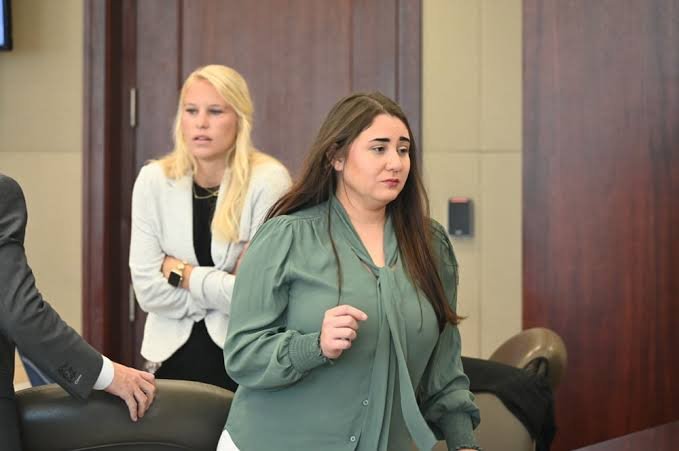
Mumby was visibly emotional when the verdict was announced and was taken into custody following the proceedings.
A Pregnancy Announcement That Became Part Of The Case
Mumby’s pregnancy was one of the details that attracted considerable attention during coverage of the trial.
Reports indicated that she had learned she was expecting a child on the morning of the crash. The couple’s disagreement later that day became part of the prosecution’s account of the events leading up to the collision.
However, the pregnancy alone does not explain why the argument developed or establish what either person was thinking at the time. The legal findings rested on the evidence presented in court, including the driving data, witness accounts and the circumstances of the collision.
The case illustrates how a personal disagreement can become part of a much larger legal proceeding when investigators must determine what happened during a serious road incident.
For those following the trial, the central issue remained the conduct behind the wheel and whether the prosecution had proved the charges beyond a reasonable doubt.

What Happens Next For Leigha Mumby?
Following the guilty verdict, Mumby remains in custody while awaiting sentencing. She faces a maximum potential prison term of 20 years for the convictions, although the final sentence will be determined by the court.
The outcome brings the trial phase to a close, but the case has left lasting questions for those who knew Waterman and followed his recovery.
His injuries changed the course of his life, and the months between the collision and his passing involved an extended medical struggle. The jury’s decision established Mumby’s criminal responsibility under the charges brought by prosecutors, while sentencing will determine the consequences she faces.
The case also highlights the importance of evidence in complex vehicle investigations. Onboard data, witness testimony and medical findings can all become critical when a collision leads to serious injuries and later legal proceedings.
As the case moves toward sentencing, attention will turn to the court’s final decision and the impact of the verdict on those connected to Waterman and Mumby.
For now, the jury’s ruling marks a major development in a case that began with a crash on Interstate 95 and ultimately became a trial over responsibility, evidence and the consequences of dangerous driving.