
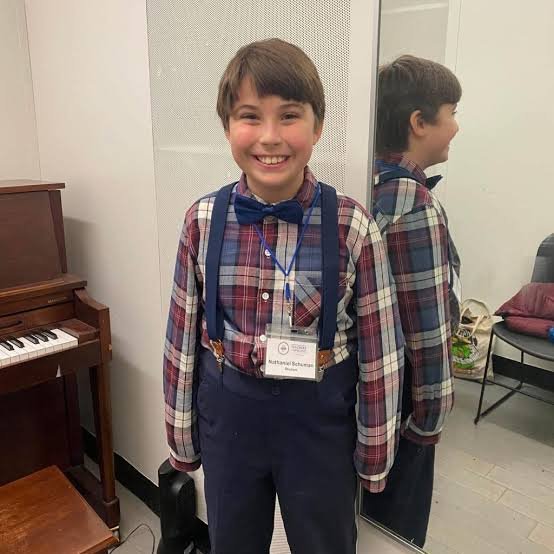
For years, Nathaniel Schumann’s mother wondered what her son understood but could not express in words. Although the young boy rarely spoke more than a few words at a time, his family believed he was taking in far more of the world around him than others realized.
Then, at age eight, Nathaniel began speaking in full sentences after starting a medication called leucovorin as part of a clinical trial. Suddenly, he could share thoughts, explain his feelings and even bring up complaints he had held onto for years.
His mother, Kathleen Schnier, recalled being surprised by how much her son remembered. According to her account to the New York Post, Nathaniel had accumulated plenty of things he wanted to say, from everyday family disagreements to frustrations he had never been able to communicate.
The change was an emotional milestone for the family, but it also raised a bigger question: Could a medication help certain children with autism improve their communication?
A Childhood Filled With Questions
Nathaniel’s early development initially appeared typical in some respects. However, his mother noticed that he began losing words as a toddler and was not reaching certain developmental milestones as expected.
She sought help early, enrolling him in speech, occupational and developmental therapies when he was just 17 months old.
By age two, Nathaniel relied largely on single words or repeated phrases to express basic needs. At three, he received diagnoses of autism, receptive-expressive language disorder and ADHD.
His family continued pursuing therapies while searching for additional explanations for his communication difficulties.
Kathleen said one of her greatest concerns was that people might mistake Nathaniel’s limited speech for a lack of understanding. She believed he was absorbing conversations and experiences even when he could not respond in the way others expected.
That possibility became especially meaningful when he eventually found more ways to communicate.
The Treatment That Changed His Communication
In 2021, Kathleen learned about research exploring leucovorin, also known as folinic acid, in children with autism and language difficulties.
The medication has established medical uses, including reducing certain toxic effects associated with chemotherapy. Researchers have also investigated whether it may help some individuals with cerebral folate deficiency, a condition involving inadequate folate availability in the brain.
Nathaniel underwent testing that reportedly identified a folate-related problem. He subsequently joined a clinical trial investigating whether leucovorin could improve communication in selected children.
According to Kathleen, the difference became noticeable after he began taking the medication. Over approximately six months, she said, Nathaniel progressed from using only a few words to speaking in complete sentences.
One particularly memorable moment came when he tried to explain the experience of having thoughts he could not previously express. His mother recalled him describing it as having a television playing inside his brain that he could finally communicate through his mouth.
For the family, the change represented more than an increase in spoken words. It created new opportunities for conversations, questions and shared experiences that had previously been difficult to achieve.
Why Therapy Remained Essential
Kathleen has emphasized that leucovorin was not the only factor in her son’s progress.
Nathaniel had spent years receiving speech, occupational and developmental therapies before beginning the clinical trial. His mother believes those services helped establish the foundation he needed to develop communication skills.
Speaking more frequently also required learning how to maintain conversations, listen to others and respond appropriately.
In her account, the medication appeared to make communication more accessible, while therapy helped Nathaniel develop the practical skills needed to use it.
His experience illustrates why an individual improvement should not automatically be interpreted as proof that the same treatment will produce similar results for everyone.
Today, Nathaniel participates in a range of activities, including music lessons, swimming and Special Olympics golf. His interests and ambitions reflect a life extending far beyond his earlier communication difficulties.

What Science Says About Leucovorin
Leucovorin has attracted attention because several small studies have reported potential improvements in language or communication for some autistic children, particularly those with certain folate-related abnormalities.
However, the evidence remains limited, and researchers still need larger, independent studies to determine which patients might benefit, how significant the effects are and what risks may accompany treatment.
In March 2026, the U.S. Food and Drug Administration approved expanded use of leucovorin for cerebral folate deficiency associated with confirmed variants in the FOLR1 gene. That approval was for the specific genetic condition, not autism generally.
The American Academy of Pediatrics has advised against routine leucovorin use for autistic children because the available evidence does not establish that it is effective for the broader autism population.
Medical experts emphasize that families should consult qualified healthcare professionals before considering treatment, particularly because appropriate testing, monitoring and assessment of potential side effects are important.
Leucovorin should not be viewed as a universal solution or a replacement for therapies and support services that help children develop communication and daily living skills.
A Mother’s Hope For Other Families
Kathleen supports continued research into treatments that could help children facing similar challenges. At the same time, she has cautioned against assuming that every child will respond as Nathaniel did.
Some children who participated in the research did not experience the same improvements, she noted. Her message is that families deserve access to appropriate care, realistic information and support tailored to their children’s individual needs.
She has also expressed concern that excitement surrounding a potential medication could overshadow the importance of established services for disabled children.
For Nathaniel and his family, the experience brought an unexpected opportunity to hear thoughts that had remained difficult to express for years.
His story offers a reason to continue investigating possible treatments while remembering that autism affects people differently. One child’s progress can inspire hope, but it cannot predict another child’s outcome.
As research continues, the most important goal remains helping each child access the communication tools, medical care and support that best meet their individual needs.