
Nearly two decades after Madeleine McCann disappeared from a holiday apartment in Praia da Luz, Portugal, investigators in Britain, Germany and Portugal are continuing to pursue unanswered questions surrounding one of the world’s most closely watched missing-child cases.
A significant new development emerged in July 2026, when a dossier compiled by German authorities was reportedly transferred to detectives with London’s Metropolitan Police. The material is understood to focus heavily on Christian Brueckner, the German national who has been identified by German authorities as the main suspect in Madeleine’s disappearance. Reports say the files contain photographs, witness accounts and other material that German investigators believe could strengthen their investigative theory. However, the precise contents of the dossier have not been publicly released, and Brueckner has never been charged with Madeleine’s disappearance.
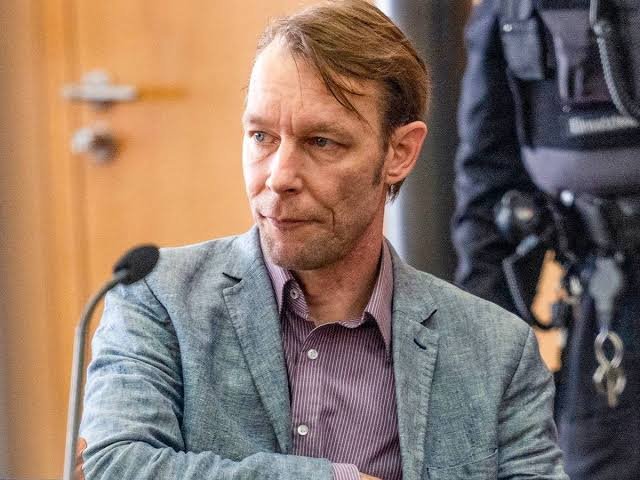
The development is particularly significant because Britain’s Operation Grange remains an active investigation. The Metropolitan Police established Operation Grange in 2011 at the request of the Home Secretary, initially conducting a detailed review of the previous investigations into Madeleine’s disappearance. In 2013, the work formally became an investigation, with British detectives working alongside Portuguese authorities and later cooperating closely with German investigators. The Metropolitan Police continues to describe the investigation as ongoing.
Madeleine disappeared on May 3, 2007, while on holiday with her parents and siblings in Praia da Luz in Portugal’s Algarve region. She was three years old at the time. Her disappearance triggered an international search and an investigation that has continued through several different phases, involving Portuguese, British and German authorities.
For years, the case remained without a clear suspect. That changed dramatically in 2020, when German prosecutors publicly identified Christian Brueckner as a suspect. German investigators have said they believe Madeleine is dead and have linked Brueckner to the case, although the German authorities’ publicly described evidence has not resulted in a murder charge against him.
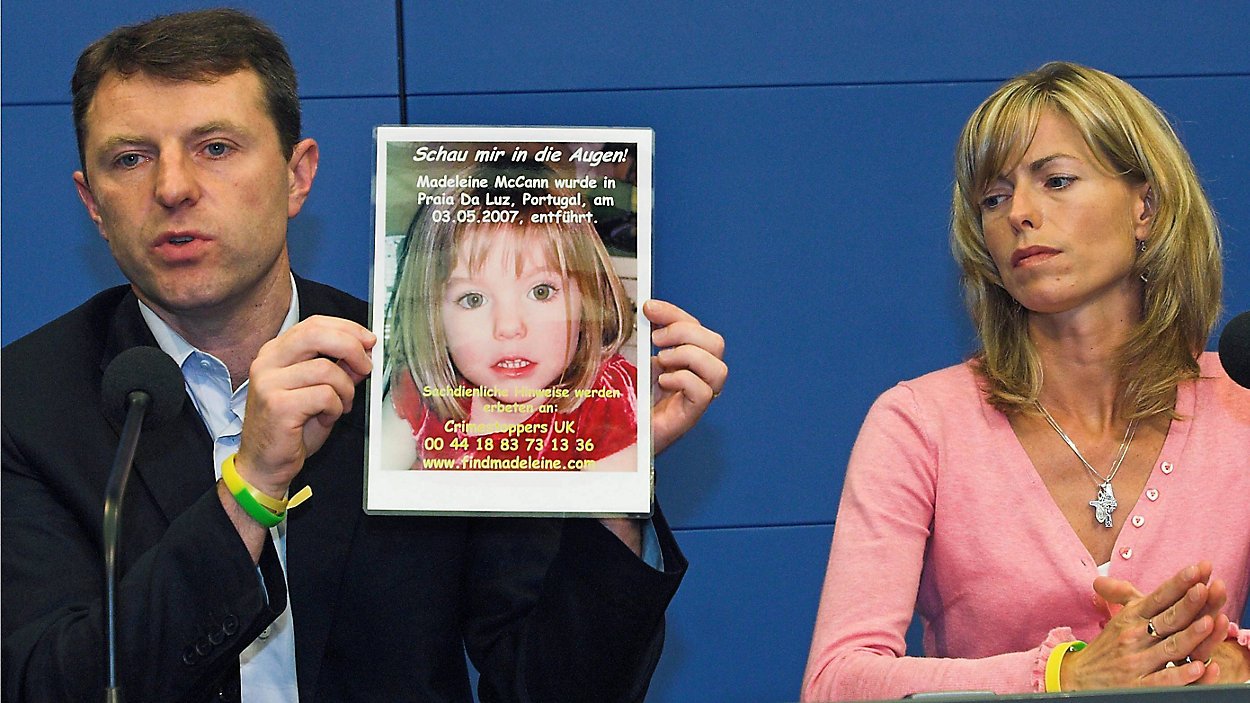
Brueckner has denied involvement in Madeleine’s disappearance.
The German investigation has nevertheless continued to focus on him. Brueckner lived in the Algarve around the time Madeleine vanished, and investigators have examined his movements, contacts and activities in Portugal. German authorities have previously said that they possess evidence they believe connects him to Madeleine’s disappearance, while acknowledging that the evidence publicly discussed has not established a criminal conviction in relation to the girl.
The latest dossier reportedly represents another attempt to share the German investigative picture with British detectives.
According to reports published in Portugal and Britain, the documents were assembled by German authorities and subsequently delivered to Scotland Yard’s Operation Grange team. The material reportedly includes photographs and accounts relating to Brueckner and the investigation. Some reports have described the material as potentially significant or “sensational,” but the language used by media reports should not be confused with an official finding that Brueckner committed a crime.
One particularly important aspect of the reporting concerns digital material allegedly connected to a hard drive. Earlier reports have claimed that German investigators obtained storage devices containing photographs or files that could place Brueckner in Portugal around the period of Madeleine’s disappearance. The significance of those files has been widely discussed, but the complete contents have not been publicly disclosed by prosecutors, meaning the public cannot independently assess the material or its evidentiary value.

This distinction is important because the Madeleine McCann investigation has repeatedly generated dramatic claims that later proved more complicated than initial headlines suggested. Evidence can be important to investigators without being sufficient for a prosecution, and information passed between police forces does not necessarily mean that authorities have reached a final conclusion.
German prosecutors have maintained that they possess physical evidence supporting their belief that Madeleine is dead and that Brueckner is responsible. However, reporting has also emphasized that the evidence described by German authorities is not forensic proof establishing the case in court. Brueckner has not been charged with Madeleine’s murder and remains legally presumed innocent.
The latest dossier therefore does not mean that a prosecution is imminent.
Instead, it demonstrates that investigators continue to examine the Brueckner theory and are sharing information across national borders.
The British role is particularly important because Operation Grange has remained active even after the German investigation became the dominant line of inquiry. The Metropolitan Police has repeatedly stated that its officers continue to work with law-enforcement partners in Germany and Portugal and will pursue viable lines of inquiry.

The cooperation has also involved investigative activity in Portugal. British, German and Portuguese authorities have previously conducted searches and revisited locations connected to the case, reflecting the continuing effort to establish what happened on the night Madeleine disappeared.
The case became particularly complicated after Brueckner was released from a German prison in September 2025. He had been serving a sentence for an unrelated conviction and remained under investigation in the Madeleine case after his release. Reuters reported at the time that no charges had been filed against him in connection with Madeleine’s disappearance.
His release created additional attention because British and German investigators still considered him central to their respective inquiries. However, the legal position remained unchanged: Brueckner had not been charged with Madeleine’s disappearance and was not convicted in connection with her case.
Reports in 2026 have continued to describe police surveillance and monitoring of Brueckner in Germany, while investigators have continued examining material gathered over the years.
The new dossier is therefore arriving at a moment when the investigation is under renewed scrutiny.
It also comes after years of attempts to determine whether enough evidence exists to move the case from a missing-person investigation toward a prosecutable homicide case. The Metropolitan Police has continued to treat Madeleine’s disappearance as an active investigation, while German authorities have publicly maintained their belief that she died. That difference in terminology and legal status remains significant.
Madeleine has never been found.
There has been no confirmed discovery of her remains, and no court has determined what happened to her after she disappeared from the Ocean Club complex in Praia da Luz.
That absence of definitive physical evidence remains one of the central challenges facing investigators.
The latest material could potentially help answer some of the questions that have remained unresolved since 2007. Investigators may be able to use photographs, witness accounts, digital information and other records to reconstruct Brueckner’s movements and determine whether those movements can be reliably connected to Madeleine’s disappearance.
But the evidentiary threshold for a criminal prosecution is considerably higher than the threshold for developing an investigative theory.
A suspect can remain under investigation for years without being charged if prosecutors do not believe the evidence is sufficient to secure a conviction. That is particularly important in a case as complex and internationally scrutinized as Madeleine’s.
The Metropolitan Police has not publicly confirmed all of the claims made in media reports about the new dossier. Its official position remains that Operation Grange is ongoing and that officers continue to cooperate with German and Portuguese law enforcement.
German authorities have likewise not publicly released the complete body of evidence that they say supports their theory regarding Brueckner.
As a result, many details surrounding the latest dossier remain confidential.
For Madeleine’s family, however, every new investigative development carries enormous emotional significance. Kate and Gerry McCann have spent nearly two decades living without knowing what happened to their daughter. The continued investigation offers the possibility, however uncertain, that investigators may eventually establish the truth.
The international attention surrounding the case has never disappeared. Madeleine’s disappearance became one of the most recognizable missing-child cases in modern history, generating investigations across several countries and thousands of reported tips.
The latest developments show that authorities have not simply closed the file.
Instead, investigators continue to revisit existing evidence, exchange information and examine new material as it becomes available.
The dossier sent from Germany to Scotland Yard could ultimately prove highly important, or it could simply provide investigators with additional information that requires further verification. At this stage, it is too early to know which.
What can be established is that German authorities have continued to focus on Christian Brueckner, that British investigators remain engaged through Operation Grange, and that the two sides continue to exchange information concerning the case.
The most important unanswered question remains the same one that has existed since May 2007: what happened to Madeleine McCann?
Nearly 20 years later, there is still no definitive public answer.
The latest dossier may provide investigators with new avenues to explore, but it does not by itself establish what happened to Madeleine or prove Brueckner’s guilt. Any future prosecution would require evidence capable of meeting the legal standard in court.
For now, the investigation continues across three countries.
And while the new German dossier has renewed attention on the case and its principal suspect, the ultimate breakthrough will depend on whether the information inside those files can be independently verified and transformed into evidence capable of finally explaining what happened to the three-year-old girl who disappeared from Praia da Luz nearly two decades ago.