
More than three years after a fatal confrontation inside a Chicago home, Keshia Golden has learned that she will not spend time in prison for the death of her boyfriend, Calvin Sidney.
Golden, now 37, pleaded guilty on August 24, 2026, to involuntary manslaughter in connection with Sidney’s death, bringing a long-running case to an unexpected conclusion just as her trial was about to begin.
She was sentenced to two years of probation and community service, meaning she will not serve a prison sentence. Her attorneys said Golden accepted the plea because she wanted to remain present in the life of the daughter she was carrying when Sidney died.
But the case is far more complicated than a simple account of a woman fatally stabbing her boyfriend.
Golden’s attorneys have maintained that she was defending herself after Sidney allegedly attacked her during a confrontation at their Chicago home in October 2022. At the time, Golden was eight months pregnant with Sidney’s child.
According to the Cook County Public Defender’s Office, the confrontation happened shortly after the couple’s baby shower.
The defense says Sidney attacked Golden and repeatedly slammed her head against a kitchen counter. Golden then grabbed a knife and stabbed him once in the leg, according to her attorneys.
The single stab wound proved fatal.
Sidney was taken to a hospital but died from his injuries.
Golden’s lawyers have consistently argued that the stabbing was an act of self-defense. They say she used the knife because she was trying to stop the assault and escape from the apartment.
The legal outcome, however, was not an acquittal.
Golden ultimately pleaded guilty to involuntary manslaughter, accepting criminal responsibility for Sidney’s death while avoiding the possibility of a lengthy prison sentence that could have followed a conviction at trial.
A relationship that had already involved police
One of the central issues surrounding the case has been the history of the relationship between Golden and Sidney.
According to statements from Golden’s defense team, the couple’s relationship had been marked by allegations of domestic abuse before the fatal incident.
Golden had obtained a protection order against Sidney in the months before his death, and her attorneys said police had received numerous calls concerning alleged abuse involving the couple.
Those details became an important part of the defense’s explanation for why Golden believed she was in danger during the October 2022 confrontation.
Her attorneys have argued that the fatal stabbing cannot be viewed separately from that history.
They described Golden as a woman who had repeatedly attempted to get away from an abusive partner but continued to encounter him.
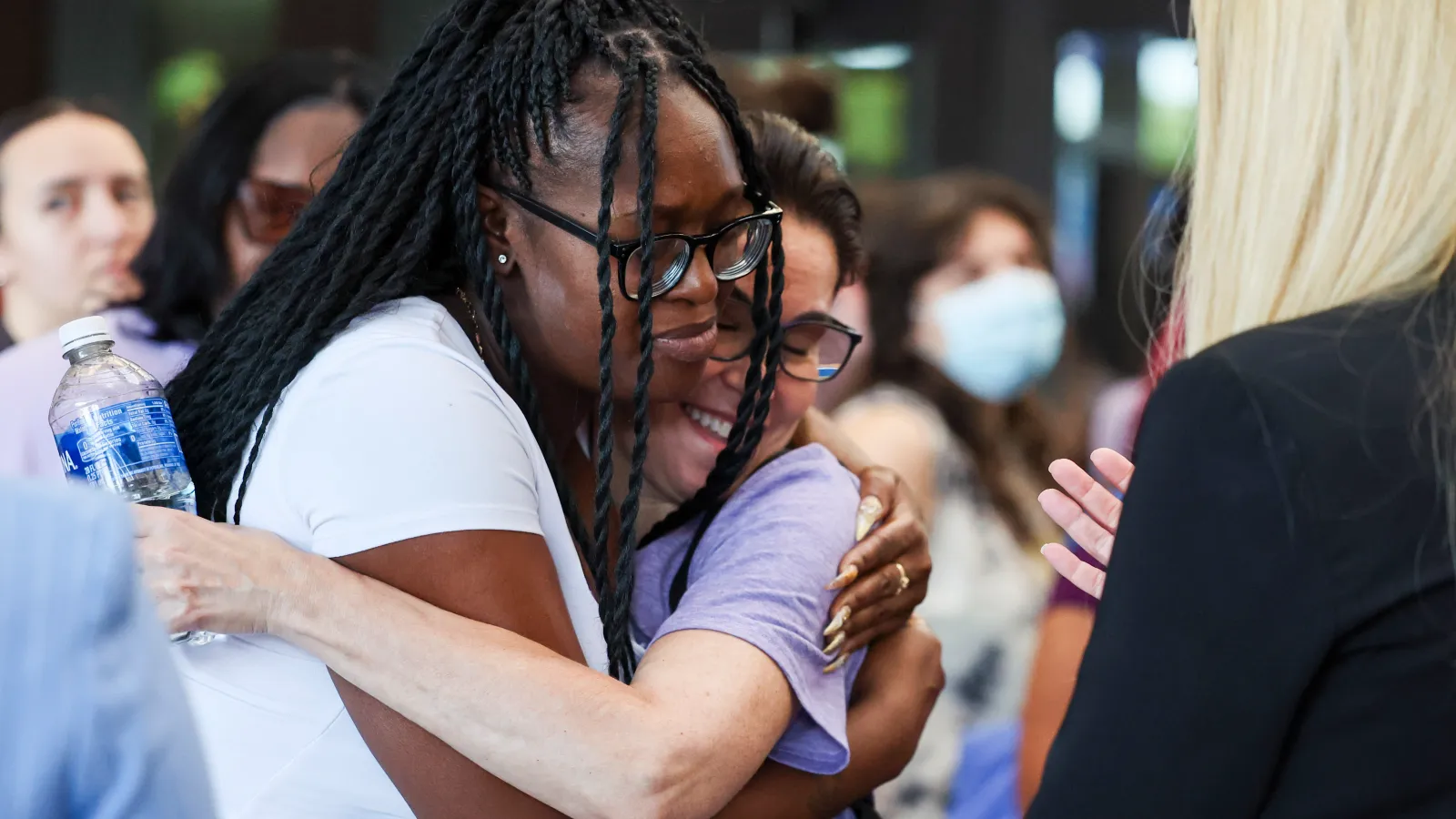
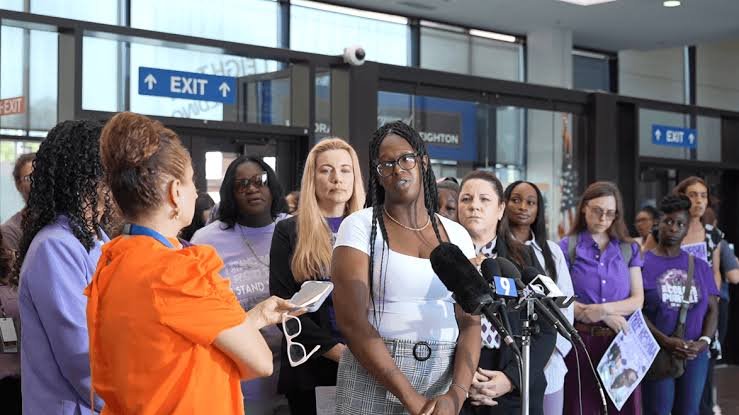
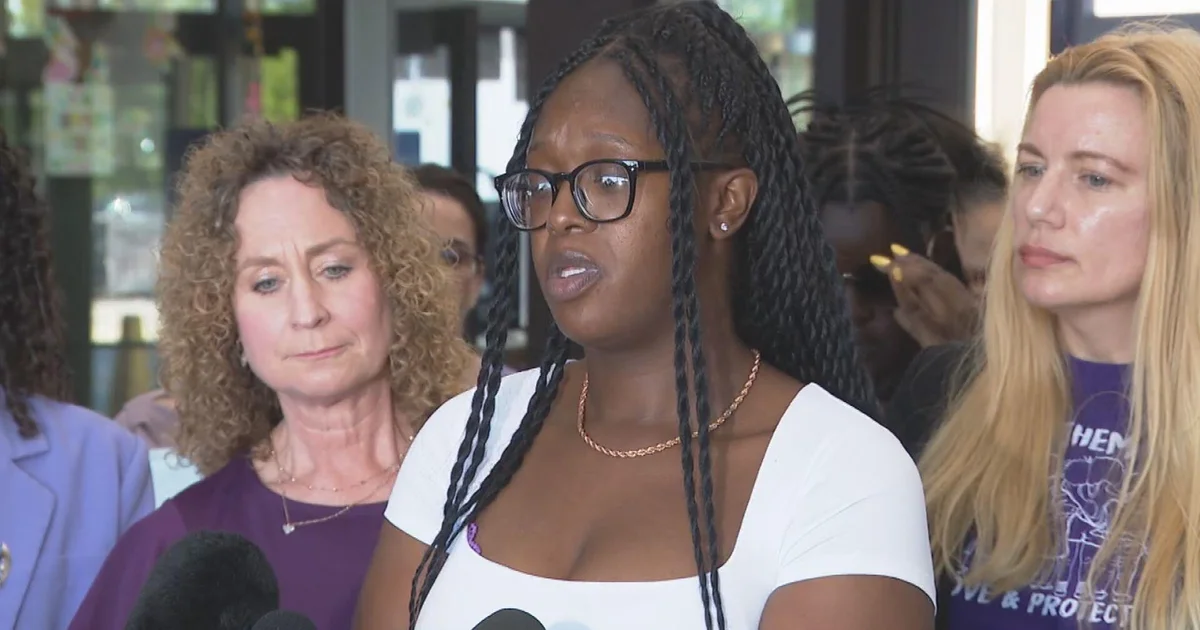
At a news conference following the plea, Golden herself addressed that part of her life.
She became emotional while speaking about Sidney and said she had tried to leave the relationship multiple times.
“I tried to leave many times, but he found me,” she said, according to reports from the court proceedings.
Her statement offered a glimpse into the complicated circumstances surrounding a relationship that ultimately ended with one person dead and the other facing a criminal conviction.
The night of the fatal confrontation
The incident happened on October 22, 2022, after the couple’s baby shower, according to the Cook County Public Defender’s Office.
Golden was eight months pregnant.
The defense’s account says an argument broke out inside the home and eventually became physical.
According to her attorneys, Sidney attacked Golden, slammed her head against the kitchen counter and continued assaulting her.
Golden then took hold of a knife and stabbed Sidney once in the leg.
She did not stab him repeatedly, according to the defense.
Instead, her attorneys say the single strike was intended to stop the attack and give Golden an opportunity to escape.
Sidney was subsequently transported to a hospital, where he died.
The precise legal circumstances surrounding self-defense were ultimately not decided by a jury because Golden entered a guilty plea before trial.

That distinction matters.
Golden’s defense team continues to characterize her actions as self-defense, while the guilty plea means the case ended with a conviction for involuntary manslaughter rather than a finding that she was completely justified in using deadly force.
Why Golden chose the plea deal
Golden had been free on bond while awaiting trial, and her trial was scheduled to begin around the time she accepted the plea agreement.
Her attorneys said the decision was largely motivated by her daughter.
The child Golden was carrying during the 2022 incident is now several years old. According to the defense, the child has also experienced significant medical difficulties and has undergone spinal surgeries and rehabilitation.
Golden’s attorneys said she did not want to put her daughter through another traumatic period by going through a lengthy criminal trial.
Instead, she accepted the plea agreement and the sentence of probation and community service.
The Public Defender’s Office described the decision as a rational choice for Golden, while also arguing that it was not a just outcome given the history of alleged abuse they say she endured.
The agreement therefore brought an end to a case that had remained unresolved for nearly four years.
Golden will be able to remain with her daughter rather than enter prison.

A mother left to raise the child
The case has also drawn attention because of what was at stake for Golden’s daughter.
When the fatal confrontation occurred, Golden was carrying Sidney’s child.
The child was subsequently raised without her father, while Golden faced the possibility of spending years behind bars.
That possibility is now gone.
Under the sentence imposed after her guilty plea, Golden received two years of probation and community service rather than incarceration.
For Golden, that outcome means she can continue raising the daughter whose future was one of the reasons she accepted the deal.
For Sidney’s family, however, the case ends with a very different reality: Calvin Sidney is dead, and Golden has admitted criminal responsibility for his death.
The plea agreement does not erase that loss.
Golden speaks after accepting responsibility
Following the court proceeding, Golden apologized while speaking publicly about the case.
She expressed remorse over Sidney’s death and said she felt that she had let his family down.
Her comments reflected the complicated emotions surrounding the case. She has maintained that she was trying to protect herself, while also acknowledging the devastating result of the confrontation.
Golden also used the opportunity to speak directly to people experiencing domestic violence.
She urged survivors to leave dangerous relationships and emphasized that abuse can make it difficult for victims to simply walk away.
Her own account was that she had attempted to leave Sidney before but repeatedly found herself pulled back into the relationship.
The case raises difficult questions about self-defense
Golden’s case has attracted attention beyond Chicago because it highlights one of the most difficult questions in domestic-violence cases:
When does a victim have the legal right to use deadly force to protect herself?
Golden’s attorneys have argued that she acted because she was being attacked and feared for her safety.
But the death of Sidney meant prosecutors pursued a homicide case against her, initially exposing Golden to a potentially severe prison sentence.
The eventual involuntary-manslaughter plea avoided a trial and a possible lengthy prison term.
Her defense team has continued to argue that the circumstances surrounding the relationship and the alleged history of abuse should be considered when evaluating what happened.
The case therefore cannot accurately be reduced to either “woman kills boyfriend” or “woman completely cleared after self-defense.”
Neither description captures what actually happened in court.
Golden was convicted of involuntary manslaughter through her guilty plea.
At the same time, her attorneys continue to maintain that she was responding to an attack and that the circumstances of the relationship were central to her actions.
What happens now
For Golden, the criminal case has effectively reached its conclusion.
She will serve two years of probation and community service rather than a prison sentence.
The decision allows her to remain with her daughter and move forward without incarceration, although her felony conviction and the circumstances surrounding Sidney’s death will remain part of her history.
For Sidney’s relatives, the outcome cannot change the fact that he died after being stabbed during the confrontation.
And for advocates and legal observers, Golden’s case has become another example of the complicated intersection between domestic violence, self-defense and the criminal justice system.
The facts that are no longer in dispute are straightforward: Sidney died after being stabbed in October 2022, Golden was prosecuted in connection with his death, and she ultimately pleaded guilty to involuntary manslaughter on August 24, 2026.
What remains more complicated is the story surrounding that fatal moment.
Golden’s defense says she was being attacked and acted to protect herself. Her history of seeking a protection order and contacting police about alleged abuse became a major part of that argument.
Ultimately, she chose not to put those claims before a jury.
Instead, she accepted a plea deal that allows her to remain out of prison and continue raising her daughter.
The case that began with a violent confrontation inside a Chicago home has now ended with a sentence measured not in years behind bars, but in probation, community service and the responsibility of living with what happened.
For Golden, the next chapter will be lived outside prison.
For Sidney’s family, the loss remains permanent.
And for the broader conversation surrounding domestic violence, the case leaves behind a difficult question that has no simple answer: how should the justice system respond when someone accused of using deadly force says she was fighting to survive?