
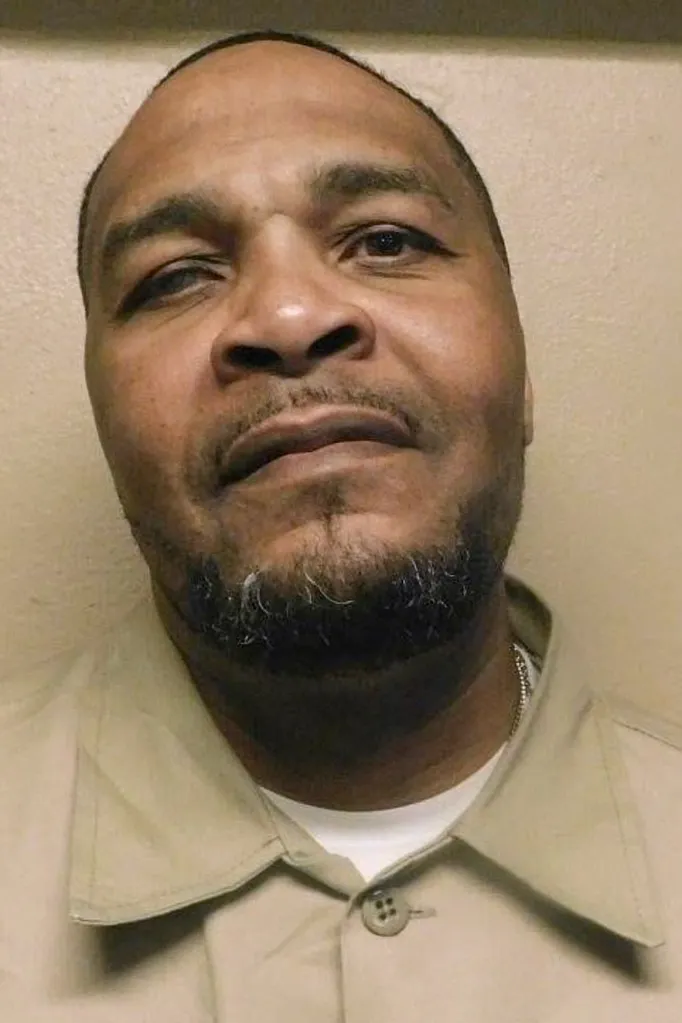
Nearly 28 years after a robbery at a small Alabama pawnshop, Jeffery Lee’s long-running legal case has reached its final chapter.
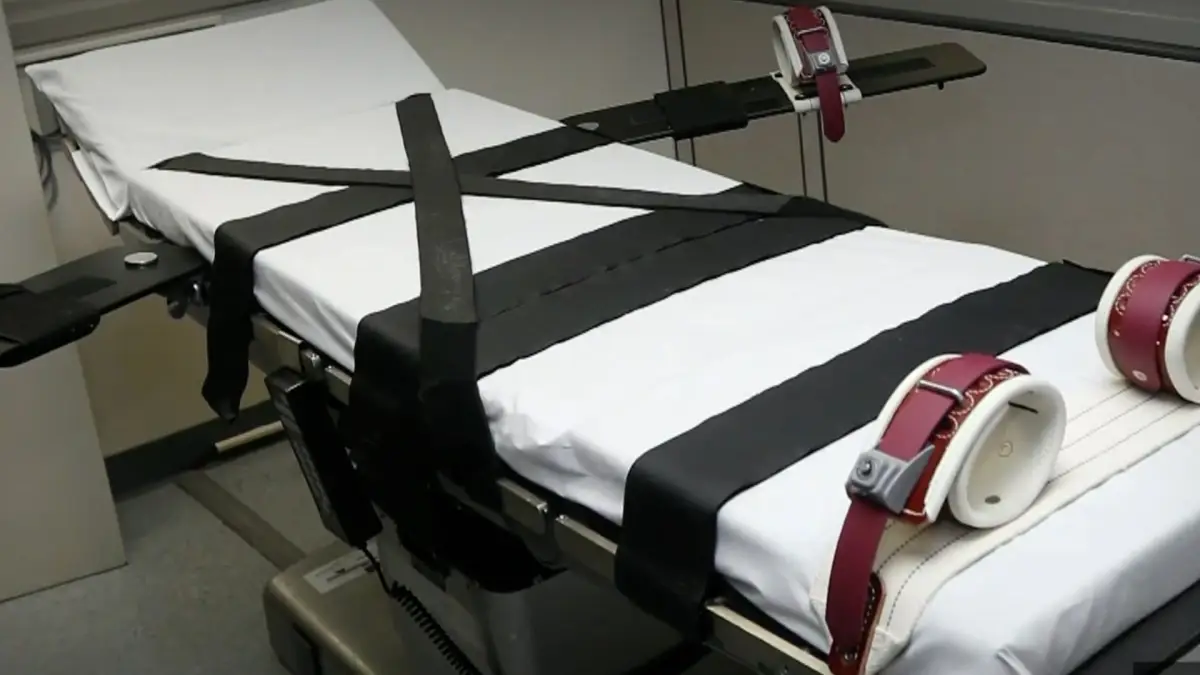
Lee, 49, was executed by lethal injection Thursday evening at William C. Holman Correctional Facility in Atmore, Alabama, after the U.S. Supreme Court rejected his final request to stop the procedure.
The execution came just three months after a judge blocked Alabama’s earlier plan to use nitrogen gas.
Lee had originally been scheduled for execution on June 11 using nitrogen hypoxia. That plan was halted after a federal judge ruled against the state’s proposed method, and the U.S. Supreme Court declined to lift the order.
Alabama then set a new execution date and changed the method to lethal injection.
On Thursday, the Supreme Court again declined to intervene, allowing the state to proceed.
Lee was pronounced dead at 6:22 p.m. Central Time, according to Alabama officials.
The case dates back to December 12, 1998, when a robbery unfolded at Jimmy’s Pawn Shop in Orrville, a small community west of Selma.
According to testimony presented during Lee’s trial, he entered the store and asked to look at wedding rings. He reportedly told employees that he would return after getting money from his grandmother.
Investigators said Lee later returned carrying a sawed-off shotgun.
Jimmy Ellis, the owner of the pawnshop, and employee Elaine Thompson were fatally shot during the robbery. Another employee survived by pretending to be unresponsive and later contacted 911 after Lee left the business.
Lee was convicted in 2000 of capital murder and attempted murder.
But his case continued to draw legal attention for another reason: the jury that convicted him did not recommend a death sentence.
Instead, jurors voted 7-5 in favor of life imprisonment without parole.
At the time, Alabama law allowed a trial judge to override a jury’s sentencing recommendation in certain capital cases.
The judge ultimately imposed a death sentence on Lee.

That issue remained central to Lee’s later appeals.
Alabama abolished judicial override in 2017, meaning judges can no longer replace a jury’s sentencing decision in capital cases. The change, however, was not made retroactive, leaving Lee among the prisoners whose sentences had been imposed under the earlier system.
In the months leading up to Thursday’s execution, Lee’s attorneys argued that the state should not be allowed to change the execution method.
The dispute had a complicated history.
Lee had previously challenged Alabama’s lethal-injection procedure in court. After Alabama authorized nitrogen hypoxia as another execution method, Lee selected nitrogen as his preferred method.
In 2018, he agreed to dismiss his lawsuit challenging lethal injection after the state agreed that, if he were executed, the state would use nitrogen hypoxia.
His attorneys later argued that this agreement prevented Alabama from switching to lethal injection.
The state disagreed and asked the courts to allow the new method.
That legal battle continued until Thursday, when the U.S. Supreme Court rejected Lee’s request for a stay without issuing an explanation. The decision came only hours before the scheduled procedure.
The change in execution method also brought renewed attention to Alabama’s use of nitrogen hypoxia.
Alabama began using nitrogen gas as an execution method in 2024. The state has carried out several executions using the method, while lethal injection remains its primary execution procedure.
Lee’s case became particularly notable because he was scheduled to become one of the state’s nitrogen executions before the court intervention in June.

Instead, the state ultimately used lethal injection.
For Lee’s attorneys and supporters, the legal issues did not end with the change in method.
They also continued to challenge the sentence itself, pointing to the 7-5 jury recommendation for life without parole.
Supporters organized demonstrations in Alabama ahead of the execution, including a rally outside the state Capitol under the banner “HONOR THE JURY.” Their position centered on the argument that Lee’s sentence should reflect the jury’s original recommendation.
The case also attracted attention because of the long period between the 1998 robbery and Thursday’s execution.
Almost three decades passed between the events at Jimmy’s Pawn Shop and the final stage of Lee’s sentence.
During that time, the case moved through years of appeals, changes in Alabama law and legal disputes over the state’s execution procedures.
For the families of Jimmy Ellis and Elaine Thompson, the case has remained connected to the events of December 1998.
Ellis, the pawnshop owner, was also known as a performer. He had developed a following as an Elvis Presley impersonator and performed under the name “Orion.” His story was later featured in a 2015 documentary.
Nearly three decades later, the legal proceedings surrounding the case have now come to an end.
According to the Associated Press, Lee’s final words included messages of love for his family and for fellow inmates. His spiritual adviser was also present during the procedure.
The final legal challenge had focused on whether Alabama could move forward with lethal injection after the earlier agreement concerning nitrogen hypoxia.
The Supreme Court’s decision cleared the final obstacle, and Alabama proceeded with the execution Thursday evening.
Lee’s case is now part of a broader discussion surrounding capital punishment in Alabama, particularly the state’s changing execution methods and the history of judicial override.
It also highlights how a capital case can continue for decades after a conviction, with questions about sentencing, execution procedures and constitutional protections continuing long after the original trial.
For now, the court challenges surrounding Jeffery Lee’s sentence have reached their conclusion.
The 1998 Jimmy’s Pawn Shop case, however, remains a significant chapter in the history of capital punishment in Alabama — one that involved a jury recommendation of life imprisonment, a judge’s decision to impose a different sentence, a later change in Alabama law and a final legal battle over how the sentence would be carried out.
The execution ultimately took place by lethal injection on September 17, 2026, nearly three months after the original nitrogen-gas procedure was blocked.
And after years of legal proceedings, Jeffery Lee’s case has now reached its final procedural stage.