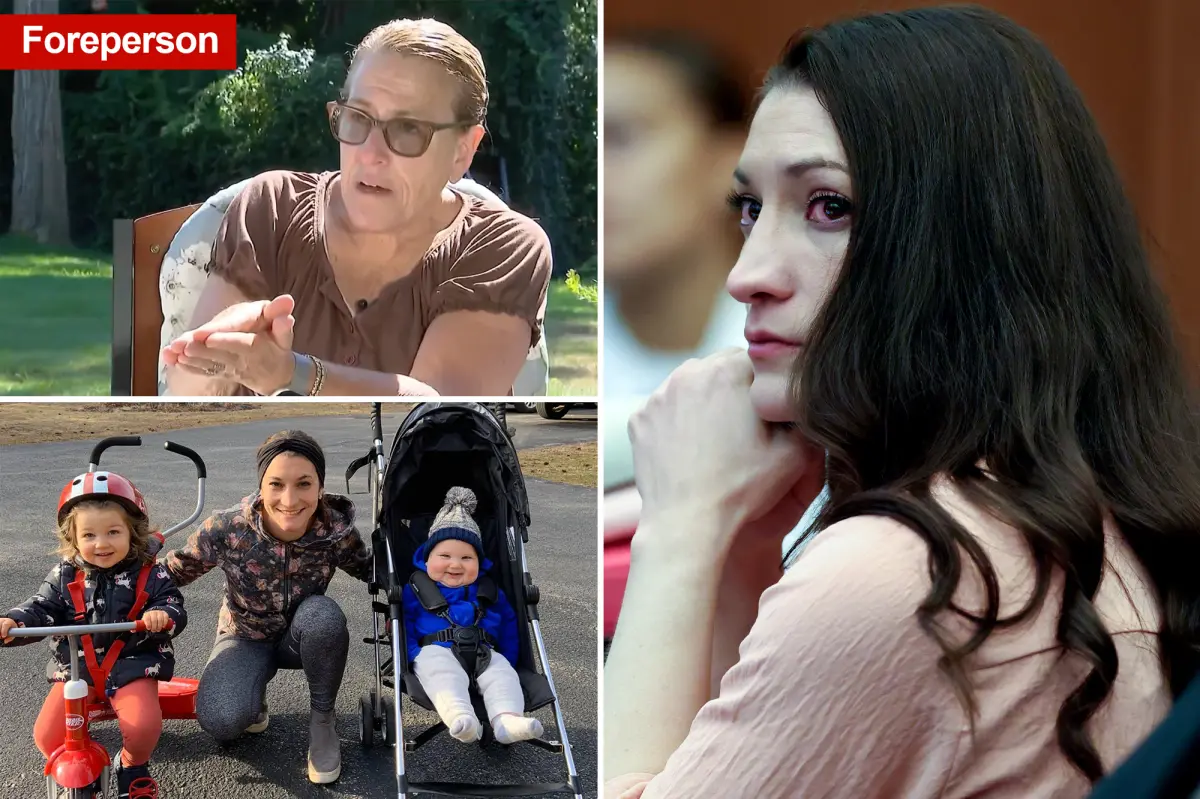
The Lindsay Clancy case has taken another dramatic turn after members of the jury revealed what happened during the tense deliberations that ultimately ended her closely watched murder trial without a verdict.
According to the jury foreperson, the panel was reportedly close to finding Clancy not guilty by reason of insanity when one juror refused to agree — even after acknowledging that he had reasonable doubt.
The revelation has added another layer to a case that has already drawn national attention because of the deaths of Clancy’s three young children, the defense’s reliance on postpartum psychosis, and the extraordinary disagreement over whether she should be held criminally responsible for what happened.
The six-week trial ended in a mistrial on September 4 after the 12-member jury failed to reach a unanimous decision following roughly seven days and nearly 40 hours of deliberations.
But the case did not end with the mistrial.
Instead, several jurors have now spoken publicly about what happened inside the deliberation room — offering the first detailed look at how a jury that was reportedly overwhelmingly leaning toward an insanity verdict became deadlocked.
A Jury That Appeared Close to a Verdict
Lindsay Clancy, 36, admitted that she killed her three children at the family’s Massachusetts home on January 24, 2023.
The children were Cora, 5, Dawson, 3, and Callan, 8 months.
The central issue at trial was therefore not simply whether Clancy caused their deaths. The defense acknowledged that she did.
The question was whether she was criminally responsible for her actions at the time.
Her defense argued that Clancy was suffering from severe postpartum psychosis and had experienced a profound break from reality. Prosecutors, however, argued that she understood what she was doing and should be held legally responsible.
After weeks of testimony from medical experts, family members and other witnesses, the question was ultimately placed in the hands of 12 jurors.
And according to the foreperson, 11 of them eventually reached the same conclusion.
They were prepared to find Clancy not guilty by reason of insanity.
Then one juror refused to join them.
The Moment That Changed Everything
Roni Carlson, the jury foreperson, later described the moment during an interview with NBC10 Boston.
Carlson said the holdout juror acknowledged having reasonable doubt.
She believed the jury was finally moving toward a unanimous decision and began filling out the verdict paperwork.
Then the juror reportedly told the group that, despite his reasonable doubt, he still would not vote to find Clancy not guilty by reason of insanity.
Carlson said she was shocked by the reversal.
The revelation became one of the most consequential moments of the deliberations because reasonable doubt is a fundamental part of the criminal justice system.
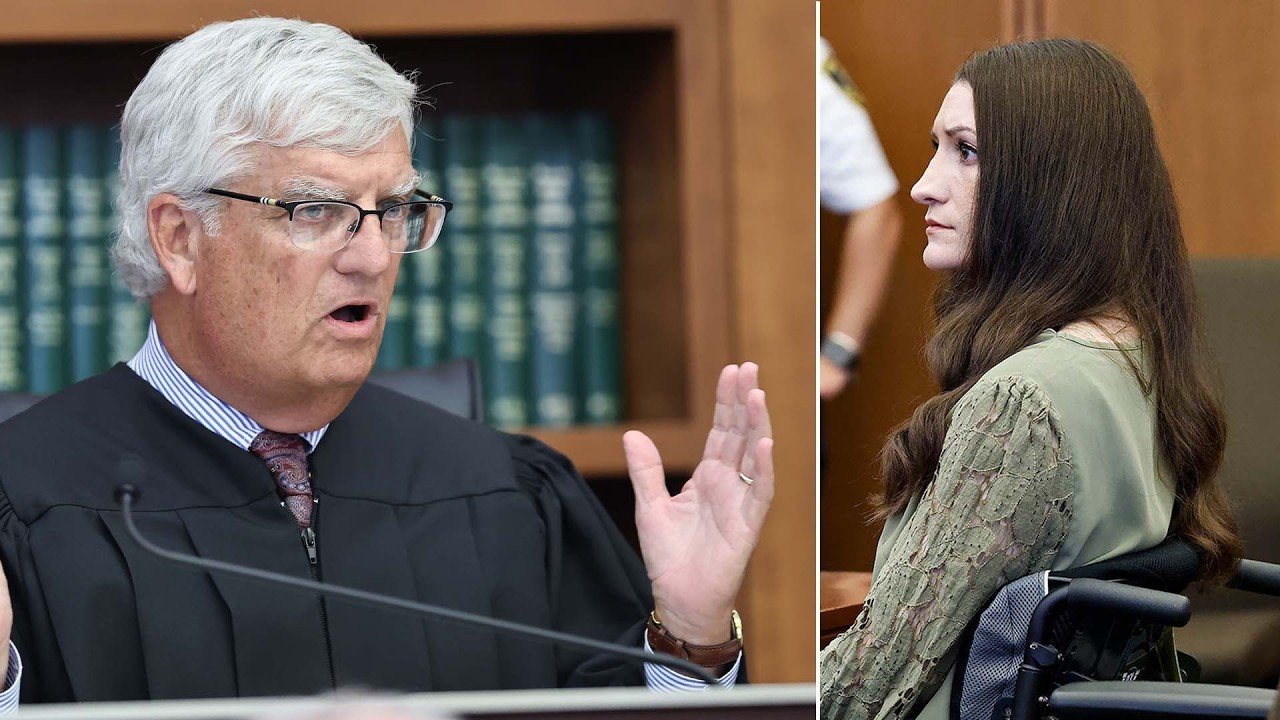
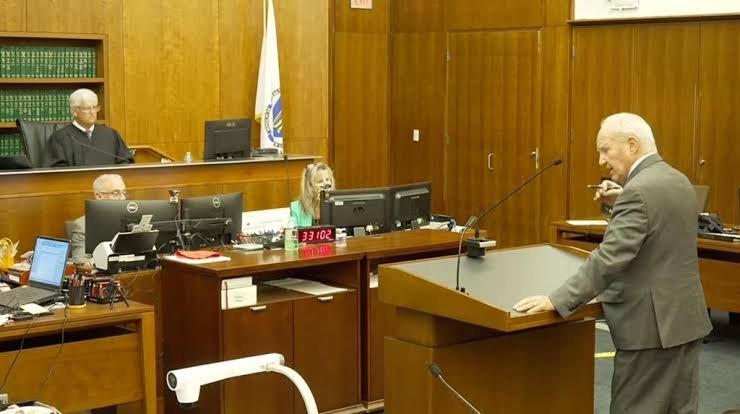
The defense had already raised concerns with the judge that the juror was not properly applying the court’s instructions. Judge William Sullivan declined to remove or individually question the juror, saying the information before him did not establish that the juror was refusing to follow the law.
The jury was sent back to deliberate.
But the disagreement remained.
Eventually, the panel told the judge that it could not reach a unanimous verdict.
That led to the mistrial on September 4.
Other Jurors Describe a Bitter Deadlock
Carlson was not the only juror to speak publicly.
Jurors Paula Devlin and Kellie Farina also discussed their experience after the trial ended.
Their accounts portrayed a jury struggling with an extraordinarily difficult question: how to reconcile the undisputed horror of what happened to the children with evidence about Clancy’s mental state at the time.
Devlin described the holdout juror as unwilling to seriously consider arguments from the other members of the panel.
Another juror said the holdout appeared particularly focused on the brutality of the killings.
That distinction is important because the jury was not simply being asked whether the deaths were horrific.
They were being asked whether Clancy understood the nature and wrongfulness of her actions when she killed her children.
Carlson explained that the majority of jurors were persuaded by the evidence surrounding Clancy’s mental state and by testimony and other evidence indicating the relationship she had with her children.
The jurors’ comments suggest that the disagreement was ultimately about criminal responsibility rather than whether Clancy had caused the deaths.
As Carlson put it, the panel was not trying to determine whether Clancy had killed the children. She had admitted doing so.
The question was whether she knew right from wrong at the time.
The Mental Health Evidence Was at the Center of the Trial
Clancy’s defense spent much of the trial attempting to establish that she had experienced a severe psychiatric crisis after childbirth.
Her lawyers argued that postpartum psychosis had fundamentally affected her ability to understand reality and control her behavior.
The prosecution took a different view.
Prosecutors argued that Clancy was criminally responsible and pointed to evidence they said demonstrated planning and awareness of her actions.
That disagreement became the central battle of the trial.
More than 80 witnesses reportedly testified during the six-week proceedings, including medical experts and people who knew Clancy and her family.
The case also drew intense attention because of the circumstances surrounding Clancy’s own suicide attempt after the killings. She survived but was left paralyzed from the waist down and has remained in psychiatric care.
For jurors, the evidence created an unusually difficult legal and emotional calculation.
The question was not simply whether Clancy had been mentally ill.
It was whether her mental condition reached the legal threshold required for an insanity defense.
The Mistrial Did Not Mean Clancy Was Acquitted
One point is especially important as the case moves forward.
A mistrial is not the same as a not-guilty verdict.
Because the jury could not reach a unanimous decision, the court did not determine that Clancy was legally insane, nor did it determine that she was criminally responsible.
The case therefore remains unresolved.
Prosecutors have not yet announced whether they will seek a new trial. If they do, Clancy would face a new jury rather than returning to the same panel.
A court hearing is scheduled for September 29 to address the next stage of the case.
And now the defense is attempting to prevent another trial altogether.
Defense Makes a New Move After the Mistrial
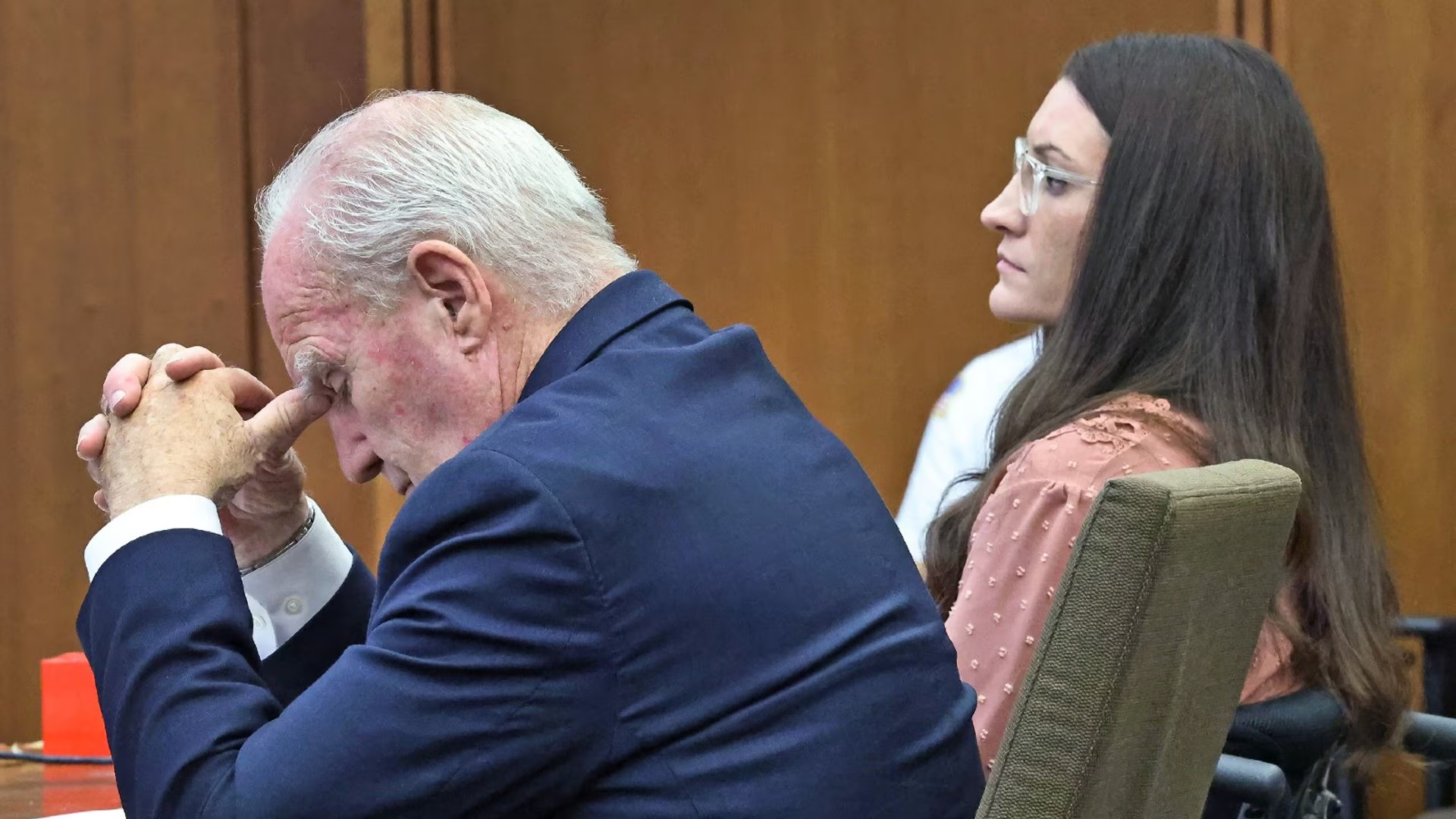
On September 10, Clancy’s attorney Kevin Reddington asked Judge William Sullivan to find Clancy not guilty by reason of insanity.
The defense argues that prosecutors failed to establish beyond a reasonable doubt that Clancy was criminally responsible for the killings.
Reddington’s request is significant because a ruling in Clancy’s favor could prevent the state from putting her through another murder trial.
The defense is pointing to the trial evidence and the reported split among the jurors as part of its argument.
Prosecutors, however, have not announced whether they intend to retry the case, leaving the next major step uncertain.
What the Jurors’ Revelation Could Mean
The public discussion by the jurors has raised questions about what happens when a jury believes there is reasonable doubt but cannot agree on the legal consequence of that doubt.
The defense has already argued that the holdout juror failed to properly follow the judge’s instructions.
But the judge previously declined to intervene, finding that the information presented to him did not establish that the juror was refusing to follow the law.
That distinction could become important if the defense continues challenging the outcome of the mistrial.
At the same time, the jurors’ accounts cannot themselves serve as a substitute for a verdict.
The holdout juror has not publicly explained his position, and his reasoning remains known primarily through the accounts given by other jurors.
That leaves an important part of the story unresolved.
The Trial May Be Over, But the Case Is Not
For six weeks, the courtroom heard arguments about mental illness, motherhood, medication, postpartum psychosis and criminal responsibility.
Then, after approximately 40 hours of deliberation, the case ended without the verdict either side had expected.
The jury’s reported 11-to-1 split has now become one of the defining features of the case.
But it is not the final legal chapter.
Clancy remains in psychiatric care. Her defense is asking the judge to end the criminal case with a finding of not guilty by reason of insanity, while prosecutors have yet to say publicly whether they will pursue a second trial.
The September 29 hearing could therefore become the next major turning point.
Until then, one question hangs over the case:
Will Lindsay Clancy face another jury, or will a judge decide that the evidence from the first trial was enough to resolve the case without starting over?
For the families involved, and especially for the memory of Cora, Dawson and Callan, there is still no final answer.
The mistrial ended the first trial.
It did not end the case.