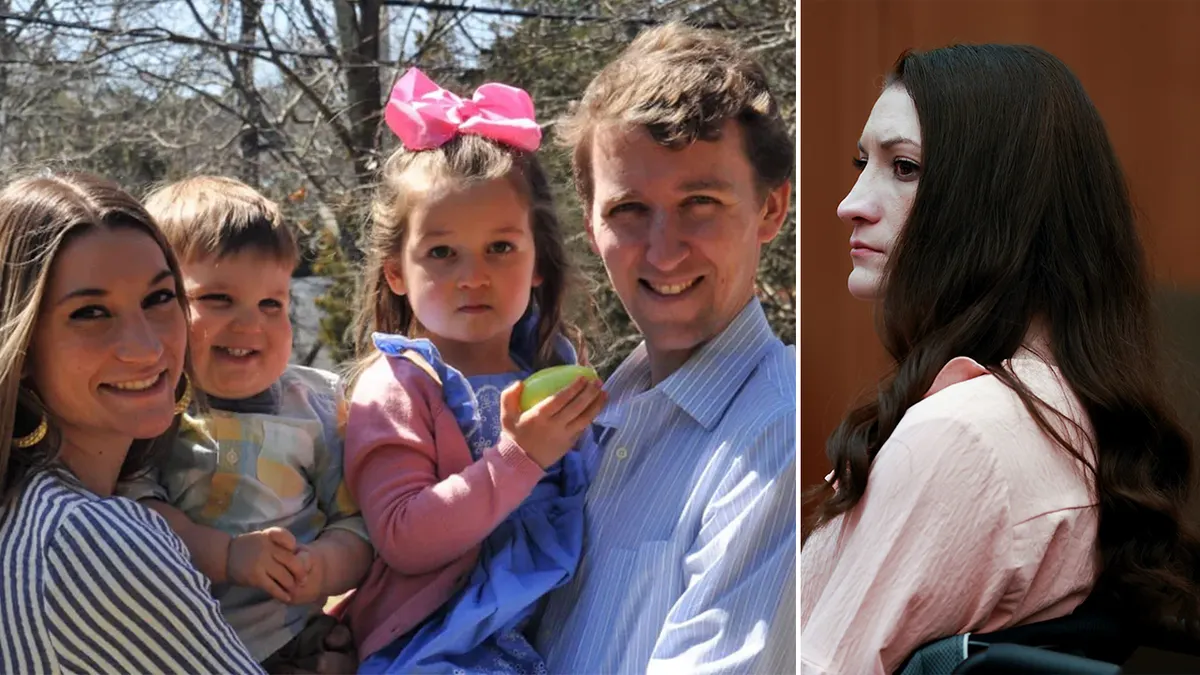
The murder trial of Lindsay Clancy is approaching its final stage, with prosecutors and defense attorneys now preparing to make their closing arguments after weeks of testimony focused largely on one central question: Was Clancy criminally responsible when she killed her three young children in January 2023?
On Wednesday, August 26, the jury heard from the prosecution’s final rebuttal witness, forensic psychiatrist Dr. Gregory Saathoff, as attorneys continued to challenge and defend competing accounts of Clancy’s mental state.
The testimony came just days after a judge rejected the defense’s request for a mistrial following controversial testimony about Clancy’s Catholic upbringing.
With the final witness expected to finish Wednesday, closing arguments are expected Thursday, August 27. The jury could then begin deliberations as early as Friday.
Clancy, 36, has pleaded not guilty to three counts of first-degree murder in the deaths of her children — 5-year-old Cora, 3-year-old Dawson and 8-month-old Callan.

She has acknowledged that she killed the children, but her defense has argued that she should not be held criminally responsible because she was experiencing severe postpartum psychosis and other serious mental health symptoms at the time.
Prosecutors have taken the opposite position.
Their case has focused on evidence that they say shows Clancy understood what she was doing and retained enough control over her actions to be held legally responsible.
The final battle over Clancy’s state of mind
The trial has increasingly become a battle between opposing psychiatric opinions.
Defense experts have described Clancy as suffering from a severe psychiatric episode involving postpartum psychosis, depression and bipolar disorder. One of the defense’s most prominent witnesses, forensic psychologist Dr. Phillip Resnick, testified that Clancy was psychotic on January 24, 2023, when the children were killed.
Resnick acknowledged that the timing was unusual because Callan was eight months old, but testified that postpartum psychosis can occur later than the period most commonly associated with the condition.
The prosecution has challenged that conclusion through its own experts.
Forensic psychologist Dr. Kirk Heilbrun testified that, in his professional opinion, Clancy remained criminally responsible for the deaths.
Heilbrun said he believed Clancy had bipolar II disorder, but he did not believe she experienced a manic episode. He also testified that she retained an awareness that killing her children was illegal and wrong.
The prosecution has argued that Clancy’s actions showed a sequence of decisions rather than behavior completely controlled by a psychotic hallucination.
That distinction could become critical when jurors begin deciding the case.

The disputed claim of a voice
One of the most important issues throughout the trial has been Clancy’s account that she heard a voice telling her to kill her children and then herself.
According to testimony reported from the trial, Clancy described the voice as telling her that she had to kill the children and herself.
Dr. Saathoff, the prosecution’s final expert witness, questioned the reliability of that account.
He testified that Clancy’s descriptions of the voice contained inconsistencies when compared with statements she made during different evaluations.
He also highlighted what he considered an unusual feature of the story: Clancy said the voice stopped after the children were killed.
Saathoff told jurors that the voice did not tell Clancy exactly where or how to kill the children. In his view, that was significant because he believed it indicated that she maintained control over her actions.
The defense has disputed that interpretation and has argued that the circumstances surrounding the killings are consistent with a severe psychotic episode.

Prosecutors point to a series of actions
The prosecution has repeatedly returned to the sequence of events on January 24, 2023.
Clancy’s husband, Patrick Clancy, left the family’s Duxbury home to pick up food and make another brief stop.
While he was away, Clancy killed the three children in the family’s basement and then attempted to take her own life by cutting herself and jumping from a second-story window.
The fall left her paralyzed from the waist down.
Prosecutors have argued that the relatively short period in which these events occurred does not mean Clancy was incapable of making decisions. Instead, they have pointed to the sequence itself as evidence that she retained awareness and control.
Heilbrun testified that he viewed individual actions taken during the killings as decisions rather than automatic responses to a hallucination.
The defense, however, maintains that this interpretation ignores the effect of psychosis and the mental state Clancy says she was experiencing.
A mistrial request adds another twist
The final stage of the trial was briefly thrown into uncertainty Monday when defense attorney Kevin Reddington asked Judge William Sullivan to declare a mistrial.
The request followed testimony from Heilbrun that brought Clancy’s Catholic upbringing and the concept of suicide being a “mortal sin” into the discussion.
Reddington argued that the reference was inappropriate and accused the prosecution of misconduct.
Prosecutors denied intentionally trying to influence the jury with religion.
Judge Sullivan ultimately rejected the mistrial request.
However, he strongly criticized the testimony and instructed jurors that references to Clancy’s religion were inappropriate and should not be considered.
The judge specifically described the discussion of Catholic doctrine as irrelevant to the jury’s decision.
The issue was particularly significant because religion had already surfaced during earlier testimony, prompting the judge to warn jurors previously not to consider similar comments.
Rather than ending the trial, Sullivan chose to address the issue through instructions to the jury and allow the proceedings to continue.
The prosecution’s final expert returns to the stand
On Wednesday, Saathoff returned to court for additional questioning.
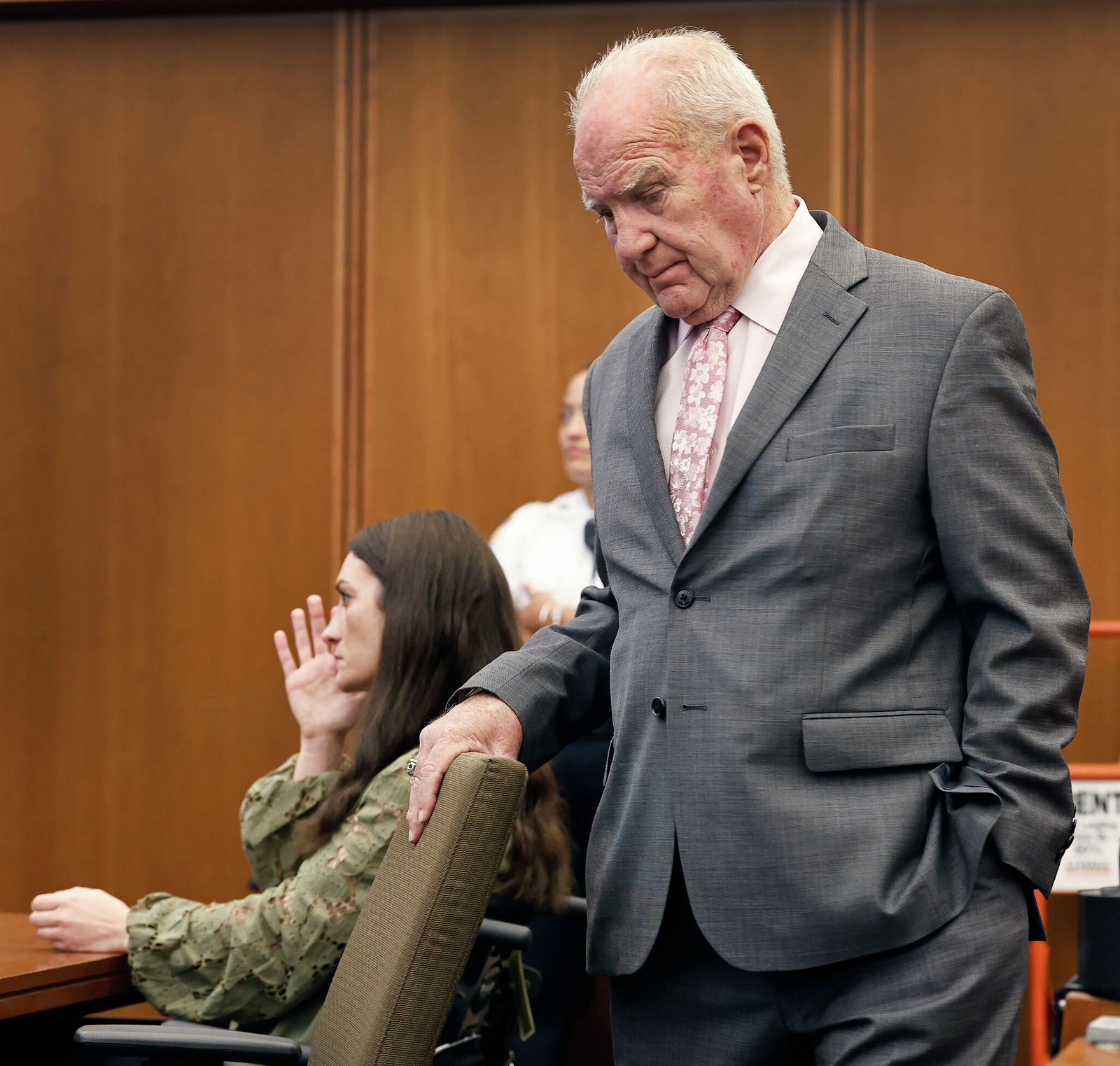
During cross-examination, defense attorney Kevin Reddington challenged Saathoff’s qualifications and questioned how much direct experience he had treating postpartum psychosis.
Reddington also emphasized that Saathoff did not interview Clancy until more than three years after the killings.
Saathoff acknowledged that Clancy experienced significant side effects from some medications, but he maintained that those effects did not prevent her from understanding right from wrong.
The testimony illustrates the fundamental disagreement between the two sides.
The defense wants jurors to view Clancy’s behavior through the lens of severe mental illness.
The prosecution wants jurors to view the same events as evidence of deliberate decision-making.
Ultimately, the jury will have to decide which interpretation is supported by the evidence presented in court.
What happens next
After the final testimony concludes Wednesday, Judge Sullivan is expected to conduct the remaining legal proceedings before attorneys deliver their closing arguments.
Closing arguments are expected Thursday.
The jury — made up of 12 women and six men — could then begin deliberating.
That means the case could soon move from months of testimony into its decisive phase.
If Clancy is found guilty of first-degree murder, she faces life in prison without the possibility of parole.
If the jury determines that she was not criminally responsible because of a qualifying mental disease or defect, she would instead be committed to a state mental health facility rather than sentenced to prison.
The distinction is important because the trial is not about whether the children died or whether Clancy was responsible for their deaths in a factual sense. She has admitted to killing them.
The central legal question is whether she was criminally responsible for those actions under Massachusetts law at the time.
A decision now rests with the jury
After more than a month of testimony, jurors have heard from family members, first responders, medical professionals and competing mental health experts.
They have also heard sharply different descriptions of Clancy’s behavior and mental state before, during and after the killings.
The defense says the evidence points to a mother experiencing a devastating psychiatric crisis.
The prosecution says the evidence shows a woman who, despite serious emotional and psychiatric difficulties, retained enough awareness and control to understand the consequences of her actions.
Neither side will get the final word until closing arguments are completed and the jury begins its deliberations.
For now, the courtroom is approaching a moment that both sides have been preparing for since the trial began.
After weeks of testimony, the question will soon be placed directly in the hands of the jurors:
Was Lindsay Clancy legally responsible for the deaths of her three children?
The answer will determine whether the case ends with a murder conviction and a potential life sentence, or with a finding that Clancy was not criminally responsible because of her mental state.
For the families involved, and especially for the memory of Cora, Dawson and Callan, the final decision is now only days away.