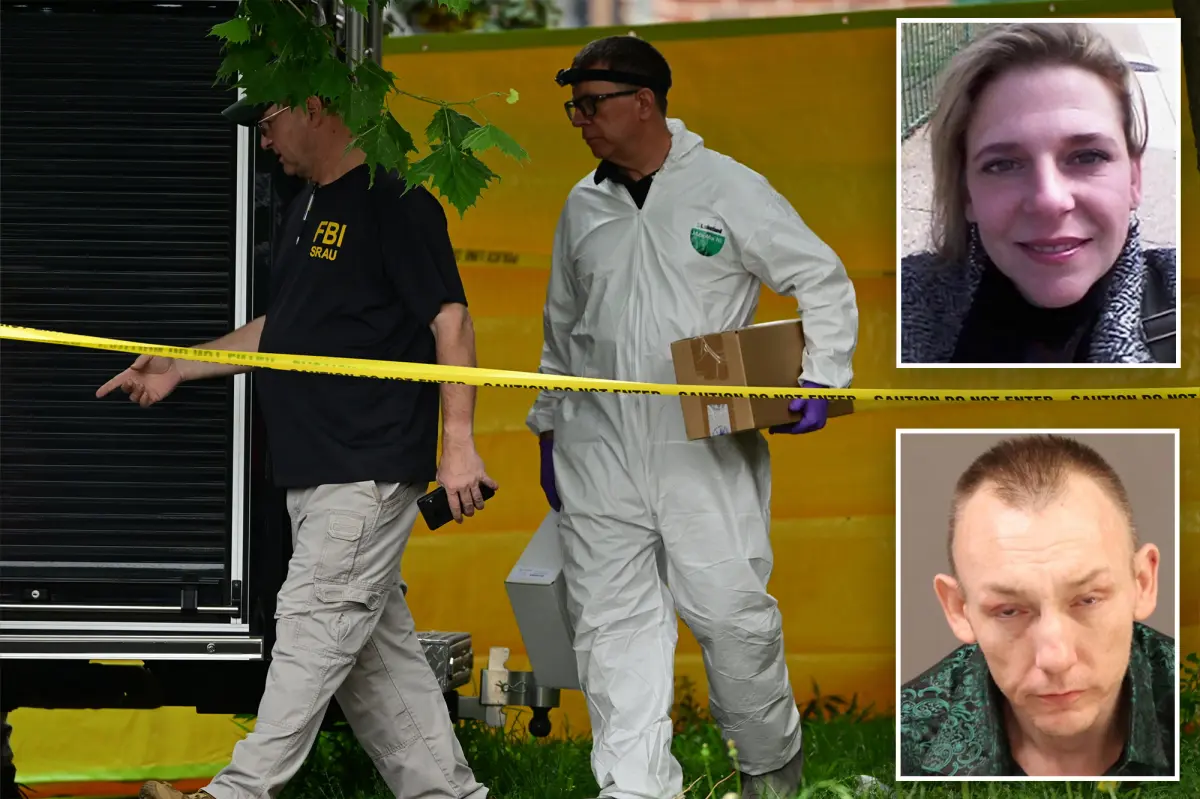
A disturbing investigation at a Philadelphia home has taken a major turn after police said digital evidence recovered from the property appears to show two women who had been missing for years alive and later deceased.
The discovery has transformed what began as an investigation involving weapons, drugs and counterfeit law-enforcement credentials into a much broader death investigation involving two missing Philadelphia women.
But authorities are still searching for answers.
The women’s bodies have not been found, and police have not charged anyone with their deaths.
At the center of the investigation is a home on the 400 block of West Chew Avenue in Philadelphia’s Olney section, a property belonging to Eugene Horsch, 44, who is currently in federal custody on unrelated charges.
Philadelphia police said investigators have recovered an enormous amount of digital material from the property — approximately 600,000 images, 70,000 videos and more than 10,000 pages of writings, manuscripts and drawings.

Only a small portion of that evidence has been reviewed.
And what investigators have already seen has raised serious questions.
Two missing women appear in the evidence
The two women identified by investigators are Maribel Fresses, who disappeared in 2018 at age 27, and Gabrielle Amarando, who disappeared in 2012 at age 22.
Police said detectives reviewing a hard drive recovered from the home found photographs and videos that appear to show the two women alive inside the property and later appearing to be deceased.
Philadelphia Police Inspector Raymond Evers described the material as extremely disturbing but declined to publicly detail what investigators saw.
Authorities have emphasized that they cannot officially declare the women dead because their remains have not been recovered.
Still, police said the evidence was serious enough that investigators notified both families and opened a death investigation.
That distinction is important.
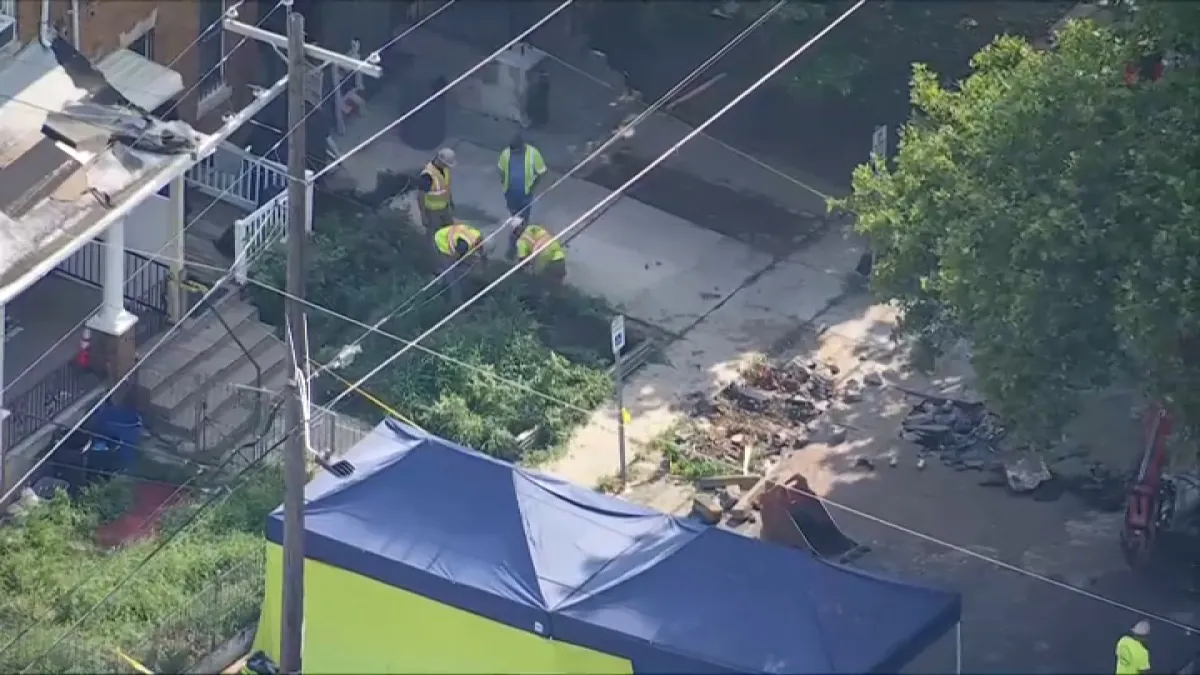
At this point, investigators believe the digital evidence indicates that Fresses and Amarando are dead. But without recovering their bodies or establishing the circumstances of their deaths through additional evidence, the case remains an ongoing investigation.
How investigators came to the house
The investigation began in June after an encounter involving Horsch near Independence Mall.
According to police, a U.S. Park Police ranger encountered Horsch and a woman in a vehicle on June 19. The ranger became concerned after hearing an argument and contacted authorities.
Investigators subsequently discovered that the woman was carrying identification belonging to another person — Blair Tonzelli, a Philadelphia woman who had been reported missing.
That discovery helped lead investigators to Horsch’s home on West Chew Avenue.
What police found there prompted a much larger investigation.
Authorities recovered firearms and ammunition-related evidence, counterfeit federal law-enforcement credentials and what police described as a drug-growing or manufacturing operation.
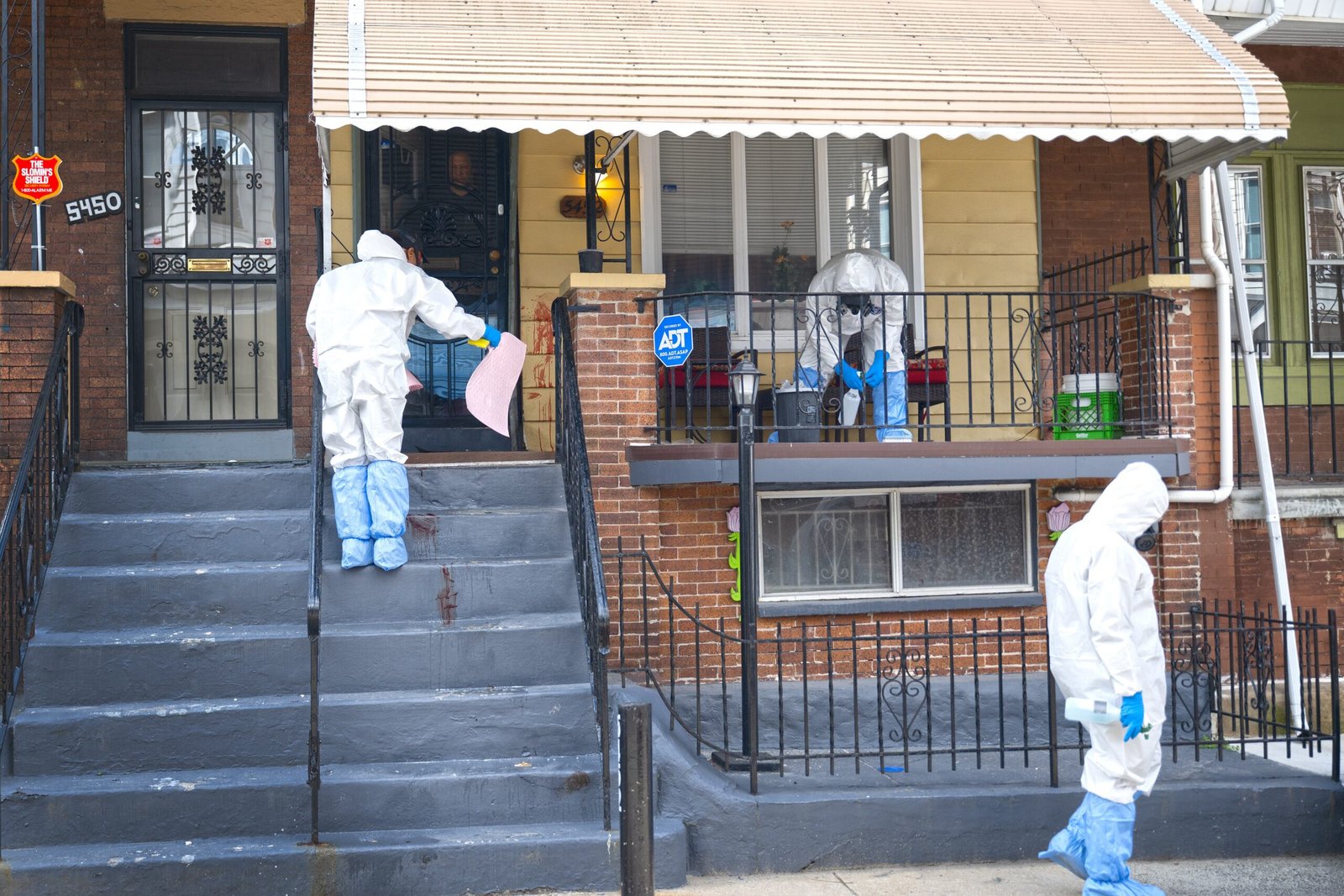
Investigators also found multiple containers and urns containing material believed to be human remains, although the significance and identities of those remains have not been publicly established.
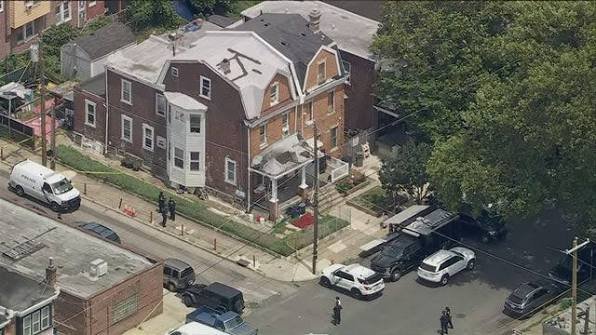
The property has since been searched repeatedly.
According to Philadelphia police, investigators have executed dozens of search warrants, with reports putting the number at roughly 95 as the examination of the home continues.
The searches have involved not only police detectives but also other federal and investigative resources.
The connection to Blair Tonzelli
Blair Tonzelli remains an important part of the larger mystery surrounding the property.
Tonzelli was reported missing in 2023.
Her name surfaced after the June encounter involving Horsch because the woman who was with him allegedly possessed identification belonging to Tonzelli.
Investigators later found a bank card bearing Tonzelli’s name at the West Chew Avenue property, according to police.
But unlike Fresses and Amarando, authorities have not publicly announced that digital evidence has shown Tonzelli dead.
That distinction matters because several missing women have now become associated with the same address, but investigators have not said that all of them are victims of homicide.
Police are continuing to work through the evidence to determine what happened to each woman and whether there are connections between their disappearances.
The digital evidence is enormous
One of the biggest challenges facing investigators is simply the amount of information recovered from the property.
Police say they have seized hundreds of thousands of photographs and tens of thousands of videos.
They have also recovered thousands of pages of writings, drawings and manuscripts.
Authorities have said only about 5% of the digital evidence had been reviewed when the discovery involving Fresses and Amarando was announced.
That means investigators may still have a substantial amount of material to examine.
The discovery of the videos also raises a difficult question: what else might be contained in the remaining digital evidence?
Police have already identified people appearing in some of the material who are still alive. Investigators have interviewed some of those individuals, although authorities have not disclosed what they told detectives.
The investigation therefore remains far from complete.
A house with an unsettling history
The property has also attracted attention because of its connection to Horsch’s late father, Raymond “R.C.” Horsch.
R.C. Horsch was an adult filmmaker and photographer who owned the property before his death in 2025.
Investigators are now examining writings and other material associated with him as part of their broader effort to understand the history of the home and the people who spent time there.
CBS Philadelphia reported that some of R.C. Horsch’s writings contained disturbing descriptions of violence and claimed acts involving the disposal of human remains.
However, those writings should not automatically be interpreted as proof that the acts described actually occurred.
Investigators still have to determine what is factual, what was fictionalized, and what — if anything — is connected to the missing-person cases.
That distinction is particularly important as speculation surrounding the property continues to grow.
Police are not calling it a serial-killer case
The strange discoveries have inevitably prompted comparisons online to notorious Philadelphia cases from the past, including the crimes of Gary Heidnik.
But authorities have not announced that Horsch is a serial killer.
They have also not publicly accused him of killing Fresses or Amarando.
As of the latest available updates, Horsch remains in federal custody on charges unrelated to the women’s disappearances.
Philadelphia police have described the situation as an ongoing and complex investigation rather than announcing homicide charges against him.
That means the most dramatic conclusions circulating online remain speculation.
What investigators can currently say is much narrower — but still deeply disturbing.
Digital evidence recovered from the home appears to show two women who had been missing for years.
Police believe those women are deceased.
Their bodies have not been found.
And investigators are still trying to determine exactly what happened.
The investigation is now reaching far beyond one house
The case has also raised questions about whether the Chew Avenue property could hold information about other missing people.
Investigators have already linked the home to at least four missing women through different pieces of evidence or personal connections.
Those women include Fresses, Amarando and Tonzelli, while another disappearance has also drawn investigators’ attention to the property.
But being connected to the home does not establish that a person was killed there.
Police are therefore working case by case, attempting to separate confirmed evidence from coincidence, speculation and material that may ultimately prove unrelated.
That process could take considerable time.
The sheer volume of digital evidence alone means investigators have potentially thousands of hours of material to examine.
Families are now waiting for answers
For the families of Maribel Fresses and Gabrielle Amarando, the latest development is both devastating and significant.
For years, they lived with uncertainty over what happened to their loved ones.
Now police have told them that evidence recovered from a Philadelphia home appears to show the women dead.
But there is still no body.
There is still no publicly established cause of death.
And there has been no criminal charge accusing anyone of killing either woman.
For a family that has spent years searching for answers, that creates an especially painful situation: investigators may have learned something about what happened, but the full story remains incomplete.
Police continue to search the property and analyze evidence in the hope of locating physical evidence that could explain what happened to the missing women.
What happens next
The next stage of the investigation will likely depend heavily on what investigators find as they continue reviewing the digital material and physical evidence recovered from the property.
Authorities need to determine whether the videos are authentic and unaltered, establish when and where the recordings were made, identify any other people shown in them and determine whether physical evidence can corroborate what appears on the recordings.
They also need to establish what happened to the women’s remains.
Those answers could eventually determine whether additional criminal charges are possible.
For now, however, the case remains an investigation — not a completed murder prosecution.
Eugene Horsch remains in federal custody on unrelated charges, while Philadelphia homicide detectives and other investigators continue examining the West Chew Avenue property.
And somewhere inside hundreds of thousands of images, tens of thousands of videos and thousands of pages of writings, investigators believe there may be more information capable of explaining what happened.
The discovery of the videos has already changed the case.
Two women who disappeared years apart are now believed by investigators to have been captured on video alive and later deceased.
But until investigators recover their remains and establish the circumstances surrounding their deaths, one of Philadelphia’s most unsettling investigations remains filled with unanswered questions.
For the families of Maribel Fresses and Gabrielle Amarando, the hope is that the evidence found inside the house will eventually do more than confirm their worst fears.
They want to know what happened.
And, after years of uncertainty, they are still waiting for the complete answer.