
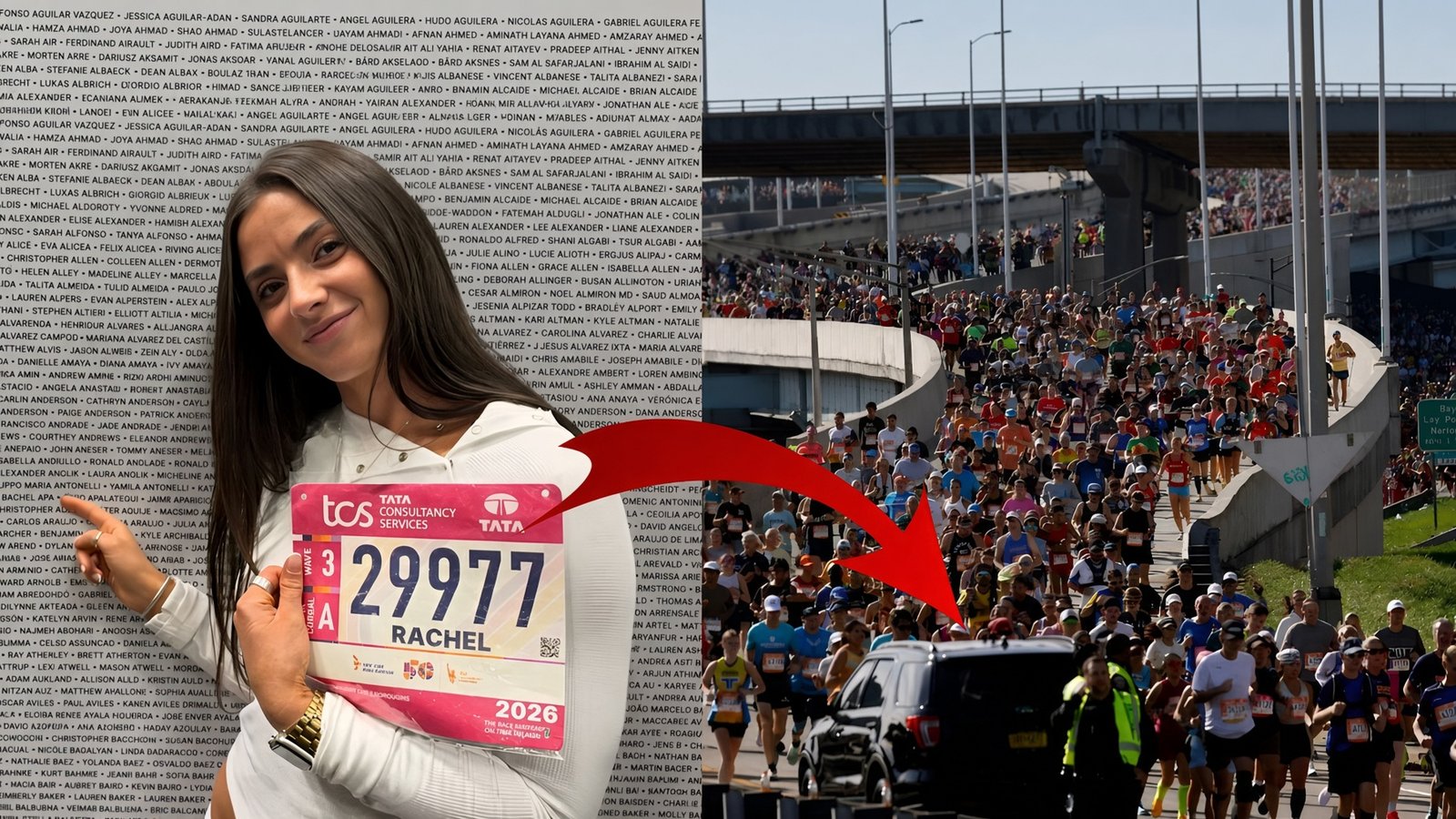
Rachel Apa, a 24-year-old former college athlete, was looking forward to completing her first New York City Marathon on November 1, 2026. But just over two miles from the finish line, she collapsed in Central Park and was rushed to Mount Sinai Hospital, where doctors worked for hours to save her. Her family later said she had suffered from a rare medical condition known as rhabdomyolysis.
Rachel, from Lewisberry, Pennsylvania, had been running the 26.2-mile race to raise money for the Parkinson’s Foundation in honor of her grandfather, who had lived with the disease. What began as a personal challenge and tribute became a heartbreaking experience for her family, friends and fellow runners.
According to her father, Steve Apa, Rachel had been feeling strong during the early stages of the race. She even sent him a message saying she felt amazing. However, as she passed the later miles, her messages began reflecting increasing physical discomfort.
Her father continued encouraging her through the marathon tracking app, reminding her to take it easy and focus on reaching the finish rather than speed. At around Mile 24, her location suddenly stopped moving.
Her mother, Michelle, who had been waiting farther along the course, went looking for her daughter. She eventually learned that Rachel had already been transported to the hospital.
Race medical personnel responded after a bystander began CPR. Medical staff also used a defibrillator before Rachel was taken by ambulance for emergency treatment. Despite approximately six hours of medical efforts, she could not be saved.
What Is Rhabdomyolysis?
Rachel’s father told reporters that doctors had identified rhabdomyolysis as the condition responsible for her medical crisis.
Rhabdomyolysis is an uncommon but potentially life-threatening condition in which damaged muscle tissue breaks down and releases substances into the bloodstream. These substances can overwhelm the kidneys and lead to serious complications, including acute kidney injury.
Although it can occur after severe physical exertion, the condition can also be associated with dehydration, injuries, certain medications and other medical factors.
Symptoms may include unusual muscle pain, weakness, swelling and dark-colored urine. Medical experts emphasize that these warning signs should not be ignored, particularly after intense exercise.
The condition can require immediate hospital treatment, often involving intravenous fluids and close monitoring of kidney function.
While Rachel’s family has shared the diagnosis they received from doctors, the New York City medical examiner had not announced a final official determination as of November 3.

A Life Filled With Sports And Ambition
Rachel was a lifelong athlete who previously played Division I field hockey at Bucknell University. During her senior season in 2023, she started every game and earned recognition on the Academic All-Patriot League team.
After college, she continued pursuing her professional and academic ambitions. She worked as a product manager for an electrical components company and had recently begun an MBA program at Charleston Southern University.
Her decision to participate in the marathon was also deeply personal. She joined the Parkinson’s Foundation fundraising team to honor her grandfather, who passed away in 2022 after living with Parkinson’s disease.
In a LinkedIn post, Rachel described her grandfather as one of her role models and credited him with teaching her to stay active, embrace challenges and push beyond her limits.
Her fundraising page had collected more than $5,400, exceeding its original $4,000 goal.

Family And Running Community Remember Rachel
Rachel’s passing has prompted an outpouring of sympathy from the running community, her former university and organizations connected to her athletic career.
New York Road Runners, the organization responsible for the marathon, expressed deep sadness and acknowledged the efforts of the bystander and medical personnel who responded during the emergency.
For her family, the experience has been especially difficult because Rachel had been so excited about completing her first marathon. Her father described her as energetic, ambitious and always ready to take on another challenge.
Her story has also brought renewed attention to the importance of recognizing unusual physical symptoms during endurance events and seeking medical attention when something does not feel right.
Rachel had set out to honor someone she loved while accomplishing a major personal goal. Although she never reached the finish line, her fundraising efforts and the reason she chose to run have left a meaningful impression on those who followed her journey.
As friends, relatives and fellow athletes remember Rachel, her story is becoming a reminder of both the determination required in endurance sports and the importance of putting health first.