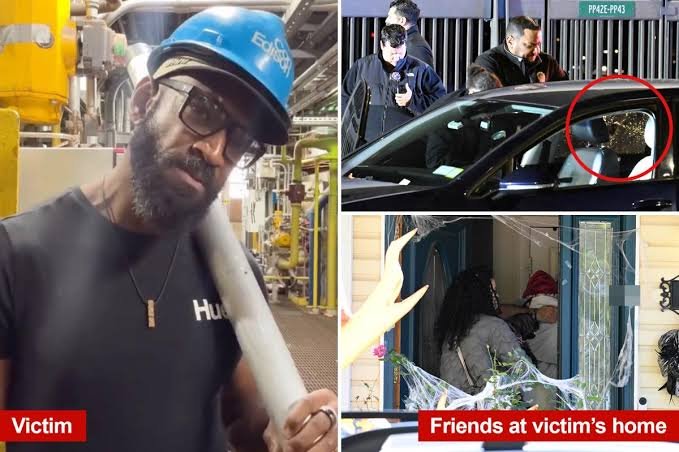
A quiet residential community in Haverstraw, New York, has been left stunned after the arrest of a retired New York City police detective accused of fatally injuring another driver during an apparent road-rage confrontation on the George Washington Bridge.
Victor Romero, 62, was arrested on October 21 and charged in connection with the October 20 incident that claimed the life of Koran Irvine, a 46-year-old husband, father and longtime employee of Con Edison. The case has drawn particular attention because Romero, who spent years working in law enforcement, had built a reputation among his neighbors as someone who was friendly, helpful and deeply involved in the community.
For residents who knew him through everyday interactions, the allegations have been difficult to reconcile with the person they believed they knew. Meanwhile, Irvine’s family is facing the loss of a loved one whose life, according to those who knew him, revolved around his family, work and friendships.
As investigators continue examining what happened on the busy bridge, two families are now dealing with the consequences of an incident that unfolded during an ordinary evening commute.
Neighbors Struggle To Reconcile The Allegations With The Man They Knew
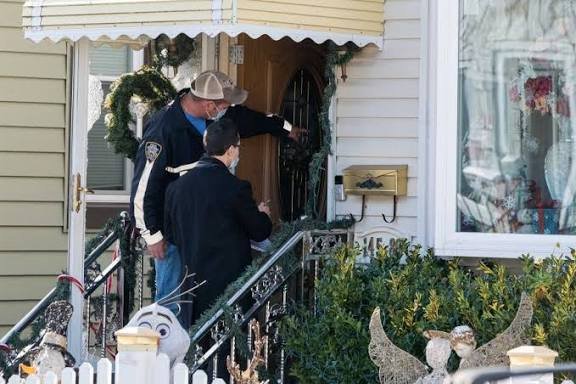
In Haverstraw, a community in Rockland County north of New York City, residents described Romero as someone who regularly offered help to the people around him.
Several neighbors told the New York Post they were shocked when they learned of his arrest. They recalled ordinary encounters in which Romero had helped with car troubles, assisted neighbors with paperwork after an accident and even helped someone retrieve a dog that had escaped.
Paola Ventura, a local resident, said she had spoken with Romero just days before the news emerged. She remembered him helping her with a problem involving her car and described herself as struggling to believe that the person she knew was connected to such a serious case.
Other residents offered similar recollections. Luis Polanco said Romero had helped him after a car accident, while Juan Duran described him as a friendly neighbor who had never appeared aggressive in their interactions.
Ann Tartaglione, president of the local community board, also expressed disbelief. She said Romero had shown an interest in improving the neighborhood and had contributed his own money toward a recent tree-removal project.
According to Tartaglione, Romero lived with his wife and college-aged daughter and also had a son who lived elsewhere.
The accounts paint a picture of someone who had established familiar relationships in his neighborhood over many years. But they also highlight a difficult reality in cases involving serious allegations: the way someone behaves in everyday community life does not, by itself, establish what happened during a separate incident.
For investigators, the priority remains determining the circumstances surrounding Irvine’s final drive home and establishing the evidence that led to Romero’s arrest.
What Happened On The George Washington Bridge?
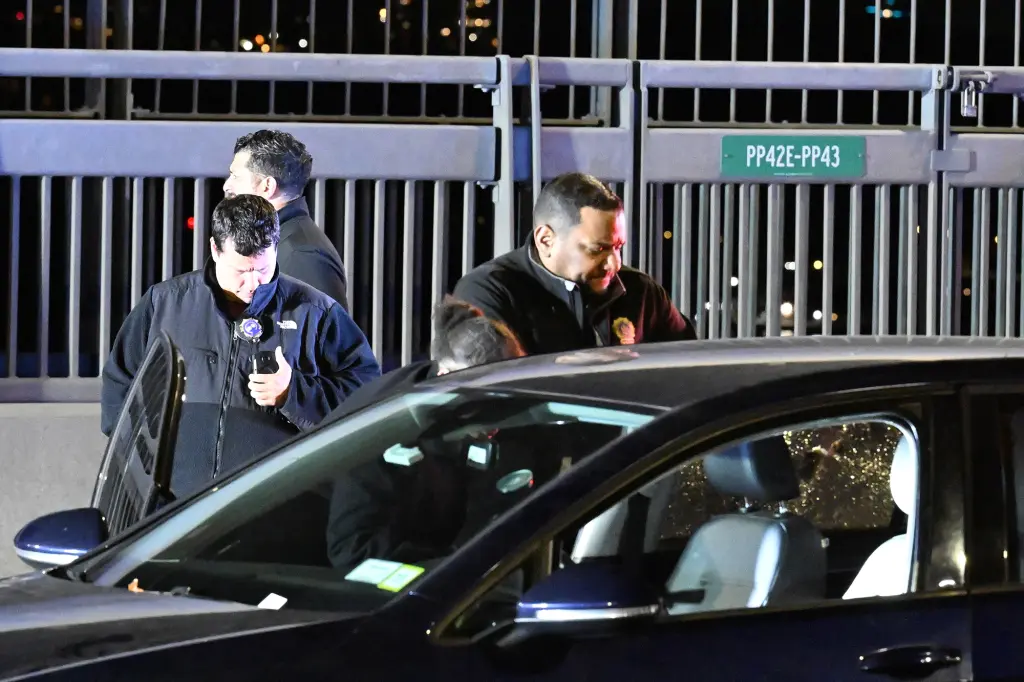
The incident occurred shortly after 7 p.m. on Tuesday, October 20, on the New Jersey-bound upper level of the George Washington Bridge, which connects Manhattan with Fort Lee, New Jersey.
According to the Associated Press, Port Authority police initially responded to a report of a vehicle crash. When officers arrived, they found Irvine unconscious and unresponsive in the driver’s seat of his Volkswagen Golf.
He had sustained a serious wound to his right shoulder. Emergency personnel transported him to Englewood Hospital, where he was later pronounced dead.
Investigators began examining whether the incident had stemmed from road rage, with authorities reviewing available surveillance footage and other evidence to reconstruct the events leading up to the emergency call.
The bridge, one of the busiest crossings in the New York metropolitan area, became the center of a major investigation. Several lanes were closed while officers worked at the scene, causing significant delays for commuters traveling between New York and New Jersey.
The affected lanes reopened approximately five hours later, according to the Port Authority.
Although the precise sequence of events remains subject to the investigation, authorities have identified Romero as the person accused in connection with Irvine’s death. He was taken into custody on Wednesday and charged with murder.
The charge represents an allegation, not a final determination of guilt. Further proceedings will establish how the evidence is presented and evaluated in court.
Who Was Koran Irvine?
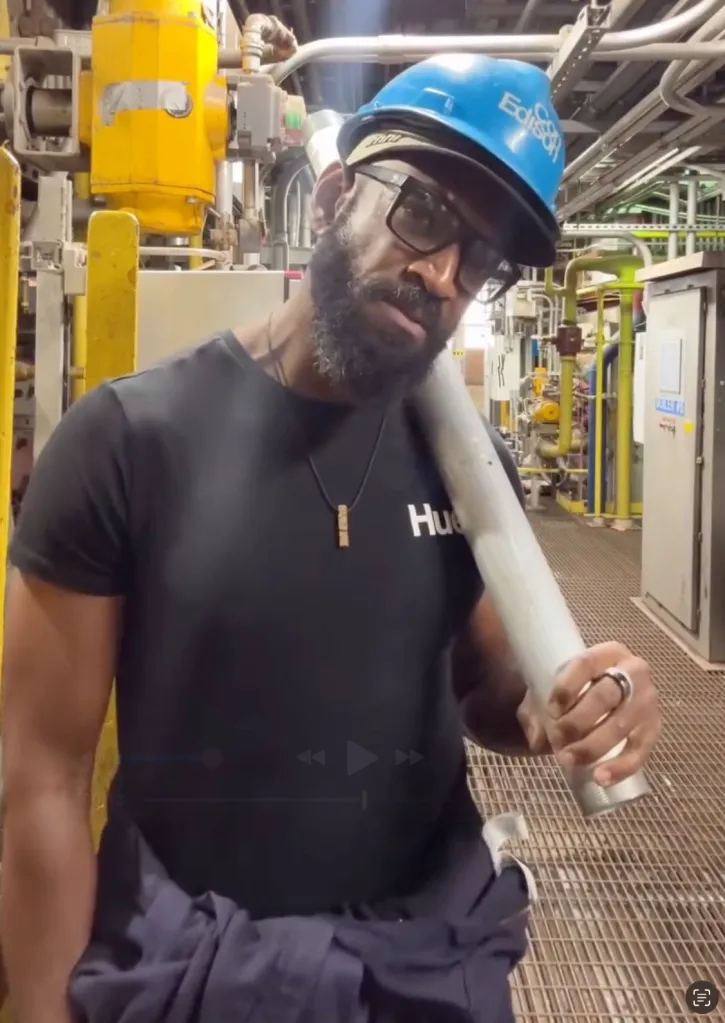
Away from the investigation, Irvine is being remembered as a devoted family man and a valued member of the Con Edison workforce.
The 46-year-old lived in Valley Cottage, New York, with his wife, Patricia Irvine, and their two children. He had been returning home after working overtime when the incident occurred.
His employer, Con Edison, issued a statement expressing sorrow over the loss of a member of its workforce and extending condolences to his family, friends and colleagues.
The company’s message reflected the impact Irvine’s passing has had on people who knew him through work, as well as those closest to him.
Neighbors also remembered him as a kind and welcoming person. One resident recalled how Irvine and his family had helped make new neighbors feel welcome, including sharing fresh eggs from chickens they kept at home.
That small recollection offers a glimpse into the everyday relationships that defined Irvine’s life beyond his job.
His wife has spoken about the difficulty of processing what happened, as the family tries to come to terms with an unexpected loss.
For Patricia and their children, the coming weeks will involve navigating grief, practical responsibilities and the absence of someone who had been part of their daily lives.
While the legal case continues, those who knew Irvine are emphasizing the person he was to his family and community, rather than allowing the circumstances of his passing to define his entire story.
Romero’s Background In Law Enforcement
Romero’s history with the New York Police Department has become another important element of the case.
He joined the department in 1994 and worked as a detective with Brooklyn North Narcotics before retiring in 2001.
His retirement followed injuries he sustained during an off-duty confrontation in June 2000 at his family’s laundromat, King’s Laundromat, in the East Flatbush section of Brooklyn.
According to the Associated Press and earlier news reports, several men attempted to rob the family business. Romero was injured during the incident, and his service weapon was used in the confrontation.
He later retired on a disability pension after serving approximately six years with the department.
That earlier experience has drawn renewed attention because it forms part of the public record of Romero’s life before his recent arrest. However, the circumstances of the 2000 incident and the current allegations are separate matters.
Romero’s former career also makes the latest case particularly striking for residents who associated him with public service. Yet his previous employment does not determine the outcome of the current proceedings, which must be resolved through the legal process.
As of the latest reports on October 22, information about legal representation for Romero had not been publicly confirmed by the sources cited in the initial coverage.
Investigators Are Examining The Road-Rage Theory
Authorities believe the incident may have begun with a confrontation between drivers, but the full circumstances have not yet been established publicly.
Investigators have been reviewing surveillance recordings from the bridge and surrounding roadways to determine what occurred before Irvine’s vehicle came to a stop.
The George Washington Bridge presents particular challenges for drivers because of its heavy traffic, multiple lanes and complicated entrance ramps. Traffic congestion and sudden lane changes are common, especially during the evening commute.
Those conditions are part of the broader setting in which investigators are trying to reconstruct the incident. However, the precise interaction between the two drivers, including what was said or done beforehand, remains a matter for investigators to establish.
The apparent road-rage connection has been reported by several news organizations, but authorities have not publicly established every detail of the confrontation.
For now, the most important distinction is between the allegations that led to Romero’s arrest and the facts that will ultimately be presented in court.
The investigation will need to establish the sequence of events, examine the available evidence and determine how the alleged actions unfolded.
A Community Left With Difficult Questions
The case has prompted an unusual response in Haverstraw because of the contrast between the allegations and the recollections shared by Romero’s neighbors.
Residents described someone who had helped with everyday problems, contributed to neighborhood projects and maintained friendly relationships. Their reactions have reflected both disbelief and concern for Irvine’s family.
Tartaglione said she felt deeply for both families, acknowledging the impact of the incident on everyone connected to it.
Her comments capture the complicated emotions surrounding a case that has affected people on both sides of the story. Irvine’s relatives are grieving a husband and father, while Romero’s family must also confront a serious legal situation involving someone they have known for years.
At the same time, the community is trying to understand how a confrontation on a crowded bridge could have such far-reaching consequences.
Road-rage incidents can escalate rapidly when frustration takes over, but the details of this particular case must be established through evidence rather than assumptions about what either driver was thinking.
The arrest has renewed attention to the importance of avoiding confrontations on the road and allowing law enforcement to address disputes instead of attempting to resolve them personally.
What Happens Next?
Romero’s arrest marks the beginning of a legal process that will determine how the allegations are addressed in court.
Investigators are continuing to examine the incident, and further information may emerge as evidence is reviewed and court proceedings develop.
Important questions remain about the events leading up to the confrontation, the evidence collected from the bridge and the circumstances that authorities believe connect Romero to Irvine’s passing.
Until those questions are addressed through the legal process, the allegations should not be treated as a final finding of guilt.
For Irvine’s family, the immediate priority is grieving their loss and supporting their children. For the Haverstraw community, the case has challenged residents to reconcile the arrest with the memories they have of a familiar neighbor.
The contrast between those memories and the seriousness of the allegations has made the story especially difficult for the people who knew Romero personally.
But at the center of the case is also a 46-year-old man who was simply making his way home after an overtime shift. Koran Irvine’s life included a family, colleagues and neighbors who valued his presence, and those relationships remain an important part of how he is being remembered.
As investigators continue their work, the community is left waiting for answers about what happened on the George Washington Bridge that evening. The legal proceedings ahead will determine the outcome of the case, while Irvine’s family faces the far more personal challenge of learning to live without him.