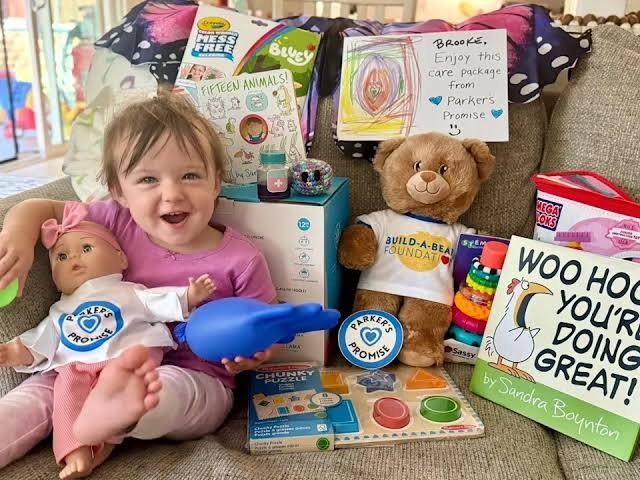
A California family thought they had found a natural solution to their toddler’s digestive problems. Instead, months later, their 17-month-old daughter was rushed to a hospital in critical condition after developing a severe E. coli infection.
Brooklyn Marris had been drinking raw goat milk for about six months before her health suddenly changed.
Her mother, Emily Marris, had turned to the milk while looking for an alternative to breastfeeding. Emily had started taking medication for chronic pain and was concerned about continuing to breastfeed while on the medication.
She had also tried other options. According to ProPublica, Emily was uncomfortable with the ingredients in organic infant formula, while regular cow’s milk appeared to make Brooklyn severely constipated.
Then Emily came across discussions about raw goat milk in a Facebook group connected to her chiropractor.
Other parents described the milk as easier to digest and promoted what they believed were health benefits. One person recommended a nearby farm called Moonlight Ridge.
Emily decided to give it a try.
The farm was only about 10 miles away, and when she visited, she said the goats appeared healthy. She also recalled being reassured that the herd and milk were clean and tested.
Brooklyn seemed to respond well.
Her digestive problems improved, and for several months the family continued using the milk without seeing an obvious problem.
Then, on June 2, everything changed.
Brooklyn became sick while her family was driving home from swimming lessons. She vomited in the back seat, and over the following two days her condition continued to worsen.
Her mother initially saw yellow bile.
Then it became a striking blue-green color.

The family took Brooklyn to an emergency room, where doctors quickly became concerned about her condition and transferred her to a children’s hospital roughly 70 miles away.
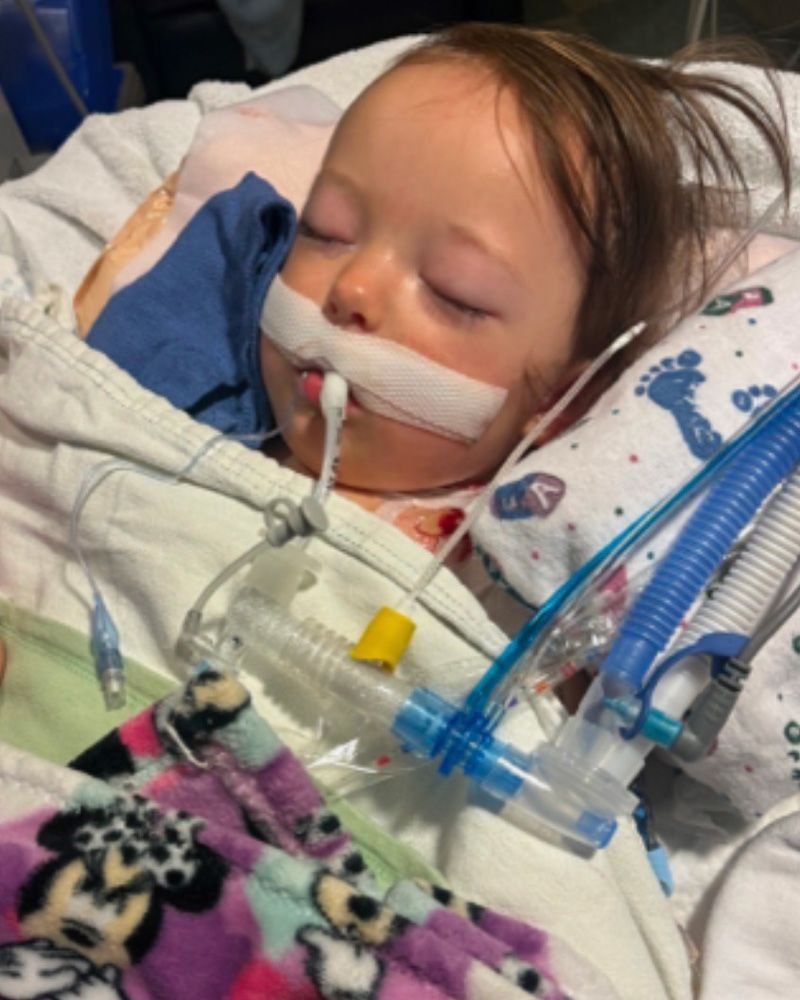
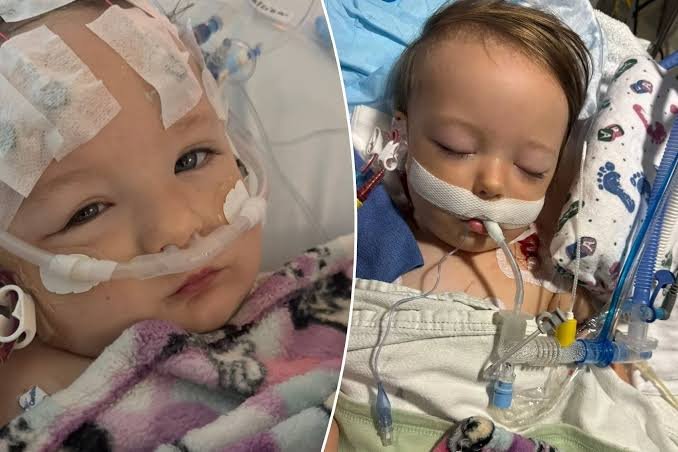
By the time she reached the pediatric intensive care unit, the situation had become extremely serious.
Brooklyn required a ventilator to help her breathe and dialysis because her kidneys were struggling.
Doctors diagnosed her with hemolytic uremic syndrome, a serious complication that can develop after certain E. coli infections and can severely affect the kidneys and other organs.
At one point, Brooklyn experienced cardiac arrest three times.
Her parents were left waiting and hoping that their daughter would pull through.
Eventually, doctors were able to stabilize her, and Brooklyn began recovering.
But the illness did not simply disappear when she left the hospital.
Her development had been interrupted. She later had difficulty sleeping and walked with a slight limp, while doctors warned the family that she could face long-term kidney problems and would need continued medical monitoring.
Doctors began looking for the source
Once Brooklyn was diagnosed with a serious strain of E. coli, her family and medical team needed to understand where the infection might have come from.
That investigation eventually led back to the raw goat milk.
Emily told investigators that Brooklyn had been drinking the milk for months.
Doctors suspected that the unpasteurized product could have been the source of the infection because raw milk is not heated through pasteurization, a process designed to eliminate harmful pathogens.
The investigation became even more concerning when another young girl in the same California area developed a similar illness.
The second child, 6-year-old Victoria Galindo, had also consumed raw goat milk from the same farm.
She later developed the same type of serious E. coli-related complication and required intensive medical care.
The connection between the two families became an important part of what followed.
Both families had obtained milk from Moonlight Ridge, operated by farmer Courtney Baker.
The families later compared their experiences and decided to take legal action.
They filed a lawsuit in Riverside County Superior Court, alleging that the farm had negligently provided contaminated raw milk that had been presented as suitable for human consumption.
Baker has disputed the allegations and said she intends to defend the farm against the claims. The lawsuit remains ongoing.
The messages that raised more questions
Emily also provided investigators with messages between herself and Baker.
After Brooklyn became ill, Emily contacted the farmer and warned her that doctors suspected the milk might have been connected to the E. coli infection.
According to ProPublica’s investigation, Baker responded that she was sorry to hear about Brooklyn’s condition and said that previous testing had not shown anything abnormal.
But the messages later raised questions about exactly what testing had been performed.
Emily said she eventually learned that the farm had not tested for E. coli in the way she had assumed.
The situation became even more concerning when Emily learned that another child who had consumed milk from the same source was also seriously ill.
She contacted Baker again and suggested that sales should be paused until investigators could determine whether there was a connection.
According to ProPublica, Emily later saw the farm being promoted online as having raw goat milk from a “clean tested herd.”
That prompted her to warn others about what had happened to Brooklyn.
A larger issue beyond one family
Brooklyn’s story has now become part of a broader debate over raw milk and how it is sold.
Raw milk is unpasteurized, meaning it has not undergone the heating process used to reduce harmful bacteria and other pathogens.
Health experts have repeatedly warned that raw milk can carry organisms including E. coli, Salmonella and Listeria.
The concern is particularly significant for young children because serious infections can progress quickly.
ProPublica reported that the milk involved in the two children’s illnesses came from a farm that was not among California’s licensed dairies.
Under California rules, unlicensed farms can sell raw milk under certain circumstances for pet use, but selling it for human consumption without the required license can lead to penalties.
The investigation also examined what regulators did after receiving information about the illnesses.
Emily had collected screenshots and messages from her phone and provided them to officials because she wanted authorities to understand what had happened and potentially prevent additional families from becoming sick.
ProPublica reported that several state and county agencies became involved, with the California Department of Food and Agriculture taking the lead in examining whether the farm had been selling milk for human consumption.
The regulatory response has since become another major part of the story.
Brooklyn is recovering, but the family still has concerns
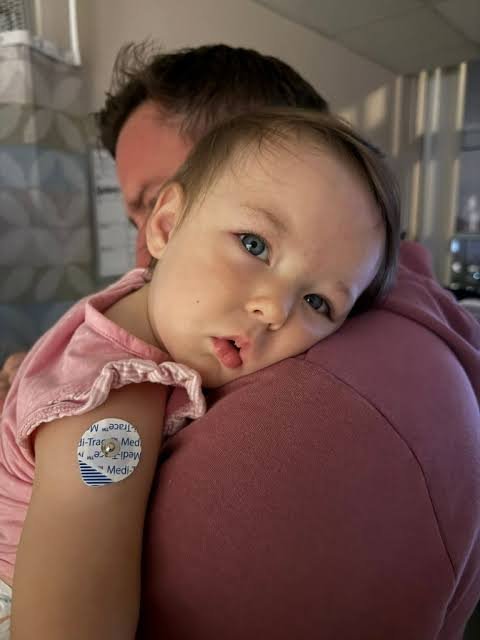
Brooklyn eventually returned home after spending days receiving intensive treatment.
Her recovery has been encouraging, but her parents remain concerned about the long-term effects of the illness.
She now requires medical follow-up, particularly because of the potential impact on her kidneys.
For Emily, the experience has also changed the way she approaches decisions about her children’s health.
She had believed she was researching alternatives and making what she thought was a careful choice.
Instead, she found herself sitting beside her young daughter in intensive care.
That experience has led her to warn other parents to carefully consider the risks associated with raw milk before giving it to young children.
Her message is not simply about one product.
It is about how quickly information shared online can influence decisions involving children — especially when claims about natural or alternative products appear alongside personal testimonials.
The case is still moving forward
The lawsuit brought by the two families against Baker and Moonlight Ridge remains ongoing.
Baker has rejected the allegations and said the farm will defend itself in court.
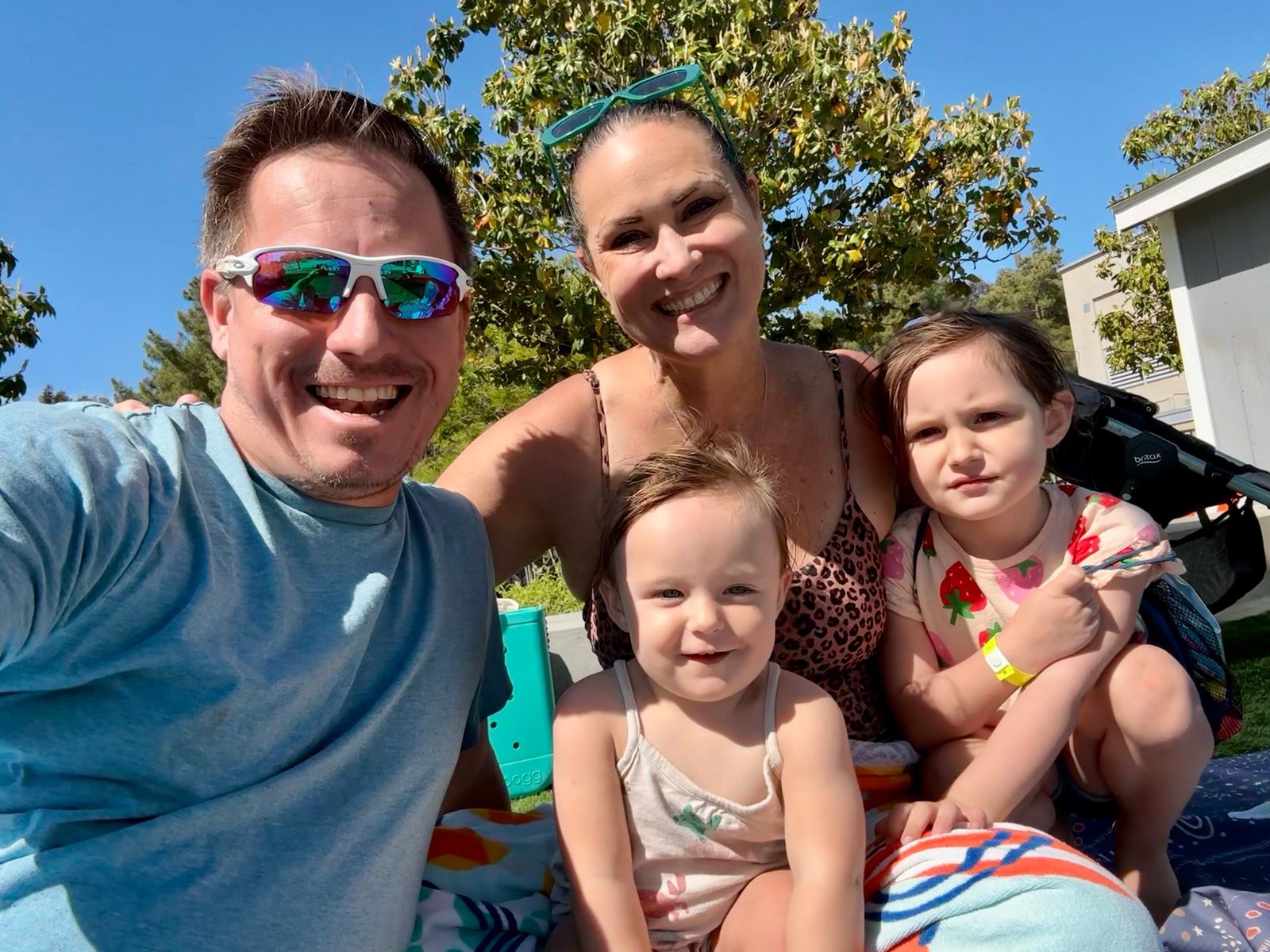
Meanwhile, Brooklyn continues to recover and receive medical monitoring.
For her family, the hope is that sharing what happened can help other parents recognize the potential risks before making similar decisions.
What began with a mother’s search for a solution to her daughter’s digestive problems eventually became a serious medical emergency involving intensive care, dialysis and a lengthy recovery.
Brooklyn’s story now serves as a reminder that something described as “natural” is not automatically risk-free — particularly when it comes to young children.
And for Emily, the most important part of telling the story is simple: she wants other families to have the information she wishes she had before she made the decision to give her daughter raw goat milk.