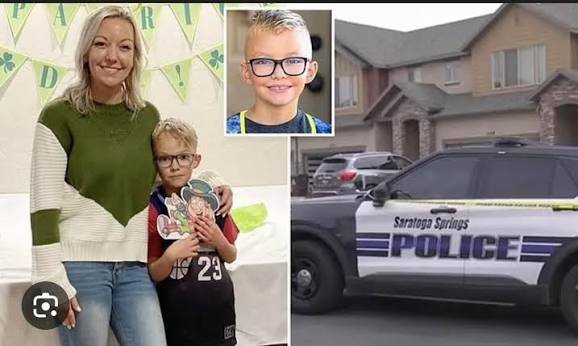
Nearly a year and a half after a mother and her 8-year-old son were found shot inside their Saratoga Springs home, a case that initially left investigators with more questions than answers has taken a dramatic turn.
A 16-year-old boy, who was 15 at the time of the killings, has now been formally charged with two counts of aggravated murder and obstruction of justice in connection with the deaths of his mother, 44-year-old Jessica Orton Lyman, and his 8-year-old half-brother, Eli Painter.
The teenager’s identity has not been released because he is being prosecuted in juvenile court. But prosecutors have already made clear that they intend to seek a far more serious legal path: transferring the case to adult district court.
The charges come after a lengthy investigation that involved dozens of search warrants, hundreds of pieces of evidence, interviews and extensive video and forensic analysis.
And according to the charging documents, investigators believe several pieces of evidence now connect the teenager to the shootings.
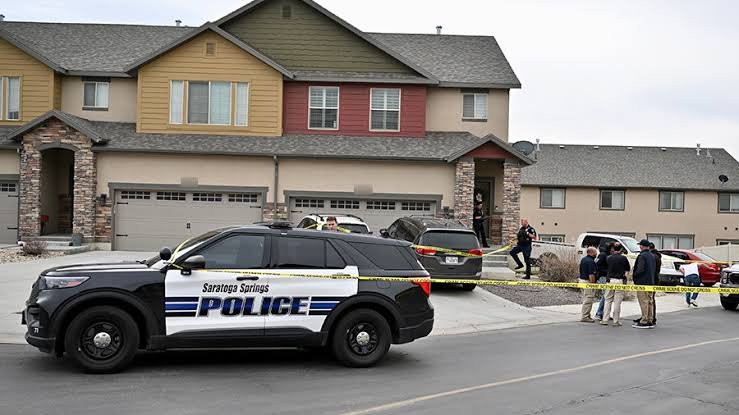
The case began on the morning of March 28, 2025, when Lyman’s teenage daughter returned to the family’s home on Willowbrook Lane in Saratoga Springs.
Inside the house, she discovered her mother and younger half-brother suffering from gunshot wounds.
Eli had been shot twice in the head and was pronounced dead at the scene. Jessica had been shot once in the head and was rushed to a hospital in critical condition. She survived for several more days before dying on March 31.
When officers arrived, the teenager was also inside the home.
According to prosecutors, he told investigators that he had been sleeping in his bedroom and had not heard the gunshots.
He also allegedly said he did not hear his sister’s frantic 911 call, despite the call taking place close to his bedroom, and did not hear emergency personnel entering the home.
At the time, the investigation did not immediately produce an arrest.
Instead, detectives spent the following months building a case and examining evidence that would eventually point investigators back toward the teenager.
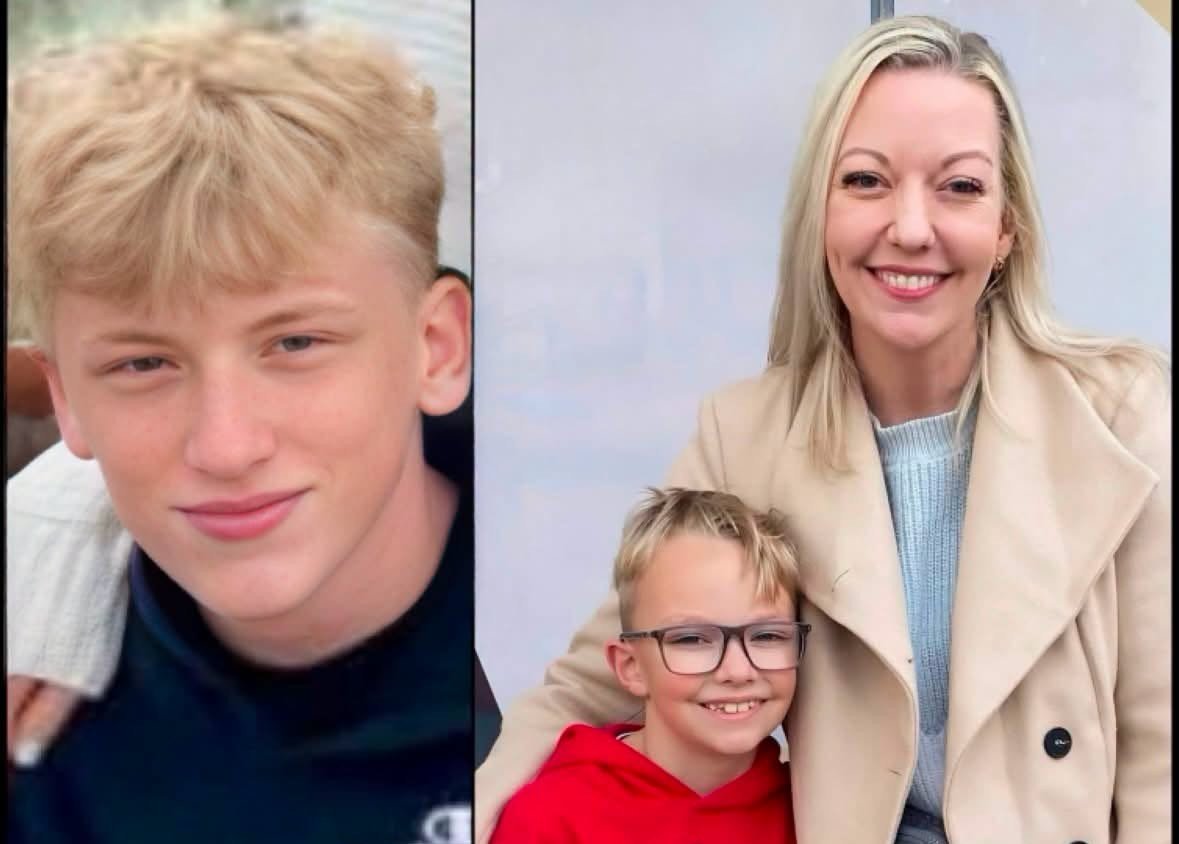
One of the most significant pieces of evidence came from a surveillance camera at a nearby home.
According to the charging documents, the recording captured what investigators described as an argument around 11:30 p.m. on March 27.
The voices were considered consistent with the teenager and members of his family.
Near midnight, a woman’s voice believed by investigators to be Jessica’s could be heard shouting, “What are you doing?”
Less than two minutes later, the recording captured three gunshots — one shot, followed by a short pause and then two shots in rapid succession.
The teenager later acknowledged to police that he and his mother had argued that night, according to prosecutors.
That surveillance recording became one of several pieces of evidence investigators continued examining as the case remained unsolved.
Then came evidence that prosecutors say placed the teenager even closer to the physical circumstances of the shooting.
Investigators documented scratches on his right shoulder.
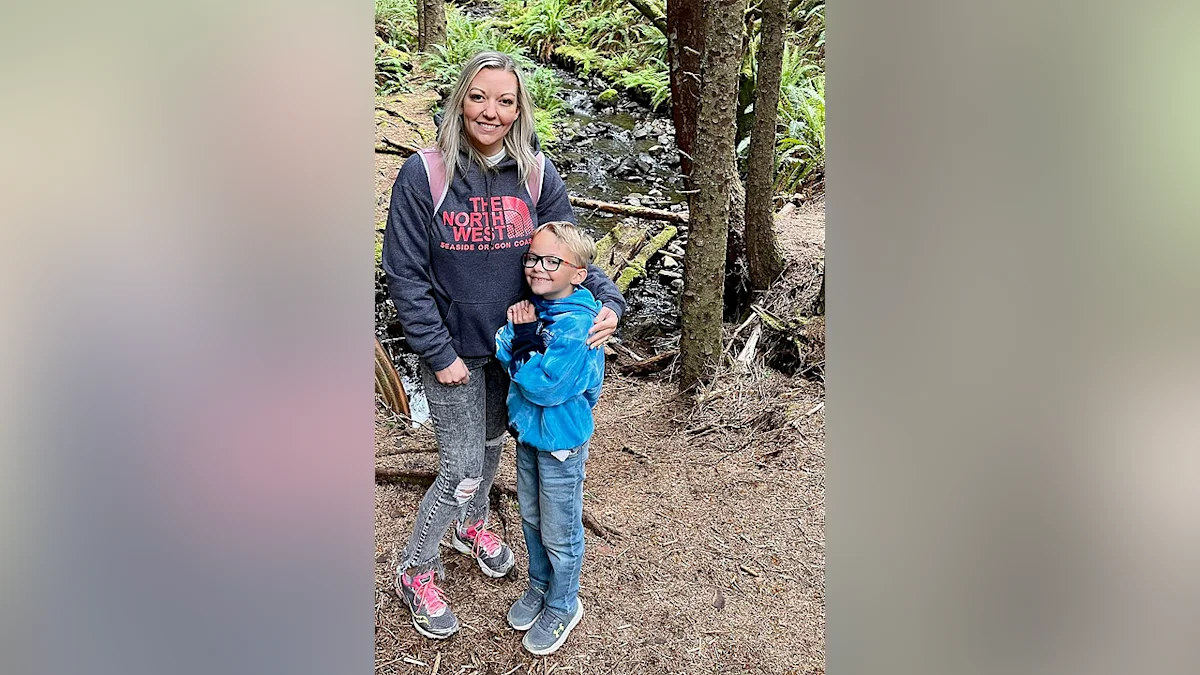
They also collected DNA evidence.
According to the charging documents, the teenager’s DNA was found beneath one of the victim’s fingernails and on the waistband of the shorts Jessica was wearing when she died.
Prosecutors also allege that biological material consistent with the teenager’s DNA was found in Jessica’s bed.
Another forensic finding involved gunshot residue.
Investigators say residue was discovered on multiple pieces of the teenager’s clothing, including clothing he was wearing on the morning the victims were found.
None of these findings, by themselves, constitutes a conviction. But prosecutors are presenting the evidence collectively as part of their probable-cause case against him.
The investigation also produced surveillance footage from the hours after the shooting.
Between approximately 2:34 a.m. and 2:59 a.m. on March 28, neighborhood cameras captured a masked person moving through the area.
According to the charging documents, the person’s height and build were consistent with the teenager.
Investigators also said the mask and some clothing appeared consistent with items known to have been worn by him.
Police believe the person’s movements and periods when the figure disappeared from camera view could have provided an opportunity to dispose of the firearm.
One possible area identified by investigators was the nearby Jordan River.
Months later, investigators acted on that possibility.
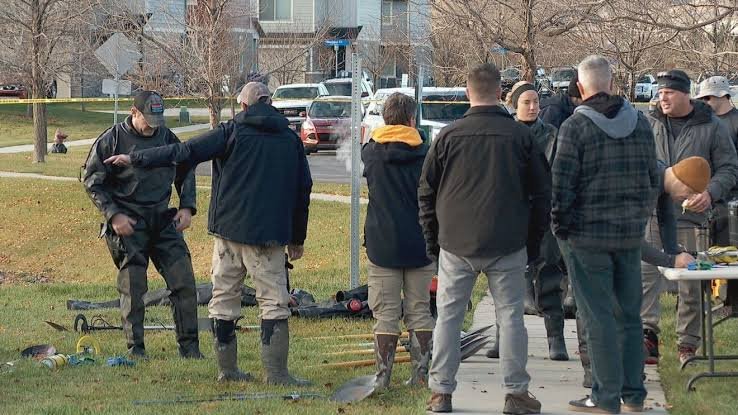
In November 2025, dive teams from the FBI and Saratoga Springs Police Department searched the Jordan River and surrounding areas for evidence.
Authorities did not publicly disclose exactly what they hoped to recover during the search. At the time, investigators had not recovered a firearm believed to be the murder weapon.
The investigation also uncovered material inside the teenager’s bedroom that raised additional questions.
Search warrants that were later unsealed showed that detectives had found handwritten notes referencing forensic evidence such as serology, DNA and firearm testing.
Another note reportedly contained the words:
“This is a murder story.”
The existence of those notes does not, by itself, establish when or why they were written. Prosecutors, however, have included the material among the evidence gathered during the investigation.
Investigators also reportedly found messages that reflected a deeply troubled relationship between the teenager and his mother. Those messages had already become part of the case when search warrants were unsealed during the earlier stages of the investigation.
For more than a year, however, the case remained without an arrest.
That changed in August 2026.
Saratoga Springs police announced that a 16-year-old had been arrested in connection with the double homicide after investigators spent approximately 17 months working through the evidence.
Police Chief Andrew Burton said the investigation required extensive time and attention, with detectives executing dozens of search warrants, collecting hundreds of items, conducting numerous interviews and reviewing large amounts of video and other records.
The arrest was followed by formal charges.
The teenager is accused of two counts of aggravated murder, both first-degree felonies, as well as obstruction of justice, a second-degree felony.
Utah County prosecutors are seeking to have him held without bail.
More importantly, prosecutors have stated that they intend to ask a juvenile court judge to move the case into adult district court.
That decision could dramatically change the potential consequences of the case.
Because the teenager was 15 when the alleged killings occurred, the case initially entered the juvenile court system.
If the case remains in juvenile court and he is ultimately convicted, the length and type of confinement would be governed by Utah’s juvenile system.
If the case is transferred to adult court and he is convicted of aggravated murder, prosecutors say the potential sentence is an indeterminate prison term of at least 25 years and potentially life in prison.
The question of whether the teenager will actually be tried as an adult has not yet been decided.
A juvenile court judge will ultimately have to determine whether the case should remain in the juvenile system or proceed in adult district court.
Legal experts cited by KUTV said that process can involve psychological evaluations, examination of the teenager’s personal and family history, and consideration of other factors before the court makes its decision.
For the family of Jessica and Eli, the arrest represents a major development after months of uncertainty.
Jessica was 44 when she died.
Eli was only 8.
Their deaths left relatives and investigators searching for answers while the case slowly developed behind the scenes.
The charging documents now provide a much more detailed account of what prosecutors believe happened that night, but they do not represent a final determination of guilt.
The teenager remains legally presumed innocent unless and until he is proven guilty in court.
There are also still unanswered questions.
Investigators have not publicly recovered the firearm believed to have been used in the killings.
The precise circumstances surrounding the alleged disposal of the weapon remain part of the case.
And perhaps the biggest legal question is still ahead: whether the teenager will face the consequences of the allegations in juvenile court or adult court.
For now, the case has moved from an unsolved double homicide to a formal prosecution built around surveillance footage, DNA evidence, gunshot residue, physical evidence, alleged statements and months of investigative work.
What began with a teenage girl returning to her family’s home and discovering her mother and little brother has now become one of the most closely watched criminal cases in Utah County.
The next major stage will not simply be about what investigators believe happened.
It will be about whether prosecutors can prove those allegations in court — and whether the juvenile court agrees that the case should proceed against the teenager as an adult.
Until then, the deaths of Jessica Lyman and Eli Painter remain the center of a case that took 17 months to reach its first major courtroom chapter.