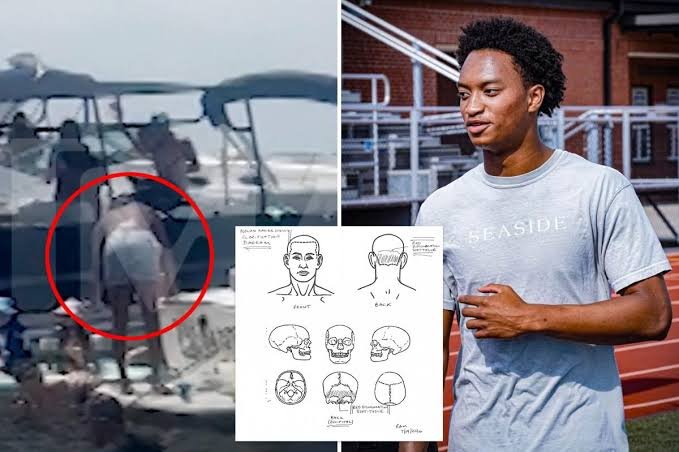
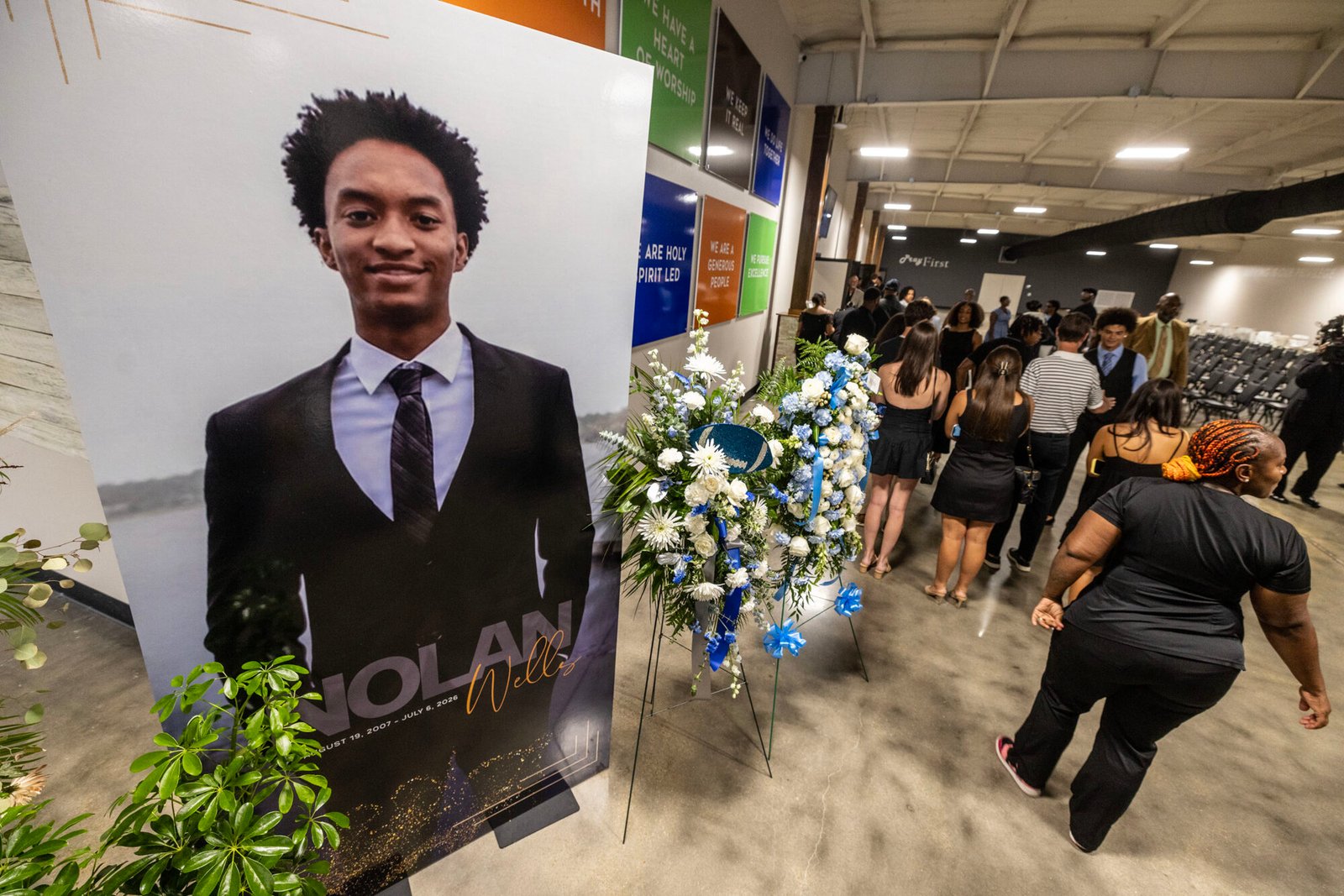
The investigation into the death of 18-year-old Nolan Xavier Wells continues to draw national attention as a second, independent autopsy has left the central question still unanswered: exactly how did the young college student die?
Wells was found dead on July 6 after disappearing during a Fourth of July trip to Horn Island, a barrier island off the Mississippi coast. He had traveled to the island with friends on July 4 but did not return with them. His body was discovered in the water two days later.
The initial investigation did not publicly identify evidence of foul play, and authorities initially suspected that Wells had drowned. His family, however, has continued to question that conclusion and has called for a more extensive and transparent investigation into the circumstances surrounding his disappearance and death.
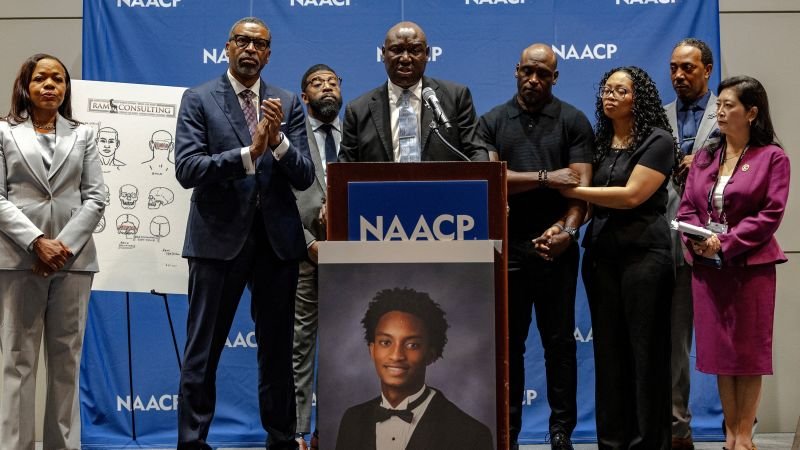
A private autopsy commissioned by Wells’ family has now provided additional information, but it has not produced the definitive answer his parents have been seeking. Instead, forensic pathologist Dr. Roger Mitchell classified both the cause and manner of death as “undetermined pending investigation.” The preliminary findings did not establish that Wells was murdered, but they also did not allow the independent pathologist to conclusively determine that his death was accidental.
The distinction is important. An undetermined autopsy does not mean that investigators have concluded a crime occurred. It means the available evidence was insufficient for the pathologist to establish a specific cause or manner of death. In Wells’ case, several factors limited what could be determined during the second examination, including decomposition and the fact that portions of the neck structures had already been retained during the original state autopsy.
According to the preliminary independent report, Wells’ body had undergone significant decomposition by the time it was examined privately. The condition of the remains made it more difficult for the forensic pathologist to identify injuries that might have been visible shortly after death. Decomposition can alter or obscure soft-tissue findings, making it particularly challenging to determine whether certain discolorations or other abnormalities resulted from injury, environmental exposure or natural postmortem changes.
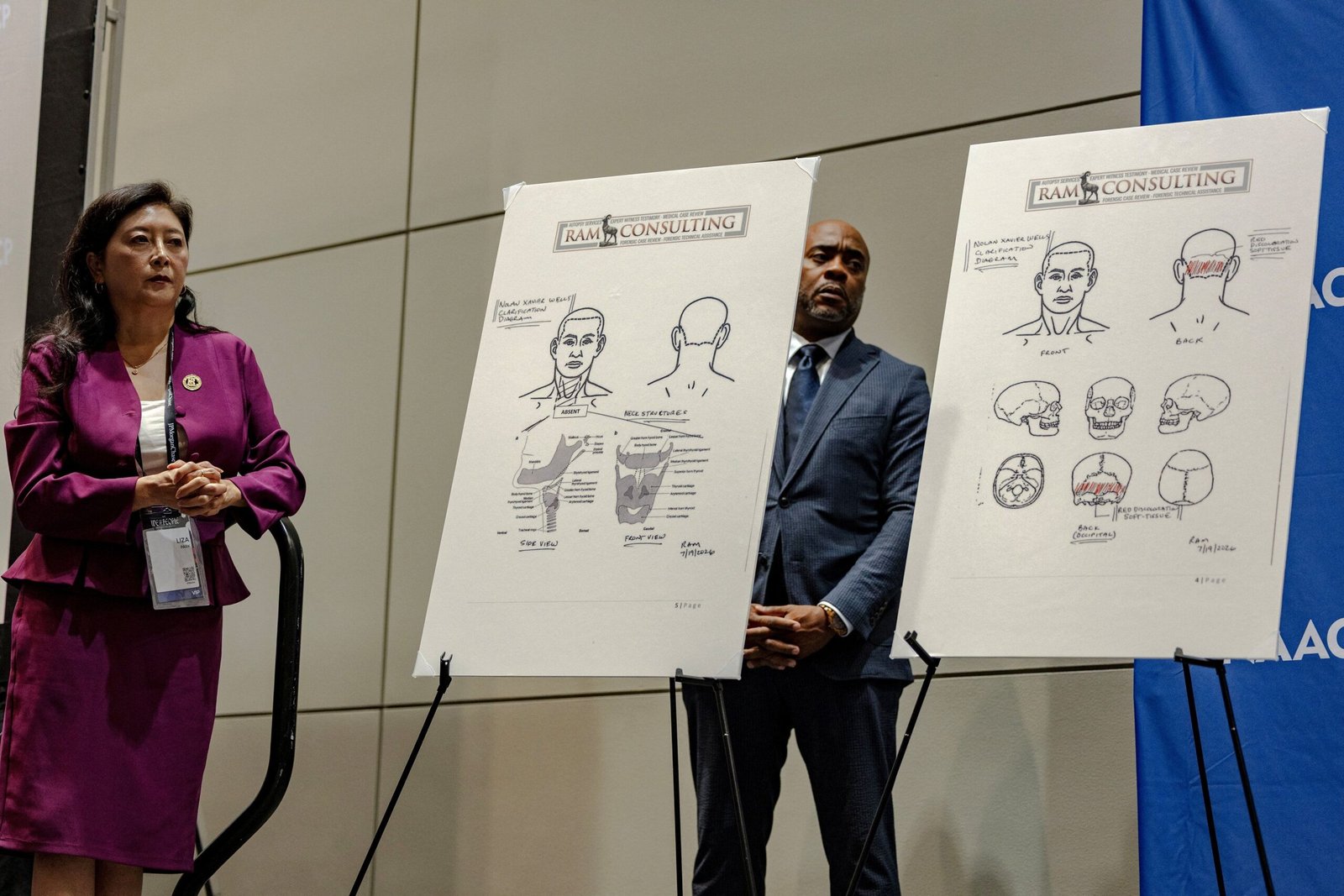
One of the findings that has received considerable attention is an area of red discoloration in the soft tissue at the back of Wells’ head. The preliminary report described the finding as inconclusive and said its origin could not be established. Importantly, the examination did not identify a skull fracture underneath the area or obvious deep-tissue injuries.
That finding has nevertheless prompted questions about whether additional investigation is necessary. Experts who were not involved in Wells’ examination have explained that discoloration in decomposed tissue can have several possible explanations. It could represent a postmortem or decompositional change, but depending on the circumstances, similar findings can sometimes be associated with blunt-force trauma. Without additional evidence, however, the discoloration alone cannot establish that Wells suffered an assault.
The independent examination also found no apparent fractures or major deep-tissue injuries. That is significant because it means the second autopsy did not identify an obvious catastrophic physical injury that could immediately explain Wells’ death.
But the absence of such injuries does not, by itself, establish drowning either.
Determining whether someone drowned can require examination of multiple forms of evidence, including the condition of the lungs and airways, toxicology, circumstances surrounding recovery of the body and information from the original autopsy. In Wells’ case, the independent pathologist said the available material was not sufficient to make that determination conclusively.
Another issue concerns the examination of Wells’ neck.
When the body was provided for the independent autopsy, certain anterior neck structures were not included. The preliminary report indicated that portions of the throat had been retained during the original examination by the Mississippi medical examiner. According to reporting on the autopsy, retaining such structures can be a normal part of forensic practice, particularly when investigators need to examine potential injuries involving the neck.
Because those structures were unavailable to the independent pathologist, however, he could not completely assess whether an injury to the neck contributed to Wells’ death. That limitation does not demonstrate that Wells suffered a neck injury. Rather, it means that the independent examination could not fully evaluate that possibility based on the material available to the pathologist.
This distinction has become particularly important as the family seeks answers.
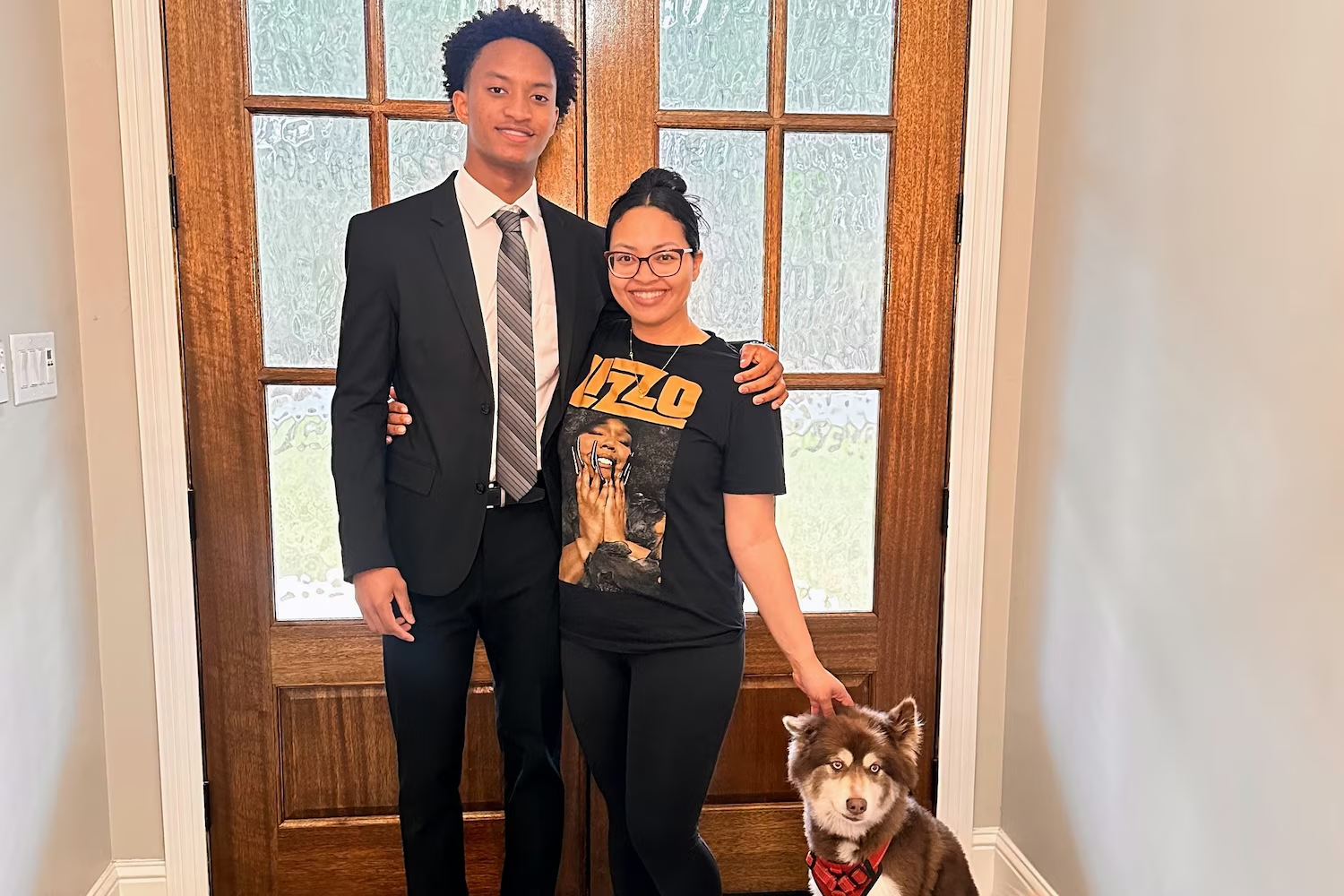
Wells’ parents, Christine Wonsley and Elmore Wonsley, have repeatedly questioned the circumstances surrounding their son’s final hours. Their concerns include the conflicting accounts about what happened on Horn Island, why Wells did not return to the mainland with his friends and why his cellphone was not found with him when his body was recovered.
The phone has emerged as another potentially important piece of evidence. It was reportedly recovered from a friend after Wells disappeared rather than being found with his body. His family believes the device could help establish what Wells was doing before his disappearance and potentially clarify the timeline of his final hours.
As of the latest reporting, however, the phone has not yet undergone the forensic examination the family wants. The family and the district attorney’s office have reportedly disagreed over how that examination should be conducted. Wells’ attorneys say they remain willing to participate in a joint forensic review and have discussed involving the Digital Forensics Lab at Mississippi Gulf Coast Community College and potentially the FBI.
That disagreement is separate from the medical findings, but it illustrates how many unanswered questions remain surrounding the case.
The official state autopsy also remains a critical piece of the investigation. Unlike the private examination commissioned by the family, the official autopsy was performed shortly after Wells’ body was recovered and is part of the state’s formal investigation. Its findings have not been publicly released.
Authorities have indicated that the official findings will be provided to a grand jury once the investigation is complete. A grand jury review does not necessarily mean prosecutors have concluded a homicide occurred; it is part of the legal process through which prosecutors can present evidence and determine whether criminal charges are warranted.
The timing of the two autopsies is also relevant.
Wells’ body was recovered on July 6. The official state autopsy was conducted shortly afterward, while the independent examination took place on July 10. By the time of the second examination, the body had undergone additional decomposition. The independent pathologist therefore had to interpret his findings within the limitations created by the passage of time and the earlier examination.
For that reason, the preliminary independent autopsy should not be viewed as a replacement for the official investigation. Instead, it provides another medical perspective while also identifying areas where additional evidence may be necessary.
The report’s most important conclusion may ultimately be what it does not say.
It does not say that Wells was murdered.
It does not say that he drowned.
It does not identify a person responsible for his death.
And it does not establish that the discoloration found on the back of his head was caused by an assault.
What it does establish is that the independent pathologist could not determine the cause and manner of death from the available evidence and that additional investigation is warranted.
That uncertainty has become the center of the debate surrounding the case.
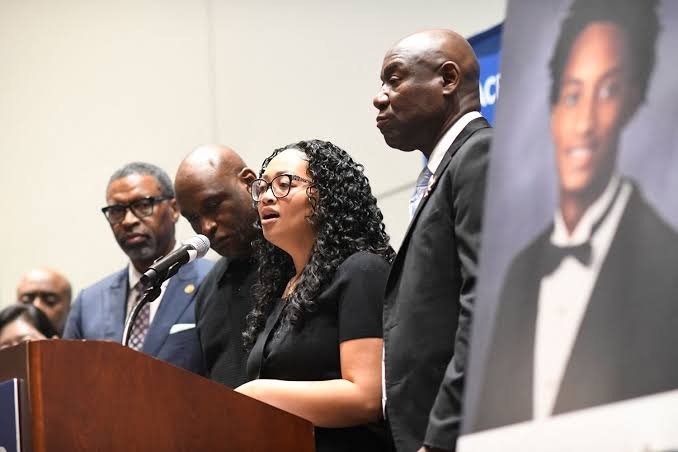
Wells’ family has argued that the circumstances deserve closer examination, particularly because of what they describe as inconsistencies in accounts of the July 4 trip. Civil rights attorney Ben Crump, who represents the family, has called for a full and transparent investigation and has been conducting a parallel inquiry.
The family’s concerns have attracted support from civil rights organizations and public figures, while the case has also generated significant public attention because Wells was Black and the friends who accompanied him were white. Advocates have called for transparency and accountability, while authorities have continued to stress that the investigation must be based on evidence rather than speculation.
That distinction is especially important as public discussion surrounding the case intensifies.
Social media has produced numerous theories about what might have happened to Wells, but those theories should not be confused with established evidence. The available medical findings do not currently provide a definitive explanation for his death, and no public finding has established that another person caused it.
At the same time, the preliminary autopsy results mean investigators cannot simply treat every question as resolved.
The red discoloration on the back of Wells’ head requires interpretation. The limitations surrounding the examination of his neck structures remain relevant. Toxicology and the official autopsy findings could provide additional information. His cellphone and digital records could potentially help reconstruct his movements and communications. Witness accounts and physical evidence from Horn Island may also be important in establishing what happened during the hours before he disappeared.
Together, those pieces could eventually provide a clearer picture.
For now, however, the case remains open.
The second autopsy has not delivered the definitive answer Wells’ parents hoped for. Instead, it has reinforced the fact that significant questions remain about his final hours and the precise circumstances of his death.
The next major developments could come from the official autopsy and toxicology results, the examination of Wells’ cellphone, additional witness information and the grand jury process. Each could potentially add information that is currently missing from the timeline.
For Wells’ family, the objective remains straightforward: they want to know what happened to their son.
They are not asking for speculation. They are asking for evidence, transparency and a complete accounting of the circumstances that led to the death of an 18-year-old college athlete whose life ended far from home.
Until the remaining evidence is examined and the official findings are released, the most accurate conclusion is also the simplest one: Nolan Wells’ cause and manner of death remain undetermined, and the investigation is continuing.
The independent autopsy has raised important questions, but it has not answered them. The red discoloration may ultimately prove significant, or it may have an explanation unrelated to trauma. The missing neck structures may limit what can be determined from the second examination, while the official investigation may contain information not yet publicly available.
What happens next will depend on whether investigators can connect those pieces of evidence into a reliable account of Wells’ final hours.
Until then, the circumstances surrounding his death remain unresolved.