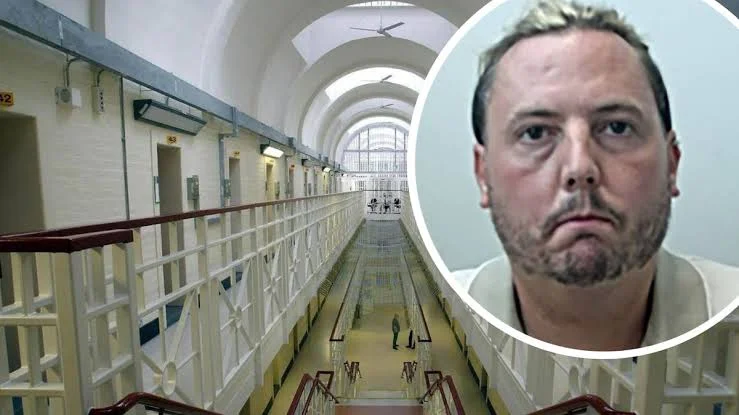
Jamie Varley has begun a new and very different chapter of his life behind the walls of HMP Wakefield, one of Britain’s highest-security prisons, after being sentenced to spend the rest of his life behind bars for the murder and abuse of his adopted son, 13-month-old Preston Davey.
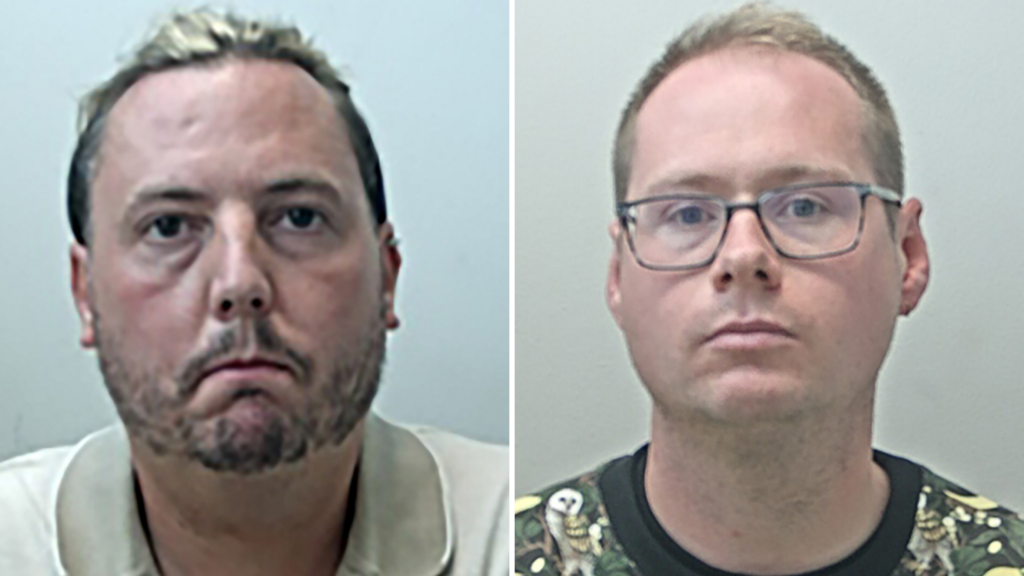
The former schoolteacher, who was 37 when he was sentenced, was handed a whole-life order at Preston Crown Court in June 2026. The sentence means that, under the terms imposed by the court, he will never become eligible for parole. His partner, John McGowan-Fazakerley, was sentenced separately to 25 years in prison after being convicted of offences including allowing the death of a child, child cruelty and sexual assault of a child.
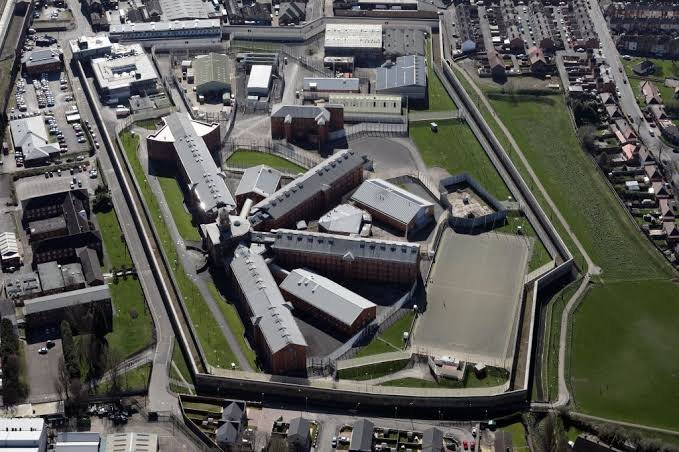
Varley’s transfer into the high-security prison system has attracted renewed attention because of the reputation of HMP Wakefield. The West Yorkshire prison is a Category A male prison and has long housed some of Britain’s most serious and high-risk offenders. The nickname “Monster Mansion” has become associated with the prison because of the number of notorious murderers and sex offenders held there.

But behind the sensational nickname is a highly controlled institution designed to manage prisoners considered to present the greatest risks to the public, themselves or others. Wakefield’s population includes prisoners serving life sentences and individuals convicted of some of the country’s most serious offences. The prison therefore operates under strict security procedures, with prisoners’ movements, associations and activities subject to close supervision.
Varley’s arrival comes after a deeply disturbing criminal case that shocked the Blackpool area and attracted national attention. Preston Davey had been placed with Varley and McGowan-Fazakerley as part of an adoption arrangement when he was nine months old. The baby had previously spent time with foster carers after being separated from his biological mother.
During the trial, prosecutors presented evidence that Preston suffered repeated physical and sexual abuse while living with the couple. Jurors heard that the child sustained numerous injuries during the months before his death, despite having been seen by a range of professionals.
On July 27, 2025, Preston was taken to hospital after becoming unresponsive. Varley claimed that the baby had been left in a bath and was later discovered submerged. Medical evidence presented during the trial did not support that explanation.
Doctors attempted to save Preston for approximately 50 minutes, but he could not be revived.
A post-mortem examination concluded that the child’s death resulted from an acute obstruction of his upper airways, with the pathologist indicating that smothering or an object or objects being placed in the child’s mouth were possibilities. Prosecutors argued that the evidence was consistent with deliberate violence rather than an accidental drowning.
The investigation subsequently uncovered disturbing material on Varley’s phone, including photographs and videos that prosecutors said documented the abuse of Preston. Those discoveries became central to the prosecution case and helped establish the scale and nature of the violence inflicted upon the child.
The jury ultimately found Varley guilty of murder and multiple other offences connected with the abuse of Preston. McGowan-Fazakerley was also convicted of serious offences relating to the child’s death and abuse.
When sentencing Varley, the judge imposed the most severe sentence available in the circumstances: a whole-life order. The ruling means there is no ordinary prospect of Varley being released on licence after serving a minimum term. His imprisonment is intended to last for the remainder of his natural life.
His move into HMP Wakefield has therefore taken place against the background of an unusually serious conviction and an exceptionally long sentence.
Reports surrounding Varley’s early days in custody have described him as fearful and struggling to adjust to prison life. Some media reports have claimed that he has been kept under heightened observation and has been reluctant to leave his cell. These reports have largely relied on unnamed prison sources, however, and the Ministry of Justice has not publicly confirmed every detail about Varley’s current custodial conditions.
That distinction is important. Information about individual prisoners’ daily routines, security arrangements and mental state is generally not made public by the Prison Service, particularly when the prisoner is being managed under high-security conditions.
What is known is that HMP Wakefield is designed for prisoners requiring a very high level of security. The prison is classified as Category A, the highest security category in the English prison system. Prisoners in this category are considered to pose a particularly serious risk and are subject to restrictions intended to prevent escape and protect the public.
Wakefield has a long history and has been used to hold some of Britain’s most notorious criminals. Its population has included convicted murderers, serious sex offenders and other high-risk prisoners. That history is one reason the prison has developed its grim nickname.
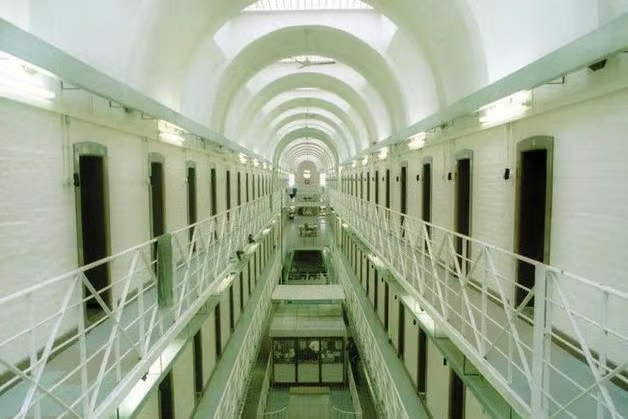
The institution itself is not simply a place where prisoners are locked away. Like other prisons operated by His Majesty’s Prison and Probation Service, it has systems intended to manage prisoners’ welfare, security, rehabilitation and daily needs. Cells, residential units, healthcare services, exercise facilities and controlled association areas form part of the prison environment.
For a prisoner serving a whole-life sentence, however, the psychological reality can be very different from that of someone who expects to return to society.
Varley now knows that his future is confined to prison.
There is no scheduled release date waiting at the end of his sentence and no normal parole hearing at which he can seek release. The whole-life order means the court has determined that the seriousness of his crimes requires him to remain imprisoned for life.
His partner’s sentence is different. McGowan-Fazakerley received a 25-year prison sentence, although the precise circumstances of any eventual release will depend on the terms of his sentence and the relevant prison and parole rules.
The case has also raised wider questions about child safeguarding.
One of the most troubling aspects of the prosecution was that Preston had been seen by multiple professionals before his death. The child was reportedly taken to hospital on several occasions, including after suffering serious injuries. Yet the concerns that might have prevented the tragedy were not identified in time to protect him.
Following Preston’s death and the conclusion of the criminal proceedings, an independent child safeguarding practice review was set to examine the involvement of agencies responsible for his welfare. The review is intended to look at how the system responded to the information available before his death and whether opportunities to protect the child were missed.
That examination is separate from the criminal proceedings against Varley and McGowan-Fazakerley. Its purpose is not to determine criminal guilt, but to understand how professionals and safeguarding systems responded to the warning signs surrounding Preston’s care.
Preston’s former foster carers have also spoken publicly about the little boy they knew before he was placed with Varley and McGowan-Fazakerley. They remembered him as a happy, affectionate child whose personality and laughter made a lasting impression on them.
Their accounts have provided an especially painful contrast to the evidence heard during the murder trial. They described a child who had been thriving in foster care before entering the adoption process, while prosecutors later presented evidence showing that his final months were marked by severe abuse.
For the people who loved Preston, the sentencing of Varley provided an important measure of justice, but it could not undo what happened to the child.
The case also generated public anger because Varley had worked as a teacher and held a position of responsibility around young people. Prosecutors argued that his professional background and outward presentation concealed what was happening inside his home.
Following the conviction, Lancashire Police described the crimes in exceptionally strong terms and praised investigators for uncovering the evidence that ultimately led to the convictions.
The police investigation was extensive. Detectives examined digital devices, interviewed witnesses, reviewed medical evidence and reconstructed the circumstances surrounding Preston’s death. The evidence gathered from Varley’s phone proved particularly significant because it helped prosecutors demonstrate a pattern of abuse rather than an isolated incident.
The court heard that Varley attempted to portray Preston’s death as an accident involving a bath. But the medical evidence and other evidence presented at trial contradicted important parts of that account.
The jury was ultimately convinced beyond the criminal standard of proof that Varley was responsible for Preston’s murder.
His arrival at Wakefield now represents the final stage of a case that began with the death of a vulnerable child and ended with one of the harshest sentences available under English law.
HMP Wakefield itself has also faced scrutiny over conditions inside the prison. Previous inspections have raised concerns about violence, safety and the management of prisoners. The prison has experienced serious incidents involving inmates, including the fatal stabbing of former Lostprophets frontman Ian Watkins in October 2025.
Watkins’ death received national attention and led to renewed discussion about security inside high-risk prisons. Another prisoner, Kyle Bevan, was subsequently found dead at Wakefield in November 2025. These incidents have contributed to the prison’s reputation as a particularly difficult environment for notorious offenders.
However, the existence of violence inside a prison does not mean that every prisoner arriving at Wakefield will inevitably be attacked. Prison authorities have systems for assessing risks and separating prisoners when necessary. Decisions about where a prisoner is housed and how closely he is monitored are based on individual risk assessments and security considerations.
Reports that Varley is living in fear therefore need to be treated carefully. While some media outlets have cited sources describing him as frightened or vulnerable, his precise current circumstances have not been publicly confirmed by prison authorities.
What is certain is that Varley’s life has changed dramatically.
Before his arrest, he was a teacher and was living with his partner while pursuing the adoption of a young child. Today he is a convicted murderer serving a whole-life sentence in a Category A prison.
There is no ordinary route back to the life he once had.
His case will also continue to have consequences beyond his own imprisonment. The safeguarding review into Preston’s care is expected to examine whether professionals could have recognized the danger earlier. That process may eventually produce recommendations designed to prevent similar failures in the future.
For Preston’s biological family and former foster carers, those answers may be nearly as important as the criminal convictions themselves. They want to understand how a child who had been known to healthcare and social-care professionals could suffer repeated injuries without the system intervening effectively enough to save him.
The tragedy has therefore become more than a murder case. It is also a case about trust, professional responsibility and the protection of vulnerable children.
Inside Wakefield, Varley now faces the consequences of the convictions handed down at Preston Crown Court. Outside the prison, the focus will increasingly turn toward the safeguarding review and the lessons that can be learned from Preston’s short life.
The nickname “Monster Mansion” may dominate headlines about HMP Wakefield, but the more important story is what the prison represents for someone serving a whole-life order: permanent confinement, strict security and a future defined by the sentence imposed by the court.
For Jamie Varley, there is no expected return to ordinary life.
For Preston Davey, the justice delivered in court cannot bring back the life he should have had.
And for those who cared for the little boy, the remaining question is not simply how his killer will spend the rest of his life, but why the systems designed to protect Preston failed to keep him safe.