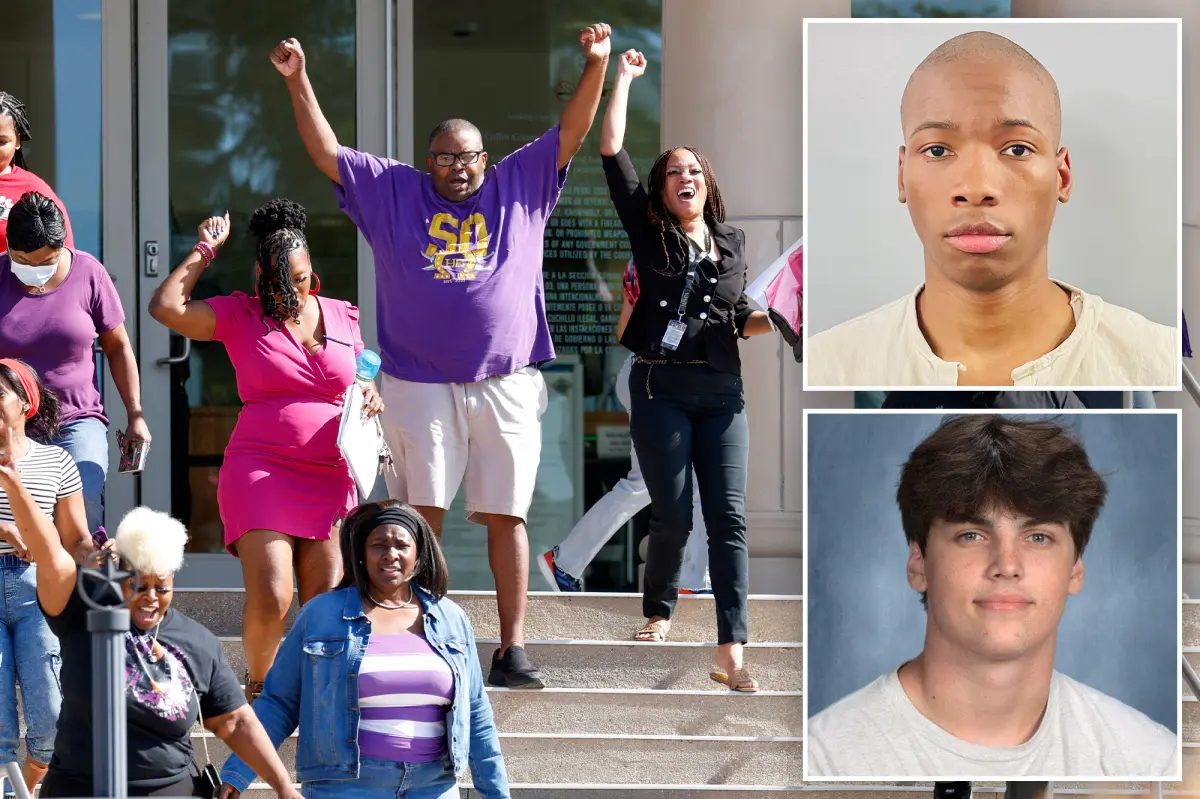
The legal battle surrounding Karmelo Anthony has taken a dramatic new turn after prosecutors disclosed a collection of previously withheld evidence that was never presented to the jury during his murder trial, including disturbing text messages, allegations involving an ex-girlfriend and information about Anthony’s interest in violence and weapons. The revelations emerged during a hearing on Anthony’s request for a new trial, adding another layer of complexity to a case that has already generated intense national attention and sharp debate over race, self-defense and the fairness of the original proceedings.
Anthony, now 19, was convicted in June of murdering 17-year-old Austin Metcalf after a confrontation at a high school track meet in Frisco, Texas, in April 2025. A Collin County jury rejected Anthony’s claim of self-defense and found him guilty of murder after several days of testimony. He was subsequently sentenced to 35 years in prison. Anthony has maintained that he acted in self-defense, while prosecutors have argued that he initiated the confrontation and ultimately used a knife against Metcalf during the dispute.
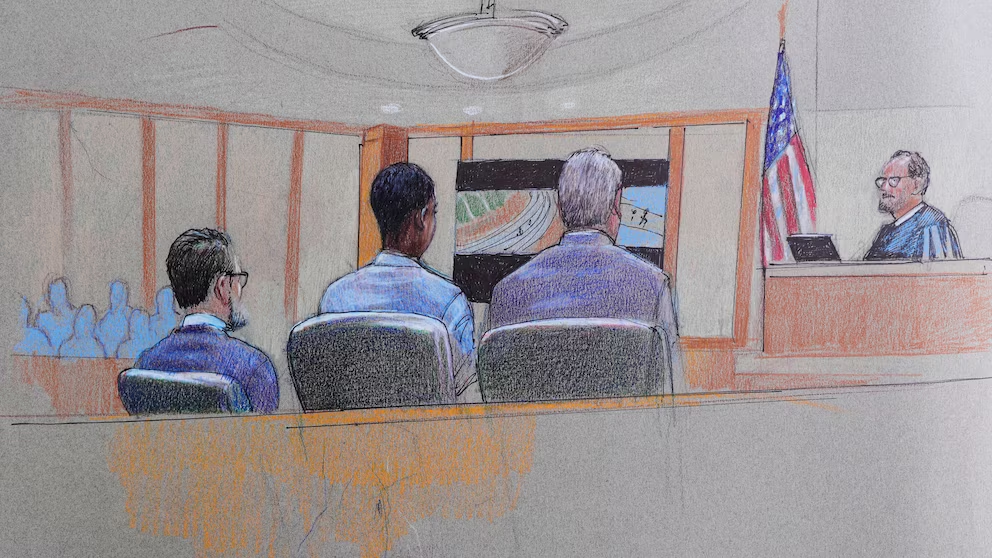
The latest revelations do not represent a new conviction or a new criminal charge against Anthony. Instead, they are part of an ongoing legal fight over whether the original trial was conducted fairly enough for the conviction to stand. Anthony’s new attorneys are asking the court to grant him a new trial, arguing that significant information was excluded from the proceedings and that a series of procedural decisions limited the defense’s ability to present its case.
At the center of the latest hearing is an informal understanding reached between the prosecution and defense before the original trial. The agreement was intended to prevent the courtroom from becoming consumed by the personal histories and controversial backgrounds of both Anthony and Metcalf. The two sides agreed to concentrate on what happened during the confrontation at the track meet rather than introduce extensive character evidence about the teenagers and their families.
That agreement meant jurors did not hear a large amount of potentially inflammatory information about either teenager.
According to prosecutors, some of the material that was kept out concerned Anthony’s behavior before the fatal encounter. During the recent hearing, Assistant Collin County District Attorney Bill Wirskye described evidence involving Anthony’s former girlfriend, Valerie Perez. Prosecutors said Perez had reported Anthony for stalking and had expressed concern about his behavior after their relationship ended.
The hearing also brought attention to text messages allegedly sent by Anthony shortly before the April 2025 confrontation. Prosecutors described messages in which he reportedly discussed violence and knives. One message sent to Perez on the morning of the fatal encounter included a photograph of a knife, according to evidence described in court.
Prosecutors also presented allegations that Anthony had previously expressed an interest in stabbing someone and described violent fantasies. Those claims are among the most disturbing pieces of evidence now being discussed publicly, but it is important to understand their legal context: the jury that convicted Anthony did not hear this material during the original murder trial.
The prosecution’s decision to reveal the evidence during the current proceedings does not mean that the evidence has already been accepted as proof that Anthony intentionally killed Metcalf. The purpose of the hearing is different. The judge is considering whether the circumstances surrounding the original trial justify granting Anthony another opportunity to present his case.
The prosecution maintains that Anthony’s conviction was supported by the evidence that was properly admitted at trial and that the defense’s current claims about the proceedings do not accurately reflect what occurred in court.
Collin County District Attorney Greg Willis has previously argued that the official trial transcript contradicts several allegations made by Anthony’s former defense attorney. In particular, Willis has disputed claims that the defense was prevented from adequately preparing Anthony’s decision about whether to testify.
According to court records reviewed by CBS Texas, Anthony was given an opportunity to consult with his lawyers and family before deciding whether to take the witness stand. He ultimately chose not to testify. The prosecution has therefore argued that the decision was Anthony’s and that the record does not support claims that he was improperly prevented from testifying.
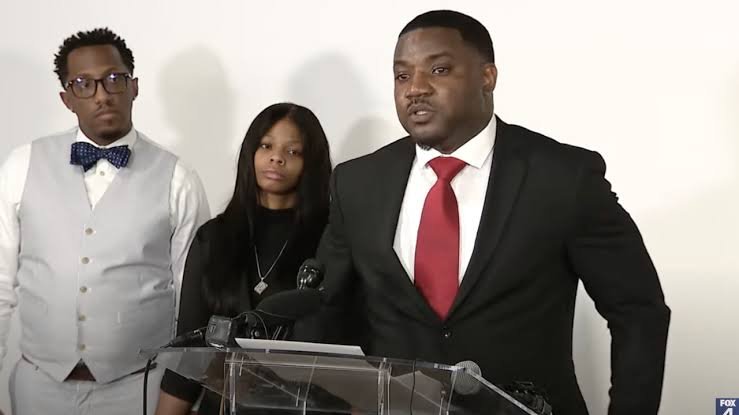
The dispute over the withheld evidence is nevertheless significant because both sides now acknowledge that the informal agreement affected what the jury heard.
The original agreement was designed in part to prevent the trial from becoming a wider confrontation over race and personal history. Anthony is Black, while Metcalf was white, and the case had already attracted enormous attention before the trial began. Both families received intense public scrutiny, and racial tensions surrounding the case became a major feature of public discussion.
The agreement also meant that evidence potentially damaging to Metcalf was not placed before the jury.
Among the information prosecutors agreed not to introduce was material concerning Metcalf’s own history, including allegations involving racist graffiti and other juvenile misconduct. The decision to keep that information away from jurors was intended to prevent the trial from turning into a contest over which teenager had the more troubling background.
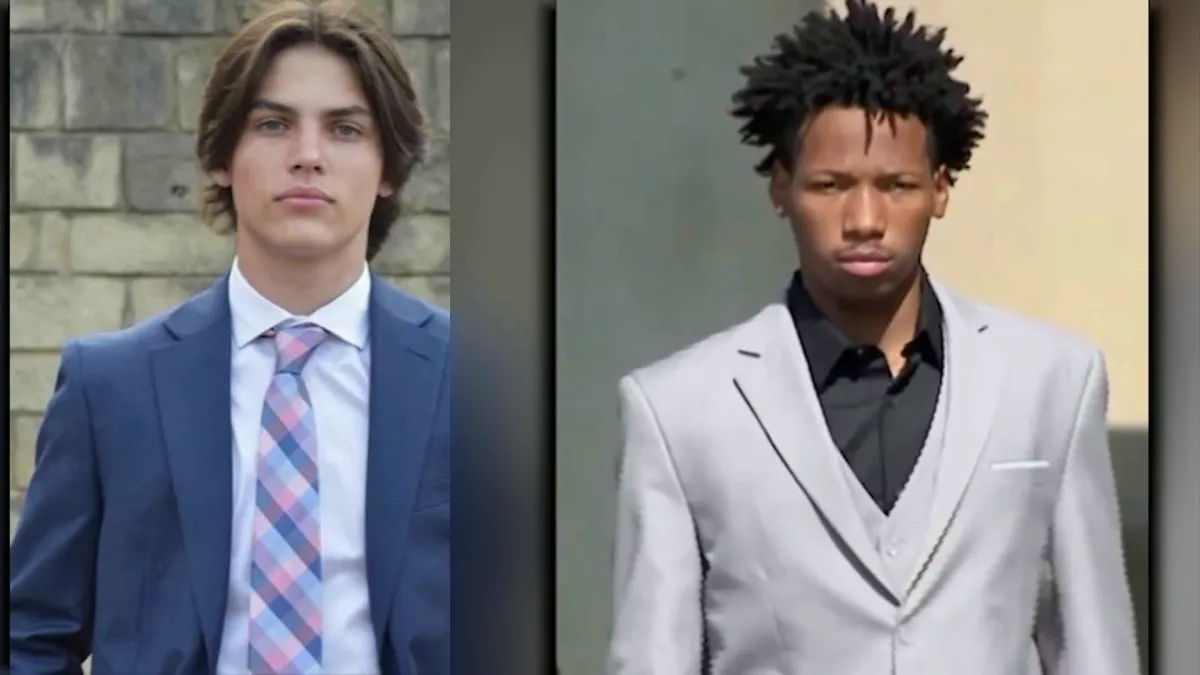
That decision is now at the heart of an unusual legal situation.
Anthony’s defense argues that the exclusion of important background evidence deprived him of a fair trial. His attorneys contend that the jury did not receive information that could have affected how it viewed the confrontation and Anthony’s claim that he acted in self-defense.
Prosecutors counter that the evidence excluded under the agreement was not necessary to determine what happened under the tent at the track meet. They argue that the jury heard sufficient testimony and physical evidence to reach its verdict and that the conviction should remain intact.
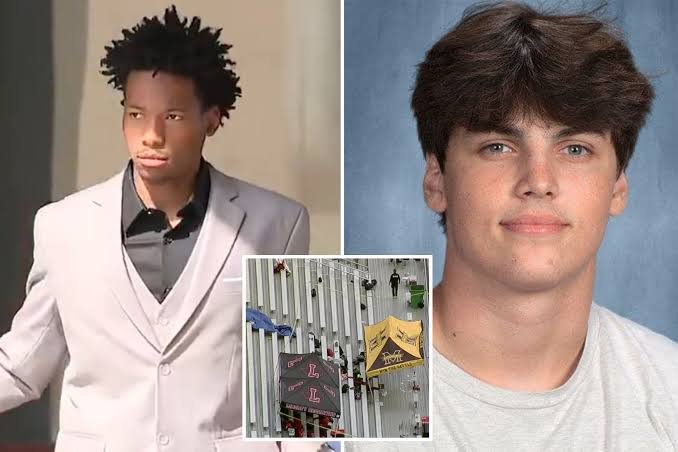
The original incident occurred on April 2, 2025, at Kuykendall Stadium in Frisco, where students had gathered for a high school track meet. Anthony and Metcalf did not attend the same school and were not known to have a prior relationship.
According to testimony presented at trial, Anthony entered an area beneath a tent that Metcalf and his teammates were using. Metcalf confronted him and told him to leave. The interaction escalated into a physical confrontation. Anthony ultimately pulled a knife and stabbed Metcalf in the chest.
Metcalf was taken to a hospital, where he died from his injuries.
Anthony was arrested and charged with murder. His defense argued that he believed he was in danger and that the stabbing was an act of self-defense. Prosecutors presented a different interpretation, arguing that Anthony was the aggressor and that the force used against Metcalf was not legally justified.
After deliberating for approximately three hours, the jury found Anthony guilty of murder. He was later sentenced to 35 years in prison.
Evidence from that original trial was eventually released publicly after the proceedings ended. The public was able to see photographs and video evidence that had not previously been available because cameras were prohibited inside the courtroom. The released material included surveillance footage showing events surrounding the stabbing and footage of Anthony’s arrest, as well as photographs of the knife prosecutors identified as the weapon used in the killing.
The current appeal is taking place under very different circumstances.
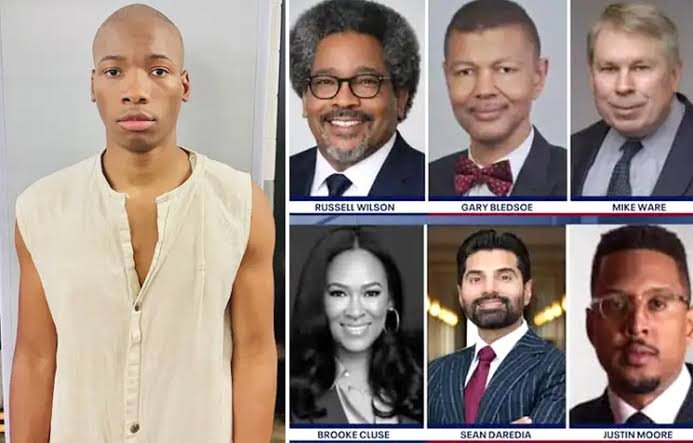
Anthony now has a new legal team that includes prominent attorneys who have agreed to represent him in his effort to obtain a new trial. His lawyers have challenged several aspects of the original proceedings, including the handling of evidence, courtroom procedures and the conduct of the judge who presided over the trial.
That judge, John Roach Jr., was recently removed from the appeal process.
The decision came after Anthony’s attorneys sought Roach’s recusal, arguing that comments he made after the trial raised questions about his impartiality. Roach had publicly discussed the verdict and expressed support for the jury’s decision. Anthony’s lawyers argued that those comments created an appearance that the judge had already formed a view about the case.
A visiting judge, Sid Harle, ultimately granted the recusal request. Retired Judge Michael Chitty was assigned to handle the proceedings concerning Anthony’s request for a new trial.
The change in judges represents an important procedural development, but it does not mean Anthony has won a new trial. The new judge must still determine whether the legal arguments presented by the defense meet the requirements for overturning the original proceedings.
The defense has argued that the original trial contained multiple problems that collectively prevented Anthony from receiving a fair hearing. One of its major arguments involves the informal agreement concerning character evidence. Another concerns the way certain hearings were conducted and the degree of public access to proceedings before the trial.
The prosecution strongly disputes those claims.
District Attorney Greg Willis has said that the official court record provides a substantially different picture from the allegations made by Anthony’s former lawyer. Prosecutors maintain that both sides participated in the decisions that shaped the trial and that the defense was not prevented from presenting a legitimate self-defense case.
That disagreement is likely to remain central as Judge Chitty evaluates the request for a new trial.
The newly revealed evidence also raises questions about how much a jury should be allowed to know about a defendant’s past when determining whether a person acted in self-defense. Evidence of previous threats or disturbing behavior can be emotionally powerful, but courts generally impose strict rules governing when such information can be introduced. The fact that evidence is troubling does not automatically mean it is legally admissible or that it proves a defendant committed the charged offense.
The same principle applies to the allegations concerning Metcalf.
Information about Metcalf’s alleged prior misconduct was not presented to the jury during the original trial. Although such information may now be discussed publicly, it does not establish that Metcalf was responsible for the confrontation that led to his death, nor does it automatically prove Anthony’s self-defense claim.
Ultimately, the legal question is not which teenager had the more disturbing background. The question is whether the evidence and procedures used in Anthony’s trial satisfied the requirements of a fair criminal proceeding.
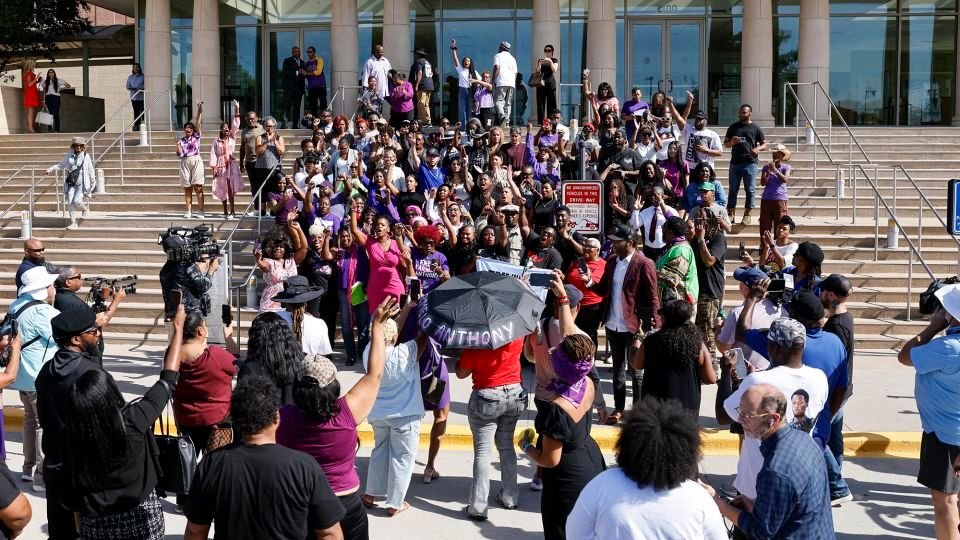
The case has also remained deeply connected to broader questions about race. Anthony’s supporters have argued that racial dynamics influenced the public reaction to the case and the handling of the proceedings. Critics have rejected that interpretation and emphasized the facts surrounding the stabbing and the jury’s verdict.
Those competing narratives have made the case exceptionally polarizing.
The families of both teenagers have faced intense public attention, online harassment and threats. The controversy has extended far beyond the courtroom, with social media users frequently presenting theories and accusations that go beyond what has been established in court.
That environment is one reason prosecutors originally agreed to limit the introduction of inflammatory personal history. They wanted the jury to concentrate on the events that occurred at the track meet rather than become influenced by unrelated allegations about either teenager.
Now, however, the same agreement has become one of the central issues in Anthony’s effort to secure a new trial.
The hearing also provides the public with a more complete picture of the information prosecutors possessed before the original trial. Some of the evidence described this week was known to investigators long before the jury reached its verdict but was intentionally kept out of the trial under the agreement.
Whether that decision was legally appropriate is now for the court to determine.
The new evidence does not erase the original jury’s verdict. Anthony remains convicted of murder and remains under a 35-year prison sentence unless a court changes that outcome. His request for a new trial is still pending.
At the same time, the recusal of the original judge and the presentation of previously undisclosed evidence have ensured that the case is far from finished.
For the Metcalf family, the legal proceedings reopen painful memories of the death of a 17-year-old son who was killed during what had begun as an ordinary school sporting event. For Anthony’s family, the appeal represents an opportunity to challenge a conviction they believe was reached through an unfair process.
The latest hearing therefore does not simply revisit the question of what happened in April 2025. It asks whether the original jury had the information and legal framework necessary to make its decision and whether the trial itself met the standards required by law.
The court will ultimately have to decide whether those concerns are serious enough to justify starting the case over.
For now, Karmelo Anthony remains convicted of Austin Metcalf’s murder, and no new trial has been granted. The newly disclosed texts and allegations about Anthony’s past are part of the ongoing legal argument, not a replacement for the evidence already considered by the jury.
What happens next could determine whether the 2026 conviction remains the final word in one of Texas’ most closely watched criminal cases or whether Anthony will receive another trial in which the circumstances surrounding the original proceedings are examined once again.