The death of 7-year-old Nia Williams in Riviera Beach has developed into a major criminal case, with her mother facing a first-degree murder charge and prosecutors seeking the death penalty.
The investigation began on April 28, 2025, when emergency responders were called to a home on West 15th Street after Nia was found unresponsive.
She was taken to St. Mary’s Medical Center, where she later died.
What initially appeared to be the sudden death of a child soon became a homicide investigation.
An autopsy found that Nia had suffered severe blunt-force trauma to her abdomen, including a lacerated liver and internal bleeding. Investigators also determined that earlier claims that medication may have contributed to her condition were not supported by toxicology results. Her death was ultimately ruled a homicide.
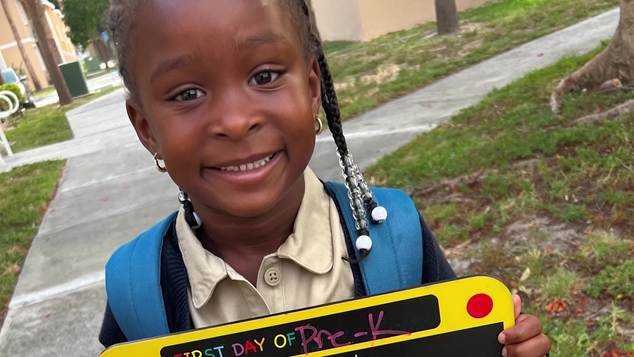
Two months later, a Palm Beach County grand jury indicted her mother, Naikishia L. Williams, on first-degree murder and aggravated child abuse charges.
Williams was arrested in June 2025 and remains held in the Palm Beach County Jail without bond, according to prosecutors and local reporting.
But the investigation did not end with the arrest.
Instead, investigators began uncovering allegations of years of abuse and neglect involving Nia and her siblings — raising difficult questions about what happened inside the family home and whether warning signs had been missed before the girl’s death.
A child already known to caregivers and authorities
According to Riviera Beach police, investigators discovered evidence suggesting that Nia’s death did not occur in isolation.
Former caregivers Rebecca Finley and Whytni Walker told investigators that they had cared for Nia and some of her siblings at different points and had previously raised concerns about the children’s safety.

Police said medical records showed that Nia had suffered previous injuries, including trauma-related fractures and burns.
Investigators also interviewed teachers, nurses, family members and Nia’s siblings as they attempted to reconstruct the circumstances leading up to her death.
According to police, Nia’s siblings described punishments allegedly involving objects such as belts, metal pipes and high-heeled shoes.
Investigators further said the children described Nia experiencing severe stomach pain and vomiting during the days before her death after allegedly being stomped on by her mother.
Those allegations have not been proven in court, but they became part of the evidence investigators cited as they built the case against Williams.
One of the most significant questions surrounding the case involves the family’s previous contact with Florida’s child-protection system.
Police said a Department of Children and Families report dated April 2 — less than a month before Nia died — documented visible injuries involving Nia and other children.
Former caregivers had also raised concerns about the children.

Yet Nia remained in her mother’s custody.
After Nia’s death, questions grew about whether authorities had been given enough warning to intervene.
The Department of Children and Families has declined to discuss the specifics of the case, citing confidentiality requirements surrounding child-protection investigations.
The final days before Nia’s death
Investigators say Nia’s condition deteriorated in the days leading up to April 28.
According to the police account, her siblings described severe abdominal pain and vomiting following an alleged assault.
Then, on the evening of April 28, someone inside the home called for emergency assistance.
Officers arrived at approximately 8:01 p.m. and found Nia unresponsive.
Paramedics transported her to St. Mary’s Medical Center, but doctors were unable to save her.
She was pronounced dead later that night.

The autopsy subsequently provided investigators with a critical piece of evidence.
Rather than a medical condition or medication being responsible for her death, the medical examiner determined that Nia had sustained fatal blunt-force injuries.
The injuries included damage to her liver and internal bleeding.
That finding transformed the investigation into a homicide case.
The case against Naikishia Williams
A Palm Beach County grand jury later indicted Williams for first-degree murder.
The indictment alleged that Nia’s death involved premeditated intent and blunt-force trauma to the abdomen. Williams was also charged with aggravated child abuse.
Williams has not been convicted.
The allegations against her will have to be tested through the court process.
But prosecutors have already taken the case one step further than an ordinary murder prosecution.
In August 2025, the Palm Beach County State Attorney’s Office filed a formal notice of intent to seek the death penalty if Williams is convicted.
Prosecutors cited several aggravating circumstances, including Nia’s age, the alleged nature of the killing and Williams’ custodial relationship with the child.
The filing also cited allegations that the crime was especially heinous, atrocious or cruel and that aggravated child abuse was involved.
A death-penalty notice does not mean a death sentence has been imposed.
It means prosecutors are seeking that punishment and will have to establish the necessary legal requirements during the court proceedings if the case reaches that stage.
Williams remains presumed innocent unless proven guilty.
Another arrest changes the case
The investigation later expanded beyond Nia’s mother.
In October 2025, Riviera Beach police arrested Carl Bryant, described in local reporting as Williams’ partner.
According to the arrest report reported by WFLX, Bryant allegedly submitted dozens of pages of false documents in an effort to interfere with the investigation into Nia’s death.
Investigators said Bryant filed documents claiming that detectives had improperly interviewed Nia’s siblings.
Police also alleged that two of the children were connected to documents purporting to withdraw or change statements they had previously given.
According to investigators, the children later said they had never seen the documents they were supposedly signing.
The arrest added another layer to an already complicated case: investigators were now examining not only the circumstances surrounding Nia’s death, but also alleged attempts to challenge or interfere with evidence collected during the investigation.
Bryant’s arrest does not establish that he was responsible for Nia’s death. His alleged role, like the allegations against Williams, must be resolved through the legal process.
Questions about the child-protection system
Perhaps the most troubling part of the case extends beyond the criminal charges.
Before Nia died, there had reportedly been multiple warning signs.
Medical records reportedly documented previous injuries.
Former caregivers had raised concerns.
Teachers and medical personnel had reportedly noticed signs of distress.
And police said a DCF report filed weeks before Nia’s death documented visible injuries.
Yet the child remained in her mother’s care.
That has prompted criticism from former caregivers and child-protection advocates, who question whether the system responded appropriately to the warning signs.
A former Palm Beach County state attorney interviewed after the arrest said the publicly known facts suggested there had been multiple opportunities for intervention.
However, determining whether DCF workers or other officials violated any legal duty is a separate question from determining whether Williams is criminally responsible for Nia’s death.
That distinction matters.
The criminal case against Williams concerns the death of her daughter.
Questions about DCF decisions involve a broader examination of Florida’s child-protection system.
Those issues should not automatically be treated as proof of criminal wrongdoing by individual caseworkers.
A case that continues to raise difficult questions
For the people who cared for Nia, the legal developments have brought some sense that the investigation is moving forward, but they have not erased the loss.
Finley and Walker have publicly remembered Nia as a bright and vibrant child.
They have also become outspoken about the warnings they say they raised before her death.
Their concerns now form part of a much larger conversation about how children at risk are identified and protected.
Meanwhile, Williams remains in custody as prosecutors pursue the murder case and seek the possibility of a death sentence if she is convicted.
The later arrest of Bryant shows that investigators have continued examining the circumstances surrounding the case even after Williams was charged.
But important questions remain.
What exactly happened inside the home on April 28?
What led to Nia’s fatal injuries?
What did each person involved know before the emergency call?
And what will the evidence ultimately establish in court?
Those questions cannot be answered by allegations alone.
For now, authorities have established that Nia’s death was a homicide, her mother has been indicted on first-degree murder and aggravated child abuse charges, prosecutors are seeking the death penalty, and another person has been arrested in connection with alleged efforts to interfere with the investigation.
The case remains ongoing.
For Nia’s surviving family members and the people who cared for her, however, the legal proceedings represent more than a criminal case.
They are waiting for accountability for a child who was only seven years old.
And as the prosecution moves forward, the central question will not simply be how Nia died, but whether the evidence presented in court can fully explain what happened to her — and whether the system that was supposed to protect her failed before it was too late.