What began as a brief confrontation between drivers on a Fort Worth interstate ended with a woman dead, a murder investigation underway and a suspect allegedly continuing on to work as if nothing had happened.
Now, newly detailed court documents are providing a clearer account of the moments leading up to the shooting that killed 38-year-old LaTaivia Davis.
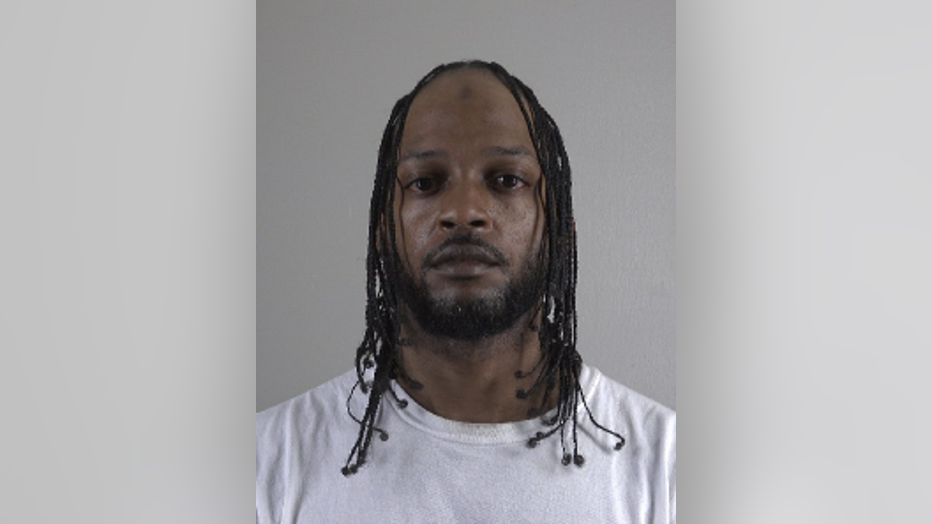
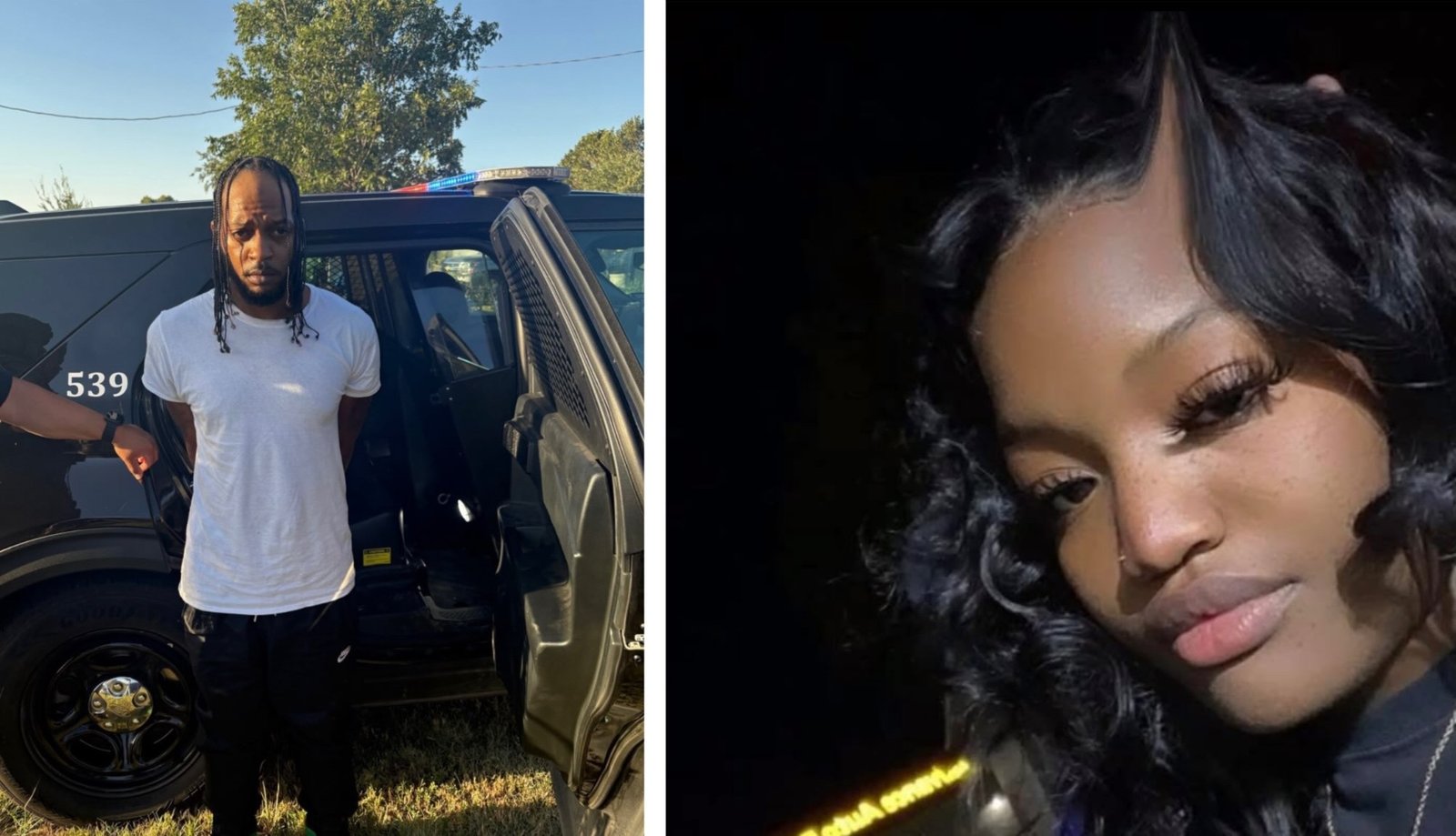
Fort Worth police arrested 37-year-old Patrick Lawrence on August 13 and charged him with murder in connection with Davis’ death. Investigators say a witness’s dashcam recording, physical evidence recovered from Interstate 20 and information gathered from Lawrence himself helped lead detectives to him later that day.
But the case began several hours earlier, during the morning commute.
A deadly confrontation on I-20
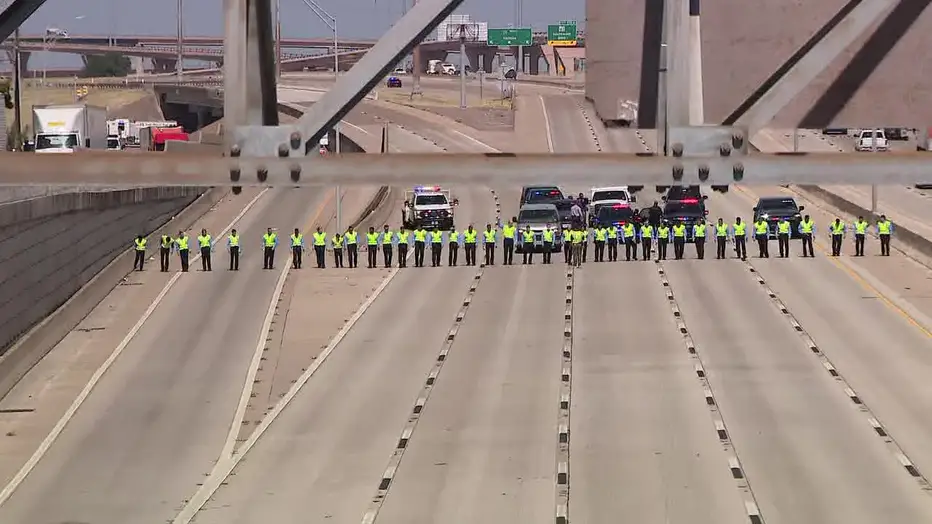
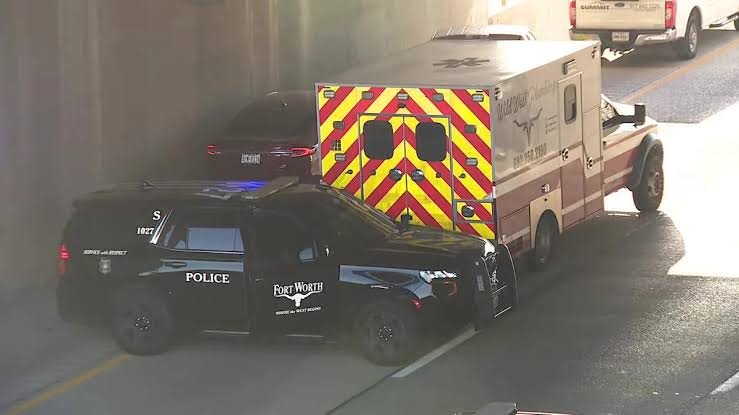
The shooting happened shortly before 6:40 a.m. Thursday on eastbound I-20 near Trail Lake Drive and Granbury Road, in the area of Hulen Mall.
Davis was driving a red vehicle when what police described as a road-rage confrontation developed between her vehicle and a blue Volkswagen.
According to the arrest affidavit, Lawrence told investigators that he was driving toward work when Davis’ vehicle began following closely behind him.
Lawrence allegedly said he was attempting to enter eastbound I-20 after crossing several lanes on South Hulen Street. As he reached the right lane near the entrance ramp, he said the red sedan moved around him.
His account, as described in the affidavit, was that Davis’ vehicle quickly merged left and crossed the white markings separating the lanes.
But the confrontation did not end there.
Police say that as the red vehicle passed, Lawrence fired a single shot into the passenger side.
The bullet struck Davis.
She was seriously wounded in the upper arm and torso area and was pronounced dead at the scene despite emergency efforts.
A witness reported hearing a loud bang and seeing a blue vehicle leave the highway toward Granbury Road.
Investigators later found a bullet casing near the area where the shooting occurred.
Davis’ vehicle had a bullet hole in the passenger-side window, providing investigators with physical evidence that helped establish the direction of the gunfire.
The suspect did not remain at the scene
One of the most striking details in the investigation came after the shooting.
According to the arrest affidavit, Lawrence did not remain at the scene or wait for police.
Instead, investigators say he left the highway and continued driving toward his workplace in Justin.
More than 30 miles away, police eventually located him at his job.
Lawrence was reportedly detained as he approached his vehicle during his lunch break later that day.
Officers also noticed a handgun inside the driver’s-side door pocket of his vehicle.
According to investigators, Lawrence acknowledged that he had fired a shot during the confrontation.
Police then compared the firearm with the evidence recovered from I-20.
The handgun allegedly found in Lawrence’s vehicle was determined to match the casing recovered from the highway.
That evidence, combined with witness information and dashcam footage, gave detectives a path from the shooting scene to the person they believed was responsible.
Dashcam footage became a key piece of evidence
The investigation did not depend solely on Lawrence’s account.
A witness’s vehicle had recorded the incident on a dashboard camera.
Investigators reviewed the footage and were able to identify the blue Volkswagen involved in the confrontation.
Police then traced the vehicle to Lawrence.
That information helped detectives locate him at his workplace in Justin later that day.
The rapid identification of the vehicle and suspect was significant because the initial investigation began with a shooting on a busy interstate and a vehicle that had already left the area.
By the time police began searching for the shooter, Lawrence was no longer near the scene.
What Lawrence allegedly told police
According to the arrest affidavit, Lawrence acknowledged firing at the red sedan.
He reportedly told investigators that he could not see clearly into the other vehicle because its windows were tinted.
Despite that, police allege that he fired one shot into the passenger-side window as the vehicle passed.
The distinction is important.
The affidavit describes Lawrence’s account of the confrontation, while investigators’ evidence is being used to establish what happened.
At this stage, those allegations have not been tested at trial.
Lawrence has been charged with murder, but a criminal charge is not a conviction.
Who was LaTaivia Davis?
The victim was not simply another driver caught up in a morning traffic dispute.
LaTaivia Davis worked as a teacher’s aide at E. Ray Elementary School in the Everman Independent School District.
Her death sent shockwaves through the school community.
Everman ISD said it was deeply saddened by the death of a valued employee and expressed condolences to Davis’ family, loved ones, colleagues and students. The district also said counseling and support resources would be made available to those affected by her death.
Davis was also a member of The Vision Church of Fort Worth, which publicly remembered her following the shooting.
For the people who knew her, the tragedy was not simply a story about road rage on an interstate.
It was the sudden loss of a woman who was on her way to work.
Her family is now asking a painful question
Davis’ family has since spoken publicly about the circumstances surrounding her death.
In an interview with WFAA, relatives expressed their grief and questioned why the confrontation could not simply have ended with the drivers going their separate ways.
The sentiment was simple: the disagreement on the road did not need to become deadly.
Family members have emphasized the devastating consequences of what they described as an unnecessary escalation.
That message has also been echoed by Fort Worth police.
Following the shooting, police urged drivers to avoid engaging with aggressive motorists rather than escalating a confrontation.
Fort Worth police spokesperson Officer Cynthia Wood warned that no destination is worth risking a life over and encouraged drivers to avoid eye contact, disengage and allow an aggressive driver to move on.
The case has raised broader concerns about road rage
The Fort Worth shooting has also renewed attention on aggressive driving and road-rage incidents.
According to the AAA Foundation for Traffic Safety, aggressive driving is common in the United States, and Texas sees thousands of road-rage-related crashes.
But the case involving Davis illustrates how quickly a seemingly ordinary traffic dispute can move from an argument between strangers to deadly violence.
There is still no indication from the available evidence that Davis knew Lawrence before the incident.
The confrontation appears to have developed between drivers on the interstate, according to the investigation.
What happened afterward, however, has now become part of a criminal case.
What happens to Patrick Lawrence now?
Lawrence was booked into the Tarrant County Jail after his arrest and charged with murder.
The initial FOX 4 report stated that no bond had been set at the time of that publication. Later jail and law-enforcement references have reported differing bond information, so the safest approach is not to rely on an unverified current bond amount without a direct court or jail record.
The central legal question will ultimately be whether prosecutors can prove beyond a reasonable doubt that Lawrence committed the charged offense.
For now, investigators have presented an account in which a traffic confrontation allegedly escalated into a shooting, Lawrence allegedly fired one round into Davis’ vehicle and then left the scene.
Police say the physical evidence, dashcam footage and firearm evidence helped connect him to the shooting.
But the criminal case must still proceed through the court system.
A single decision changed two families forever
The most disturbing part of the case may be how ordinary the beginning was.
It was a morning commute.
Two drivers were traveling on an interstate.
One vehicle allegedly followed another closely. The vehicles moved around each other. A confrontation developed.
Then a gun was fired.
LaTaivia Davis never made it to work.
Her students lost a familiar face at their school. Her family lost a loved one. And another family is now facing the consequences of a murder prosecution.
For investigators, the case is about evidence and accountability.
For Davis’ family, it is about a life that should still be here.
And for everyone who drives the roads of Fort Worth, the case has become another warning about how dangerous a moment of anger behind the wheel can become.
Police continue to urge motorists to do the opposite of what happened on I-20: disengage, create distance and let the other driver go.
Because once a road-rage confrontation becomes a gunfire incident, there may be no opportunity to take the moment back.
Patrick Lawrence remains accused of murder. The allegations against him have not been proven in court, and the legal process will determine his responsibility for LaTaivia Davis’ death.