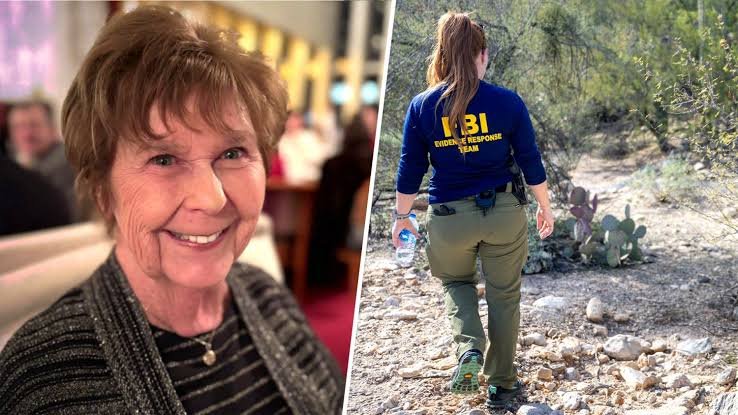
The investigation into the disappearance of 84-year-old Nancy Guthrie has taken another unexpected turn, with the FBI reportedly returning to the area surrounding her Tucson home as investigators continue searching for evidence that could explain what happened to her nearly seven months after she vanished.
The renewed activity was reported in the Catalina Foothills neighborhood where Guthrie lived, an area characterized by desert vegetation, rocky terrain, washes and relatively isolated residential properties. According to reporting by the New York Post, a neighbor recently observed investigators working through brush and desert terrain near Guthrie’s home. The renewed search has drawn particular attention because Southern Arizona’s summer monsoon season has significantly altered the landscape in recent weeks, potentially moving soil, rocks, vegetation and other material that may previously have been difficult to examine.
The significance of the new search remains unclear. Neither the FBI nor local authorities have publicly announced that investigators discovered new evidence or identified a suspect as a result of the activity. The Pima County Sheriff’s Department reportedly said it was not aware of task-force activity in the immediate area, while the FBI had not publicly explained the reason for the reported return at the time of the New York Post’s report. As a result, any suggestion that investigators have found a specific clue should be treated as speculation rather than an established fact.
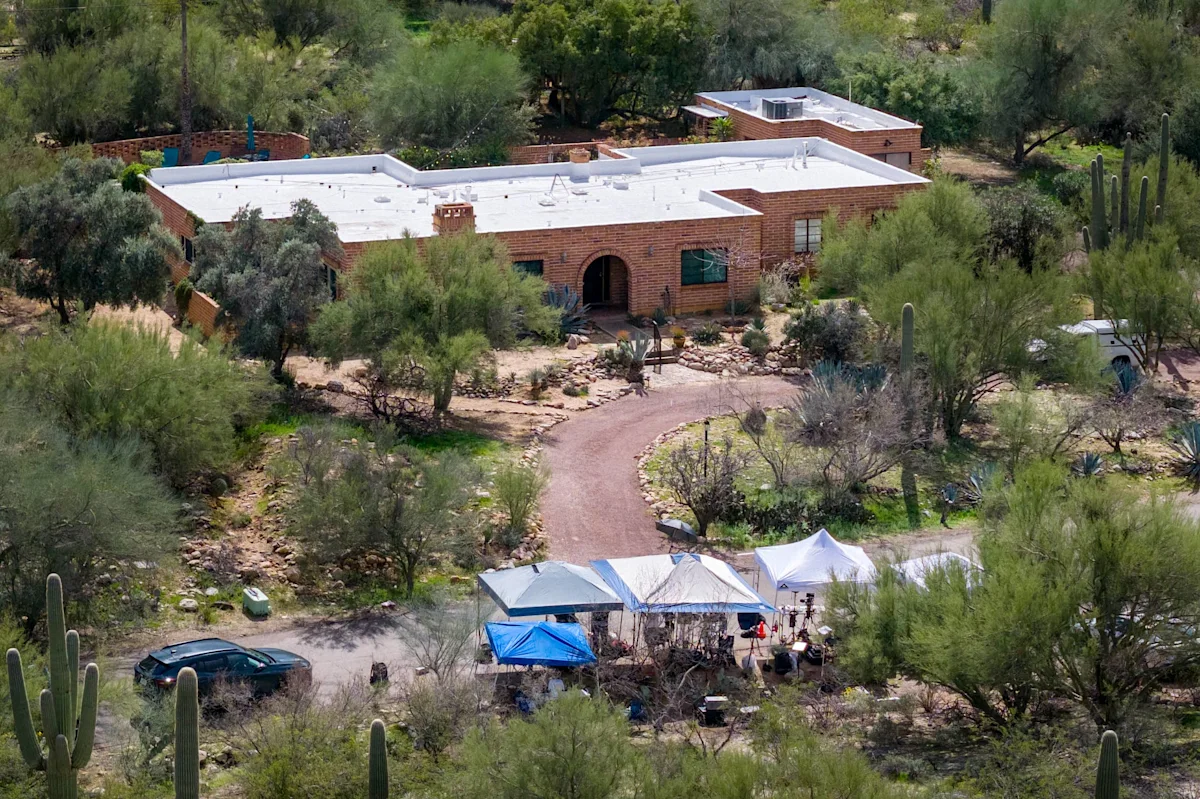
Still, the timing has attracted considerable attention because investigators have spent months examining the area around Guthrie’s home. The possibility that monsoon weather may have physically changed the environment gives authorities another reason to revisit locations that were previously searched.
Heavy seasonal rainfall can reshape desert terrain. Water flowing through washes can move rocks, branches, soil and other debris, while erosion can expose objects that were previously covered. In an investigation involving a missing person, even a small physical change can potentially make an object easier to see or alter the appearance of an area investigators previously examined. That does not mean the recent weather uncovered evidence connected to Guthrie’s disappearance, but it provides a possible explanation for why investigators might consider another examination worthwhile.
Nancy Guthrie disappeared from her home in the Catalina Foothills on the night of January 31, 2026. Her family discovered that she was missing the following day and contacted authorities. From the beginning, investigators said the circumstances were inconsistent with an elderly woman simply leaving home voluntarily.
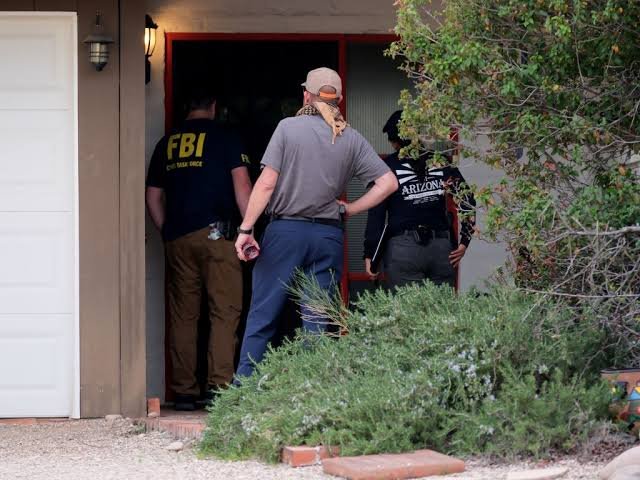
Guthrie was considered a vulnerable adult. The FBI says she had difficulty walking, used a pacemaker and required daily medication for a heart condition. Authorities have repeatedly said they believe she was taken from her home against her will. The case is therefore being treated as a criminal investigation rather than an ordinary missing-person case.
One of the most important clues came from a video doorbell camera at Guthrie’s residence. Investigators released footage showing an armed individual near the front of the home around the time of her disappearance. According to the FBI, the person appeared to tamper with the camera. Authorities later described the individual as a suspect and said he appeared to be approximately 5 feet 9 inches to 5 feet 10 inches tall, with an average build. He was also seen carrying a black 25-liter Ozark Trail Hiker Pack backpack.
The footage has remained one of the most important pieces of publicly released evidence in the case. Investigators have appealed to anyone who recognizes the individual, the backpack or the circumstances surrounding the video to contact the FBI.
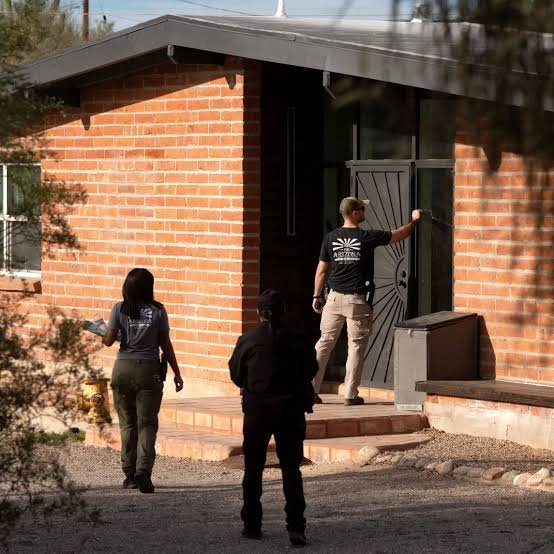
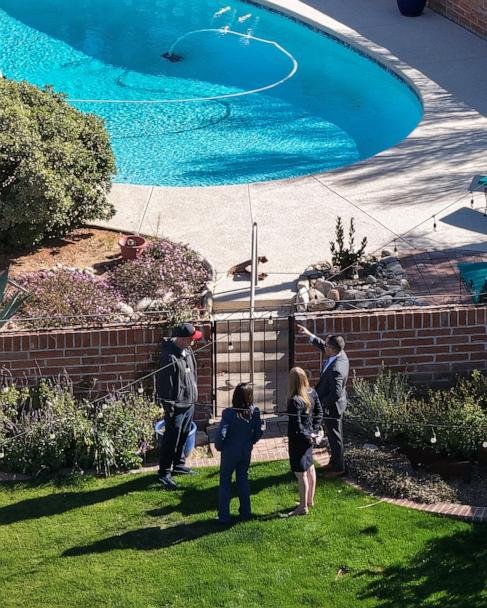
The FBI has also spent months reviewing additional surveillance material. Earlier in the investigation, agents recovered thumbnail images from motion-activated cameras positioned around Guthrie’s backyard, pool and side yard. Although investigators were unable to recover corresponding video from those cameras, the still images were preserved for examination. Sources told ABC News that the cameras did not appear to capture anything suspicious, but the material nevertheless became part of the broader forensic review.
Investigators have also conducted extensive searches beyond Guthrie’s immediate property. In February, FBI agents canvassed roads and surrounding areas in the Catalina Foothills, including locations between Guthrie’s residence and major roads leading out of Tucson. Authorities examined washes, pull-offs, nearby neighborhoods and businesses and reviewed surveillance footage from surrounding areas. At the time, investigators were following up on thousands of tips generated after the disappearance became public.
The terrain itself has presented challenges. Guthrie’s neighborhood contains thick desert brush, rocks and winding roads, with homes spread relatively far apart. These conditions can make it difficult to conduct a complete visual search, particularly when investigators are looking for small pieces of evidence that may be hidden among vegetation or debris.
That is why the reported return by federal investigators has raised questions about whether the landscape itself may have become relevant again.
The New York Post report cited a neighbor who observed people familiar from previous law-enforcement activity searching the desert area behind Guthrie’s property. The neighbor reportedly believed the investigators were examining areas that may have been affected by recent monsoon weather. The theory is that the heavy rainfall could have “moved the environment,” potentially changing portions of the landscape since earlier searches were conducted.
However, there is currently no public evidence confirming that investigators returned because they received information about a specific object or location. Authorities have not announced a newly discovered body, weapon, vehicle, piece of clothing or other physical evidence. There has also been no public announcement of an arrest.
The renewed search comes at a particularly important point in the case because investigators have simultaneously been examining another major source of potential evidence: ransom communications.
Two ransom letters connected to the investigation were recently released publicly in an effort to generate new leads. Authorities are hoping that members of the public may recognize the language, phrasing or writing style used by the person who sent them.
The letters have generated considerable discussion because their authenticity and significance remain subjects of investigation. Some experts have suggested that the communications could be a hoax or an attempt to misdirect investigators, while others have pointed out that the letters contain details that could potentially be meaningful to investigators.
The important distinction is that authorities have not publicly established that the letters were written by the person who abducted Guthrie. They therefore cannot, on their own, establish what happened to her or where she may have been taken.
The release of the letters nevertheless appears to have produced an increase in public tips. Investigators are hoping that someone who knows the writer personally may recognize an unusual expression, spelling pattern or characteristic way of communicating. In a case that has generated an enormous amount of information, investigators are attempting to identify the small pieces that can be independently verified.
The ransom-letter development has also reinforced the importance of keeping multiple possibilities open. Investigators must determine whether the communications came from the person responsible for Guthrie’s disappearance, from someone with genuine knowledge of the crime, or from someone attempting to exploit the case.
That uncertainty is one reason investigators continue to rely heavily on physical and digital evidence.
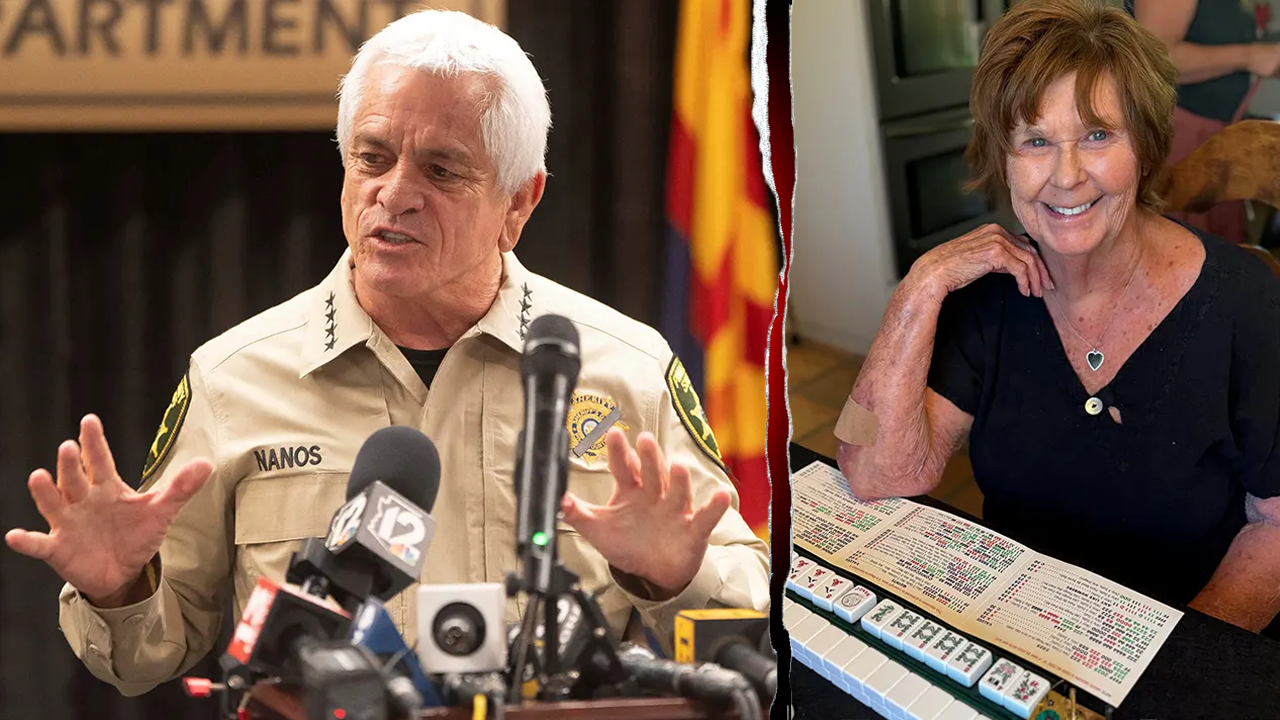
Pima County Sheriff Chris Nanos previously described the analysis of DNA and digital evidence in the case as complex and time-consuming. A joint investigative effort involving local authorities and the FBI has been reviewing a substantial amount of video and forensic information. Officials have said they want to avoid rushing to conclusions or making an arrest without sufficient evidence.
The investigation has also included extensive work to determine how Guthrie may have been taken from her home and what happened afterward. The FBI’s public materials continue to seek information about the individual captured on the doorbell footage and offer a reward for information leading to Guthrie’s location or the arrest and conviction of those responsible.
For Savannah Guthrie and the rest of Nancy’s family, the latest search represents another moment of uncertainty mixed with hope.
Savannah, the NBC “Today” show anchor, has repeatedly appealed to the public for information about her mother. The family has offered a substantial reward for information that could help bring Nancy home. Despite the enormous public attention surrounding the case, however, investigators have yet to announce a definitive breakthrough.
The passage of time has made the investigation more difficult, but it has not ended it.
Evidence can sometimes emerge months after a disappearance. A witness may eventually decide to speak. Someone may recognize a person or vehicle from previously released footage. Digital records can reveal connections that were not immediately apparent. And physical evidence that appeared insignificant during an initial search can sometimes become more meaningful when investigators have a clearer understanding of the timeline.
The changing landscape around Guthrie’s home adds another possible dimension to that process.
If monsoon rains have moved debris or exposed previously concealed areas, investigators may be able to examine locations with fresh eyes. But until authorities confirm that something relevant was discovered, it is important not to assume that the renewed search represents a breakthrough.
For now, Nancy Guthrie remains missing.
There is no publicly identified suspect who has been charged in connection with her disappearance, and authorities have not publicly confirmed that the latest activity near her home has produced new evidence. The FBI continues to ask the public for information, while investigators work through surveillance footage, forensic evidence, digital records, witness information and other leads.
The reported return to the Catalina Foothills therefore represents a new development, but not yet a resolution.
What makes the search significant is the possibility that investigators are unwilling to leave any part of the original search area unexplored. Months of heat, rain, erosion and seasonal flooding can transform the Sonoran Desert landscape. If something connected to Nancy Guthrie’s disappearance was concealed in that environment, investigators may now have an opportunity to see it differently.
Whether the renewed effort produces anything remains unknown.
But for a family that has spent months waiting for answers, every credible search and every new lead carries the same hope: that somewhere in the evidence is the information capable of explaining what happened to Nancy Guthrie and finally bringing the investigation to a conclusion.