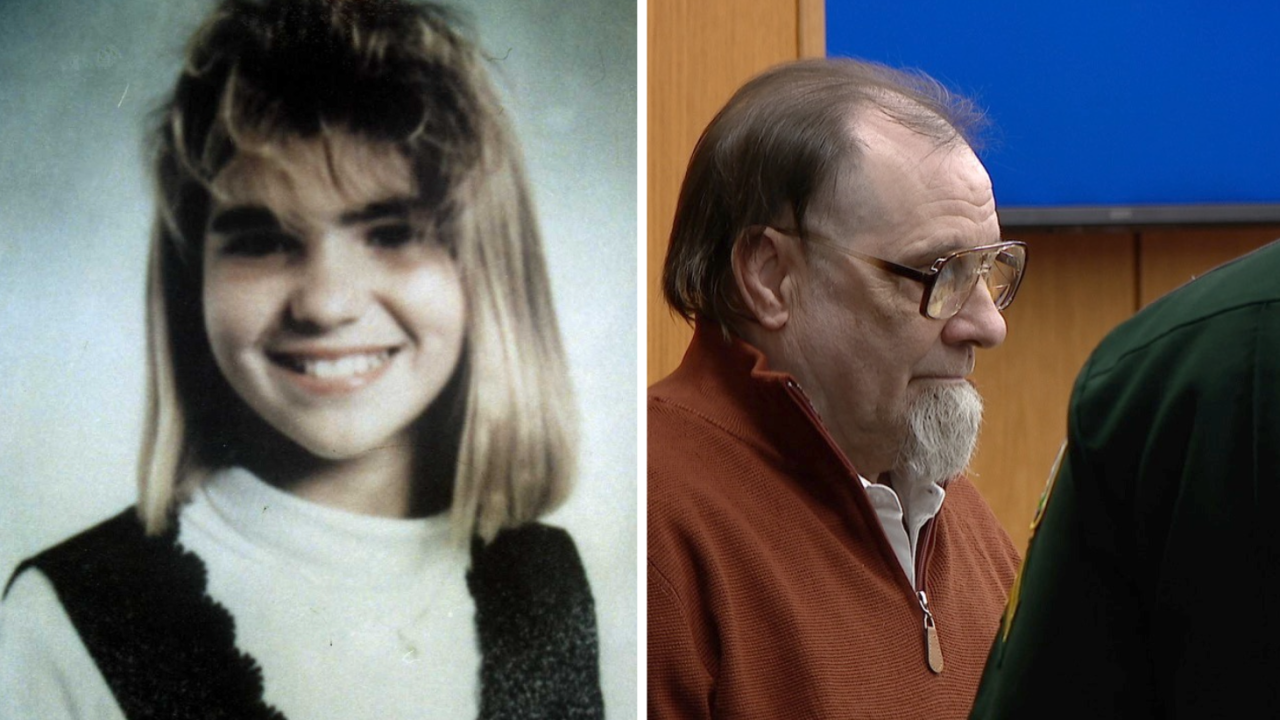
More than three decades after 12-year-old Jennifer Odom disappeared on her way home from school, the case has reached another major turning point.
A Hernando County jury has unanimously recommended that Jeffrey Norman Crum be sentenced to death for the kidnapping, sexual battery and murder of Jennifer, bringing the decades-old case to a point her family had waited years to see.
All 12 jurors voted in favor of the death penalty Tuesday, August 25, after spending about two hours and 15 minutes deliberating during the penalty phase of Crum’s trial. The recommendation came on what would have been Jennifer’s 46th birthday.
But the case is not technically finished.
The jury’s vote is a recommendation, not the final sentence. Crum’s sentencing will now move to the next stage, with a Spencer hearing scheduled for October 21. During that hearing, the defense will have another opportunity to present mitigating evidence and arguments directly to the judge before the final sentence is determined.
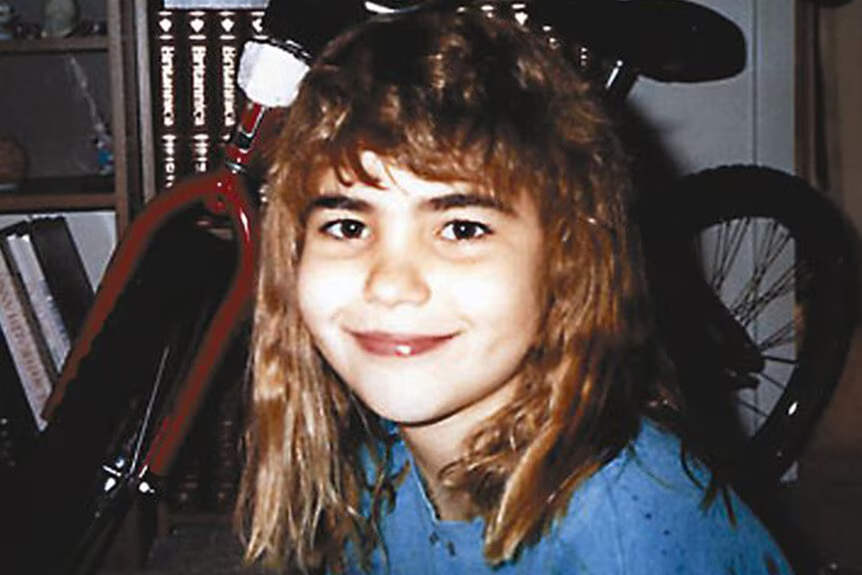
A case that began in 1993
Jennifer Odom disappeared on February 19, 1993, after getting off her school bus in Pasco County.
She was just 12 years old.
Witnesses recalled seeing Jennifer walking along a private road when a faded blue pickup truck appeared nearby. One witness testified during the trial that Jennifer got into the truck.
Six days later, Jennifer’s body was discovered in an abandoned orange grove in Hernando County.
Her school book bag and clarinet case were not found with her body. Investigators later recovered those belongings in a rural area of Hernando County in January 1995.
For Jennifer’s family, the discovery answered one terrible question — where she was — but left another unanswered for decades: Who had taken her?

The investigation remained open for more than 30 years.
The breakthrough that finally led investigators to Crum
The case eventually gained new momentum through advances in forensic technology.
Investigators had already noticed similarities between Jennifer’s disappearance and a separate 1992 attack involving a teenage girl in Pasco County.
Jeffrey Crum had been convicted in that earlier case and was serving two life sentences for kidnapping and sexual battery.
A DNA breakthrough in the earlier investigation in 2015 helped investigators identify a member of Crum’s family through a familial DNA search. That development eventually directed investigators toward Crum in Jennifer’s case.
Investigators then developed additional evidence connecting him to Jennifer’s disappearance and death, including evidence involving his ownership of a blue truck and his familiarity with the area where Jennifer was taken and where her body was eventually discovered.
After more than three decades, prosecutors finally brought the case to trial.

Crum was convicted last week
The jury’s death-penalty recommendation came only days after the same jurors found Crum guilty.
On August 20, jurors convicted the 64-year-old Crum of kidnapping, sexual battery and murder in connection with Jennifer’s death.
They deliberated for a little more than five hours before reaching the verdict. A trial that had been expected to last several weeks ended after four days of testimony.
The guilty verdict established the first major courtroom finding in the case: Crum was legally responsible for Jennifer’s kidnapping, sexual battery and murder.
The next question was whether he should spend the rest of his life in prison or receive the death penalty.
That decision became the focus of the penalty phase.
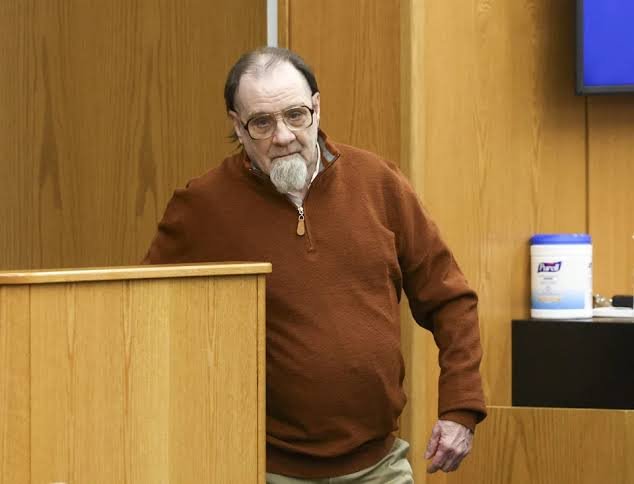
Prosecutors argued the crimes warranted death
During the sentencing phase, prosecutors presented evidence they said demonstrated the severity of Crum’s crimes.
They argued that Jennifer’s kidnapping and murder involved planning and that she was taken to an isolated location.
Prosecutors also emphasized Jennifer’s age, pointing out that she was only 12 years old and posed no threat to Crum.
Assistant State Attorney Richard Buxman told jurors that Crum was responsible for each decision that led to Jennifer’s death, including the decision to kidnap her, sexually batter her and kill her.
The state also presented testimony from a woman who said Crum sexually battered her in 1985 when she was 18.
Prosecutors used the evidence to argue that the circumstances surrounding Jennifer’s murder justified the maximum punishment available under Florida law.
The defense asked jurors to spare his life
Crum’s attorneys took a different approach.
Rather than disputing the guilty verdict during the penalty phase, the defense focused on mitigating circumstances that they argued should persuade jurors to recommend life in prison instead of death.
Those arguments included Crum’s childhood, alleged physical and emotional abuse, a family history of alcohol and substance abuse, his own history of alcohol abuse and mental-health problems, and multiple suicide attempts.
A neuropsychologist who evaluated Crum testified about the effects of his upbringing and the trauma he allegedly experienced throughout his life.
The defense also pointed out that Crum is already serving two life sentences for a separate 1992 kidnapping and sexual battery case.
His attorney argued that Crum would likely spend the remainder of his life behind bars regardless of the outcome of the sentencing proceeding.
The jury, however, rejected that argument.
After deliberating for two hours and 15 minutes, all 12 jurors recommended death.
Jennifer’s family finally heard the recommendation
The courtroom was filled with Jennifer’s relatives and supporters when the jury’s decision was announced.
FOX 13 reported that faint cries could be heard from the gallery as the unanimous recommendation was read.
Jennifer’s mother, Renee Converse, later spoke about the significance of the moment.
She said the family had lived with the pain of Jennifer’s death for 33 years and that she could finally begin to breathe again.
But she also made clear that the jury’s decision did not erase the loss.
Jennifer cannot be brought back.
Her family cannot recover the years they spent without her.
And they cannot experience the life she should have had.
Converse said the day represented justice rather than closure, because there can never truly be closure when a child is taken from a family.
The timing of the recommendation made the moment even more emotional.
Tuesday would have been Jennifer’s 46th birthday.
Instead of celebrating her 46th birthday with her family, the day became the date a jury recommended the death penalty for the man convicted of killing her.
Remembering Jennifer beyond the case
During victim-impact statements, Jennifer’s family reminded the court that she was much more than the victim in a decades-old murder case.
Her aunt, Mary Beth Lambert, described Jennifer as a barefoot water skier, an archer, a clarinet player, a Girl Scout and a devoted member of her Catholic church.
She was also a daughter, sister, niece and friend.
Those memories were important during the sentencing phase because the case was ultimately about a life that ended before Jennifer had the opportunity to grow up.
Prosecutors noted that she should have had the chance to graduate, build a career, have a family and experience the ordinary milestones of adulthood.
Instead, those possibilities ended when she was 12 years old.
The case is still not completely over
Although the jury’s unanimous recommendation represents a major development, it is important to understand what happens next.
The recommendation does not automatically mean Crum has been sentenced to death.
A Spencer hearing is scheduled for October 21 at 8:30 a.m.
During that hearing, the defense can present additional mitigation and ask the judge for a different sentence.
The judge will then make the final sentencing decision.
Crum is currently already serving two life sentences for the separate 1992 Pasco County attack.
If the judge ultimately imposes a death sentence in Jennifer’s case, the legal process would continue through the appeals system.
For Jennifer’s family, however, Tuesday’s recommendation marked something they had waited more than 30 years to hear.
The case that began with the disappearance of a 12-year-old girl in 1993 eventually led investigators through decades of unanswered questions, advances in DNA technology, renewed detective work and a courtroom prosecution.
Now, for the first time, a jury has formally recommended the harshest punishment available.
But the story that began with Jennifer walking home from her school bus stop is not quite finished.
The final sentence remains ahead.
And when Jeffrey Crum returns to court on October 21, the judge will decide whether the jury’s unanimous recommendation becomes the sentence that closes the latest chapter of one of Florida’s longest-running cold cases.