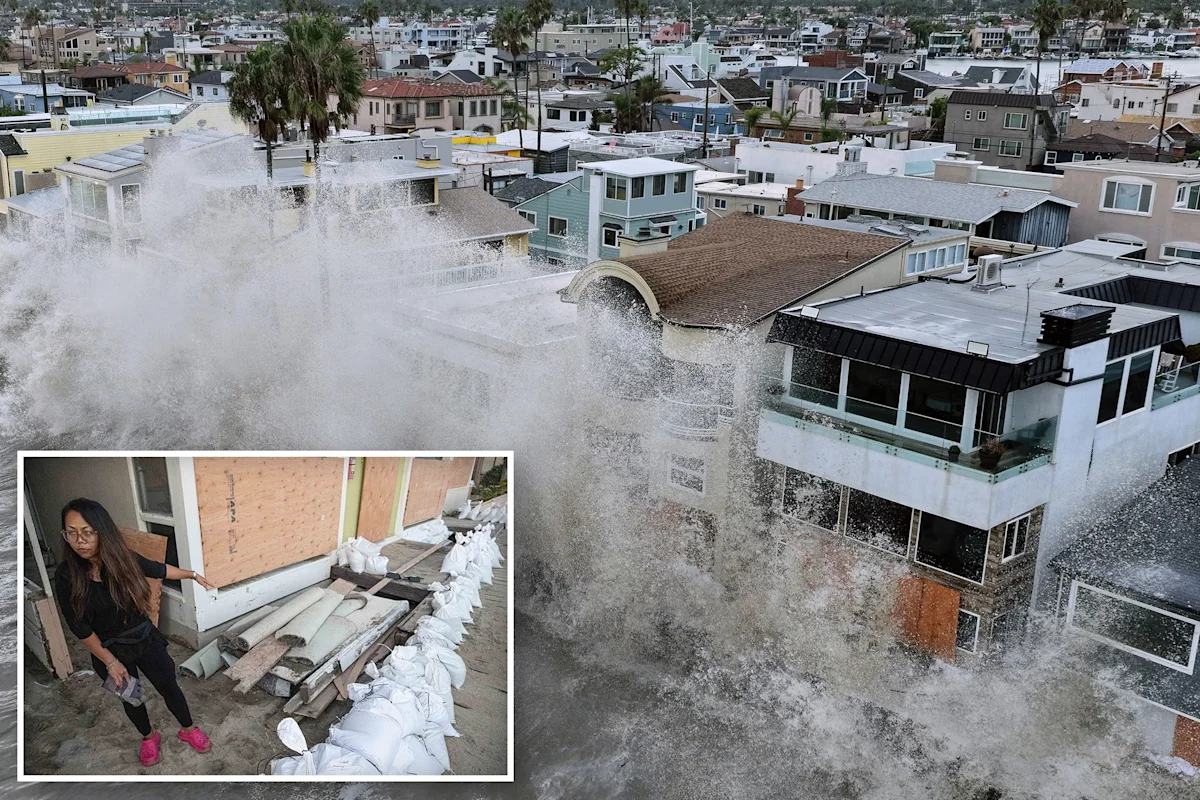
The water did not need to come from a storm making landfall to cause major destruction along Southern California’s coast.
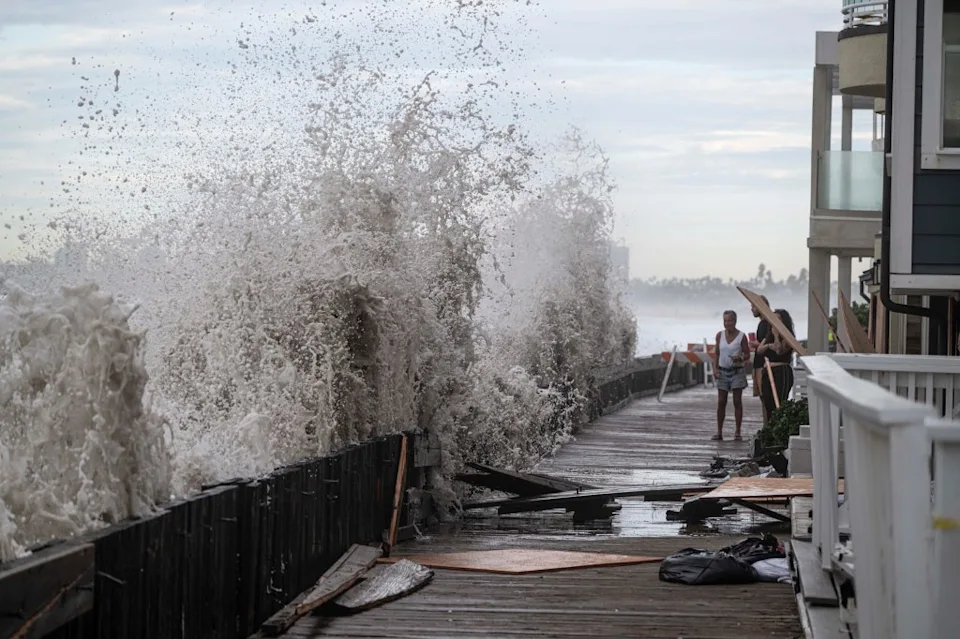
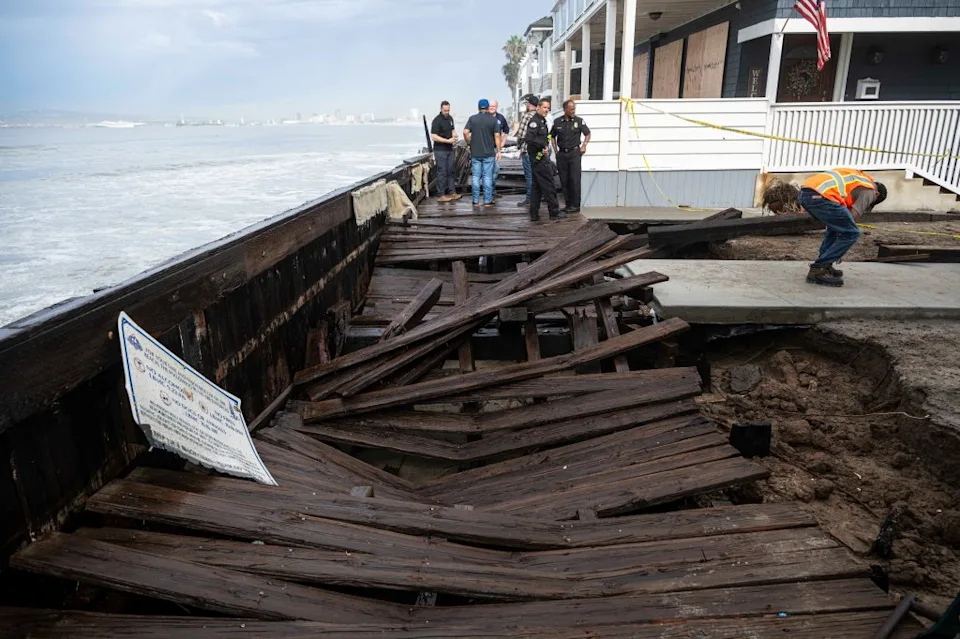
In Long Beach, powerful waves generated by Hurricane Marie battered the shoreline for days, stripping away sand, damaging the seawall and tearing apart sections of the historic boardwalk along the Long Beach Peninsula.
By Tuesday, the damage had become serious enough for officials to evacuate roughly 20 oceanfront homes while inspectors assessed whether the structures remained safe.
The evacuations covered homes in the Seaside Walk area between 63rd Place and 67th Place, where firefighters reported damaged seawalls and cracked concrete around several properties. The orders were described as a precaution while city officials evaluated the structural condition of the homes.
The situation was especially striking because Hurricane Marie never came ashore in California.
Instead, the storm remained far offshore in the Pacific while its powerful winds generated large swells that traveled toward the Southern California coastline.
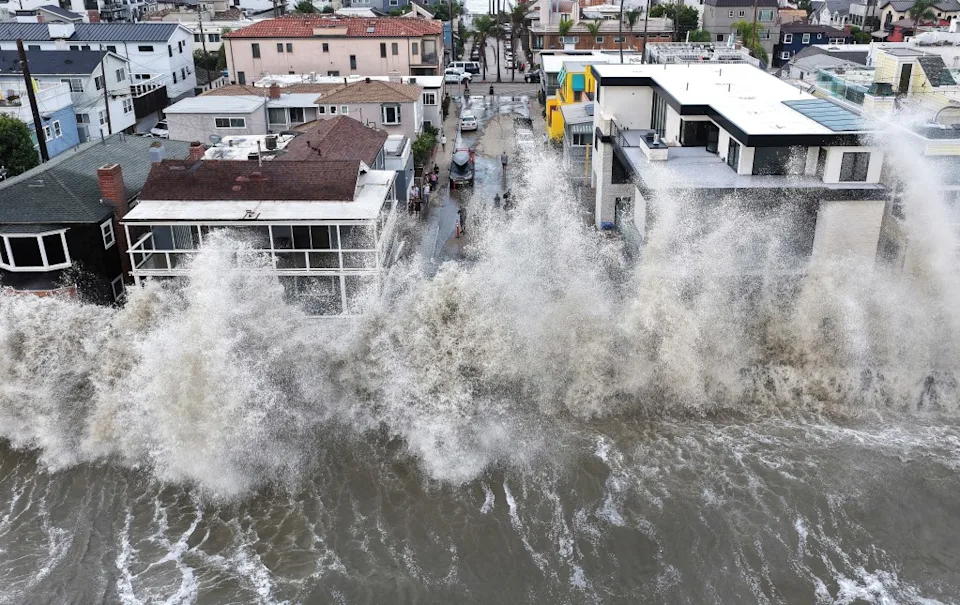
Those waves eventually reached Long Beach with enough force to overwhelm coastal defenses that residents normally rely on to protect their homes.
According to coastal observations cited by the Los Angeles Times and other reports, waves in the Long Beach area reached approximately 11.5 feet.
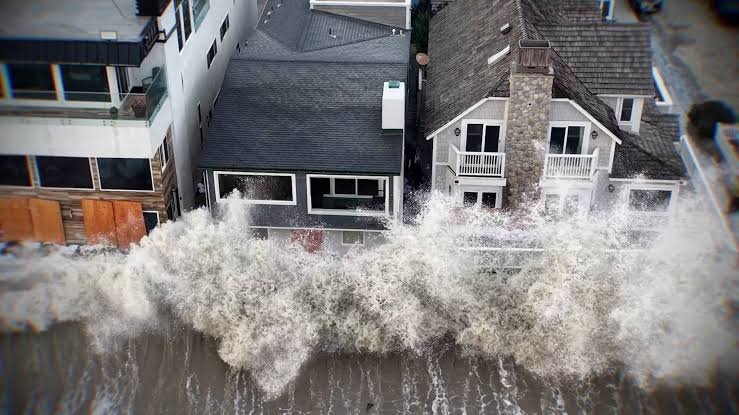
The result was a dramatic transformation of the shoreline.
Large amounts of sand were pulled away from the beach, leaving parts of the coastline dramatically lower and exposing areas that would normally remain covered. Sections of the wooden boardwalk were damaged or destroyed as waves repeatedly slammed into the shoreline and seawall.
In some locations, the erosion became so severe that a substantial drop appeared between the boardwalk and the exposed rocks below.
For residents who live directly along the water, the danger was not limited to the beach.
Waves pushed water and debris toward homes, while the loss of sand raised concerns about what was happening underneath some of the structures.
Several homes were damaged, and water entered at least some properties and garages in the area.
The Long Beach Fire Department said water entered two homes and 12 garages, while firefighters and city officials worked to determine whether additional properties had suffered structural damage.
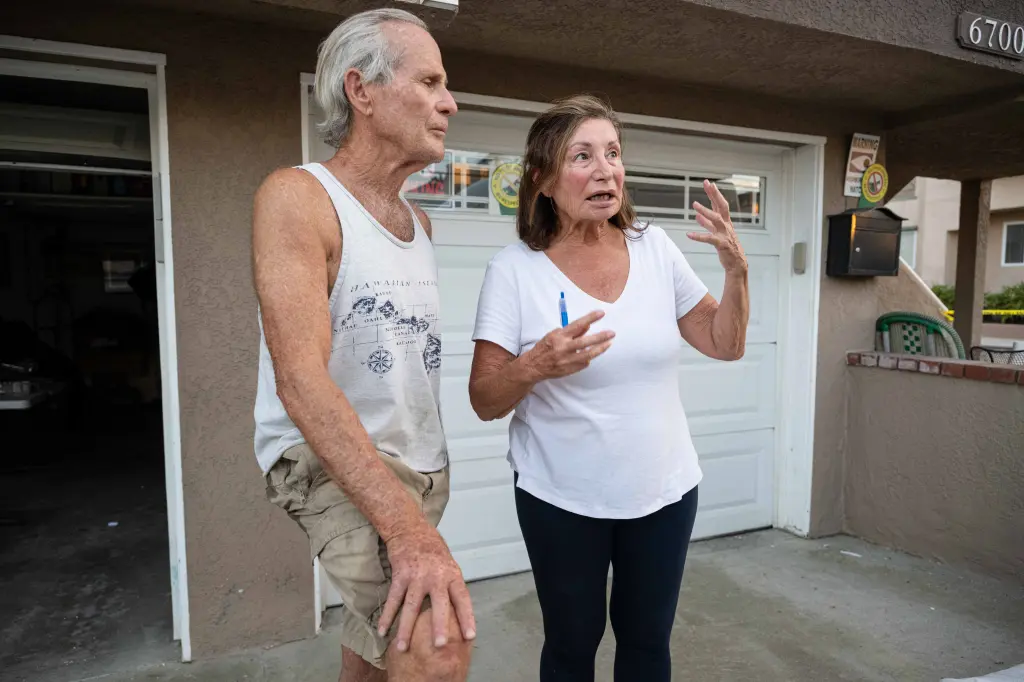
The damage was particularly visible along the boardwalk.
Residents and officials surveying the area found sections of the once-continuous walkway badly damaged, with parts torn apart by the repeated pounding of the surf.
The beach itself also looked dramatically different.
A protective sand berm that normally helps absorb the force of waves had been eroded, allowing the ocean to reach farther toward the homes and boardwalk.
Long Beach regularly rebuilds these protective sand berms because waves naturally remove sand from the shoreline. But the intensity of this event overwhelmed those defenses in a way that residents said they had rarely seen.
Local officials and residents described the scale of the weekend’s surf as extraordinary.
Some longtime residents compared the damage with previous major El Niño winters, but said the destruction from this event was particularly severe.
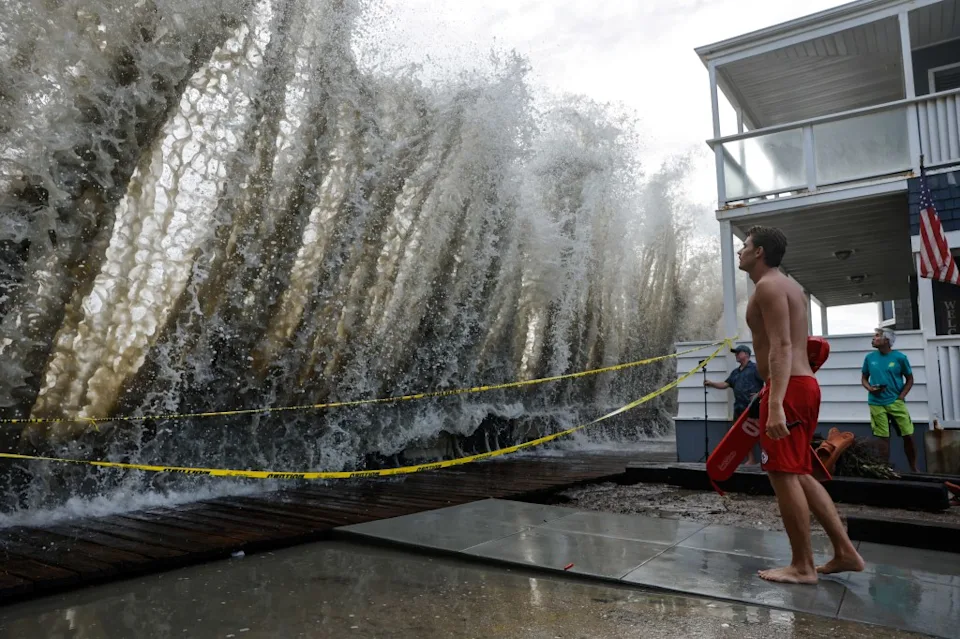
The concern now extends beyond the immediate damage.
Scientists and coastal experts are watching the event closely because Southern California is expected to experience a strong El Niño pattern this winter. The combination of unusually warm ocean temperatures and potentially stronger storms could create additional periods of large waves and coastal erosion in the months ahead.
That does not mean another event of the same magnitude is guaranteed.
But the damage in Long Beach provides a real-world example of how vulnerable some coastal communities can become when unusually large waves arrive after protective sand has been removed.
The threat also extends beyond Long Beach.
Other Southern California communities experienced significant impacts from the same swell.
In Dana Point, several oceanfront homes were placed under red or yellow tags after officials assessed storm-related damage. Laguna Beach also reported damage to public and private coastal infrastructure.
The conditions were dangerous for people in the water as well.
Lifeguards in Long Beach had to assist surfers back to shore, while officials across Southern California warned people about powerful surf and dangerous rip currents.
The National Weather Service warned that the ocean conditions could become life-threatening, particularly for swimmers and people near exposed coastal areas.
For Long Beach residents, however, the biggest concern has been what happens after the waves retreat.
Evacuated homeowners have had to leave properties while officials inspect the structures. Some residents have been forced to move belongings, protect entrances with sandbags and plywood, and wait for assessments before knowing whether they can safely return.
Meanwhile, city crews have continued working along the shoreline to rebuild protective sand berms and reduce the threat from additional high tides and waves.
The timing has added to the concern.
The destructive surf arrived during a period when Southern California’s coastline was already dealing with elevated tides and storm-driven ocean conditions.
The combination gave the waves a better opportunity to reach vulnerable sections of the shoreline.
And once the protective sand was removed, each subsequent wave was able to attack the coast with less resistance.
That cycle is one of the reasons coastal officials are paying close attention to the damage.
The Long Beach Peninsula is not an isolated beachfront where erosion can simply be allowed to happen. It is a densely developed residential area where homes sit immediately behind the seawall and boardwalk.
When the shoreline changes dramatically, the consequences can quickly move from a beach problem to a structural problem.
That is what residents are now facing.
The question is no longer simply how much sand was lost.
It is whether the erosion has weakened the ground, seawall or foundations enough to create longer-term problems for the homes closest to the ocean.
Officials are still assessing those risks.
The evacuations in Long Beach were lifted Wednesday morning after inspections, according to local reporting, but the damage remains visible and the recovery is only beginning.
The boardwalk will need repairs.
Protective sand will need to be rebuilt.
Some homeowners will have to repair damaged property, while others are waiting to learn whether their homes suffered deeper structural problems.
And the coastline will continue to face the ocean’s pressure long after Hurricane Marie has weakened.
For now, the storm serves as a powerful reminder that a hurricane does not have to make landfall to affect California.
Marie stayed hundreds of miles offshore, yet its energy traveled across the Pacific and eventually arrived at Southern California’s beaches in the form of enormous swells.
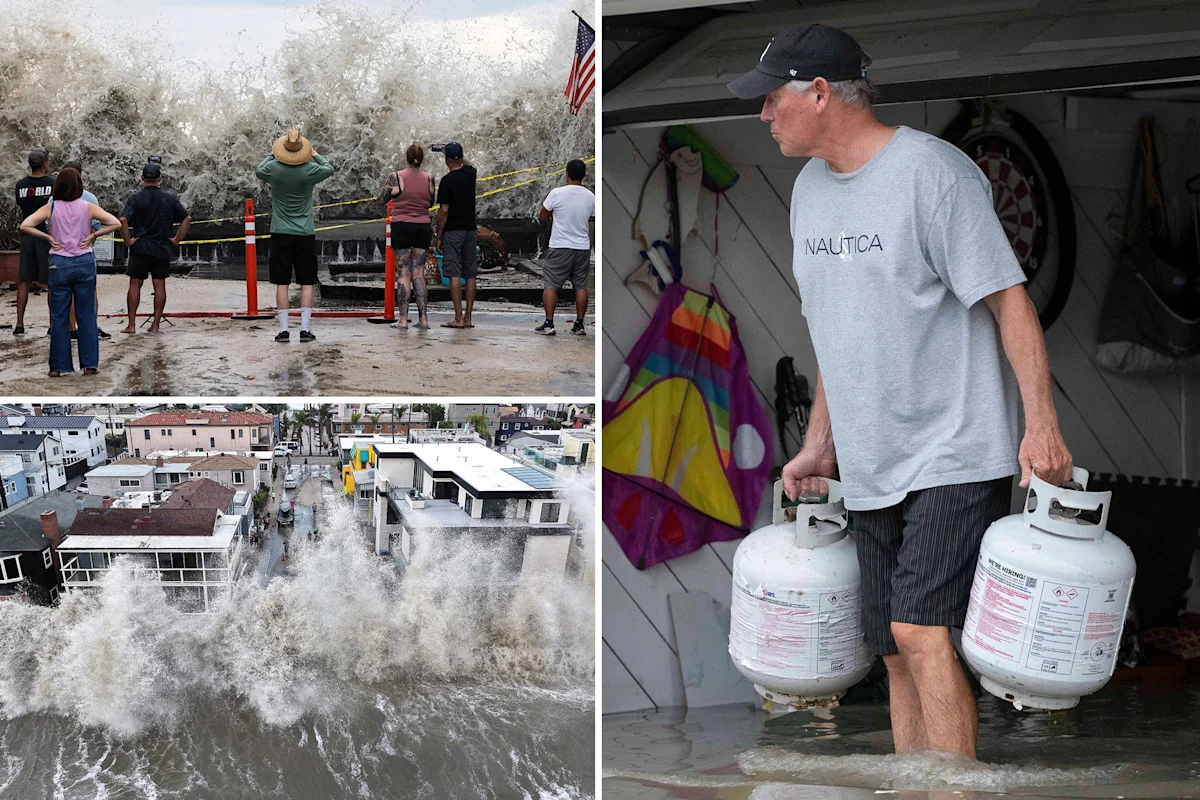
In Long Beach, those waves were enough to tear apart sections of a historic boardwalk, erode the beach, damage coastal defenses and force families out of their homes.
What residents saw this week may also be an early warning of the challenges that could come later in the year.
With a potentially strong El Niño developing, coastal scientists and officials are watching closely for the next major swell.
For the homeowners along the Long Beach Peninsula, the lesson has already arrived.
The ocean does not have to cross the front door to become a threat.
Sometimes, the first warning is the beach disappearing beneath it.