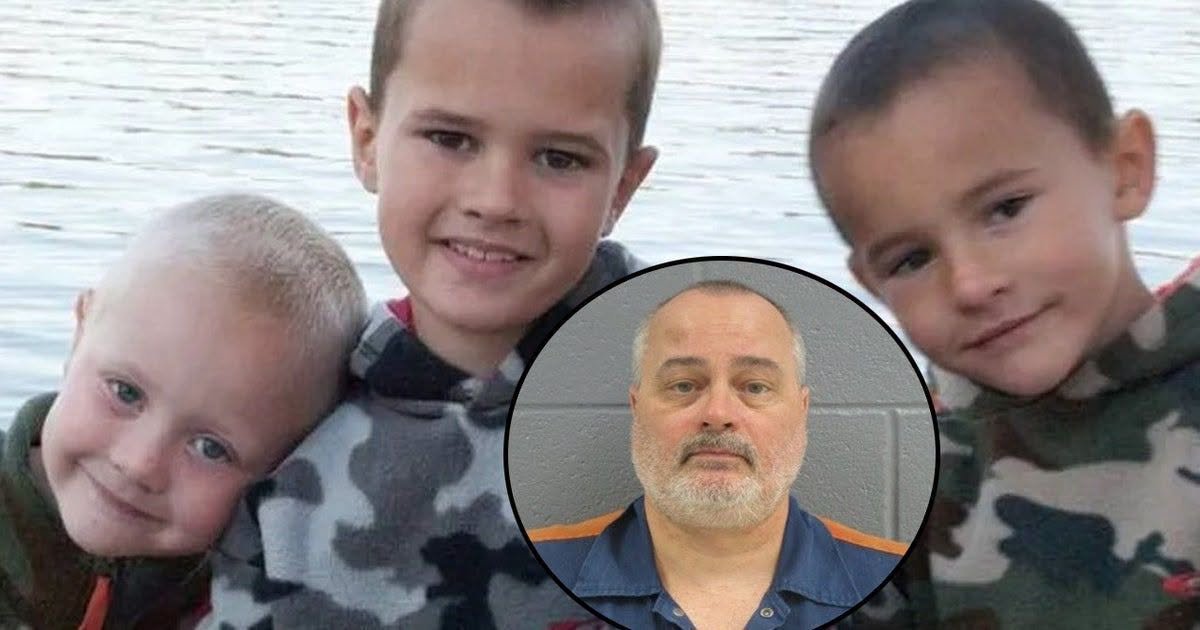
Fifteen years after three Michigan brothers disappeared during Thanksgiving with their father, the case has reached a new and extraordinary stage.
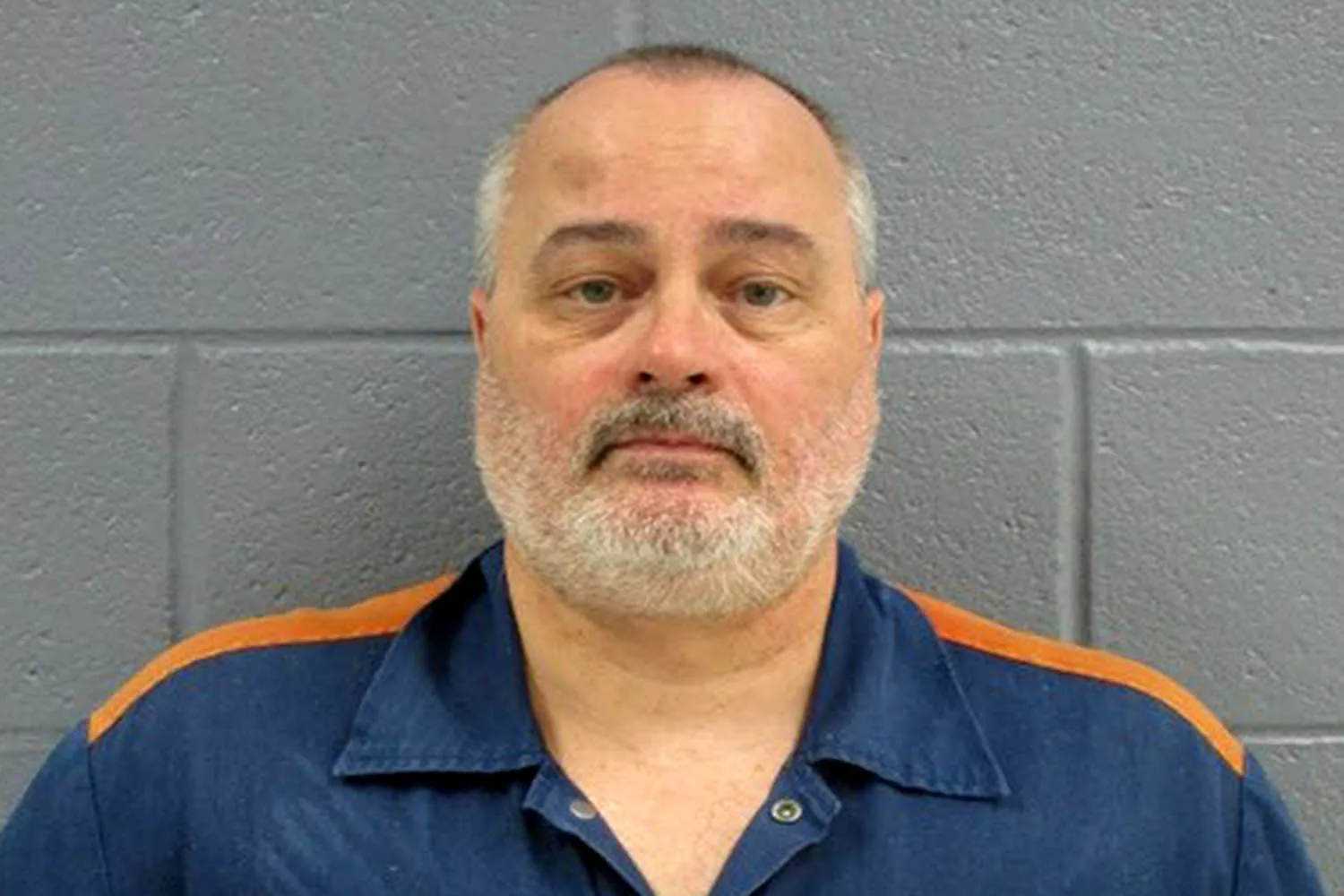
John Skelton, the father of Andrew, Alexander and Tanner Skelton, has now been ordered to stand trial on charges that he murdered his three young sons.
The decision came after a preliminary examination that began August 24 and concluded September 3 in Lenawee County. A judge determined that prosecutors had presented enough circumstantial evidence for the case to proceed to trial.
The development is significant because one of the central mysteries surrounding the case has never been solved: the boys’ bodies have never been found.
Andrew was 9 years old when he disappeared.
Alexander was 7.
Tanner, the youngest, was only 5.
All three were last seen alive on Thanksgiving Day, November 25, 2010, while they were staying with their father at his home in Morenci, Michigan.
More than a decade later, investigators still do not know where the boys were taken or where their remains might be.
But prosecutors now have the opportunity to present their case to a jury.
A Thanksgiving visit that never ended
At the time of the disappearance, John Skelton and the boys’ mother, Tanya Zuvers, were going through a divorce and custody dispute.
The children were supposed to spend Thanksgiving with their father.
That holiday visit would become the last confirmed sighting of all three brothers.
When Zuvers went to retrieve her children the following day, they were gone.
Skelton’s explanation would change repeatedly over the years.
One early version involved a woman named Joann Taylor, whom he allegedly claimed had taken custody of the boys. Investigators later determined that there was no such person.
He later told authorities that he had given the children to an underground organization that would protect them from their mother.
That explanation also failed to provide investigators with a verifiable location for the children.
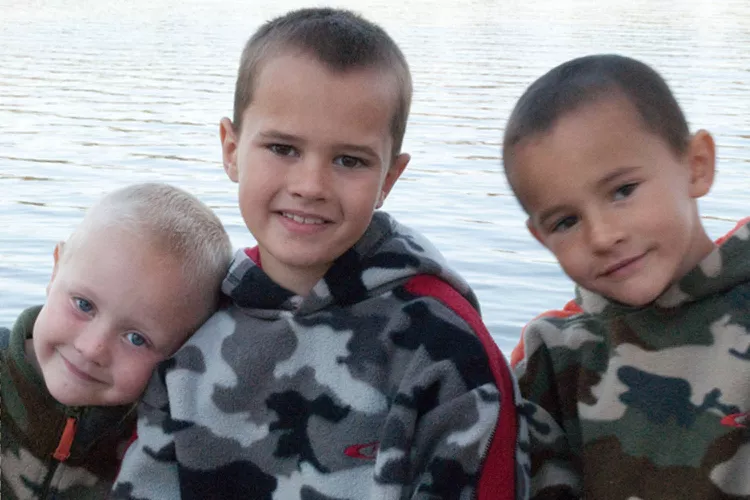
The boys were never recovered.
And as the years passed, the question of what happened inside the Skelton home during that Thanksgiving weekend became one of Michigan’s most enduring missing-children mysteries.
The suspicious hours after the boys disappeared
Investigators have long examined what happened in the hours immediately surrounding the disappearance.
According to testimony and evidence discussed during the recent preliminary examination, police found indications that Skelton had traveled into Ohio in the early morning hours after the boys disappeared.
Investigators later tracked his phone to Ohio at about 4:30 a.m. on November 26 before it returned toward Morenci several hours later.
The significance of that trip is now expected to become part of the prosecution’s case.
Search teams repeatedly looked through areas of Michigan and Ohio over the years, but none of the searches located Andrew, Alexander or Tanner.
His story kept changing
One of the most important elements in the case has been Skelton’s changing explanations.
Investigators were initially told that the children had been left with another person.
Later, the explanation shifted toward an underground group.
At one point, Skelton reportedly told his former pastor that the boys would “hibernate until they graduate,” according to testimony reported during the preliminary examination.
The statements did not lead investigators to the children.
And despite years of questioning and searches, Skelton has never publicly provided a location where authorities could recover the boys.
That silence has remained one of the defining features of the case.

The suicide attempt
Another major part of the original investigation involved Skelton himself.
The day after the boys disappeared, he was found injured and was taken to a hospital after what authorities described as a suicide attempt.
Investigators found evidence at his home that raised further questions, including a noose and a disturbing note, according to reporting on the case.
The circumstances surrounding that incident have now become relevant again because testimony during the 2026 preliminary examination addressed what Skelton allegedly said to people close to him in the days following the disappearance.
A pastor, Donna Galloway, testified during the hearing and reportedly described conversations with Skelton after the boys disappeared.
According to reporting on her testimony, Skelton made statements that suggested the children were dead.
Those statements are now part of the evidence prosecutors may rely on as the case moves toward trial.
Skelton was already convicted once
The current murder case is not the first time John Skelton has faced criminal charges connected to his sons.
In 2011, he pleaded no contest to unlawful imprisonment.
He was sentenced to a prison term of 10 to 15 years.
The original case allowed for the possibility that more serious charges could eventually be filed if evidence established that the boys had died.
Skelton remained incarcerated for years while investigators continued searching for the children.
He was approaching the end of that sentence in 2025 when the case suddenly changed.
The boys were declared legally dead
In March 2025, after years without any confirmed sighting or contact, a Lenawee County judge formally declared Andrew, Alexander and Tanner dead.
Their mother, Tanya Zuvers, had requested the legal declaration.
The ruling was an important moment for the family, but it did not initially establish that Skelton had murdered the boys.
In fact, the probate judge said the evidence presented at that proceeding was not sufficient to determine that their father had murdered them.
The legal declaration and the criminal murder case are therefore two separate matters.
The boys were legally declared dead because of the circumstances and the enormous length of time they had been missing — not because that court proceeding established who killed them.
Murder charges arrived just before his release
Then came November 2025.
With Skelton’s release from prison approaching, prosecutors filed three counts of open murder and three counts of tampering with evidence.
The timing immediately brought renewed attention to the case.
After serving more than a decade for unlawful imprisonment, Skelton was no longer simply the father of three missing children.
He was now formally accused of killing them.
He was arraigned and ordered held on a $60 million bond.
Skelton has maintained his position regarding the children, while his defense has challenged the prosecution’s case.
Most importantly, the boys’ remains still have not been found.
The 2026 hearing changes the case again
The latest development is different from everything that came before it.
For several days, prosecutors presented evidence during the preliminary examination to determine whether the murder case should proceed.
The hearing began August 24 and continued into September.
On September 3, the judge ruled that there was enough circumstantial evidence to bind Skelton over for trial.
That does not mean a judge found him guilty.
It means the prosecution cleared the preliminary stage and the murder case can now move forward in circuit court.
That distinction matters because the central question of guilt has not yet been decided.
The upcoming trial will be where prosecutors must attempt to prove beyond a reasonable doubt that John Skelton murdered his three sons.
But where are Andrew, Alexander and Tanner?
That question remains unanswered.
Despite massive searches over the years, the brothers’ remains have never been recovered.
Authorities have searched locations in Michigan and Ohio, and investigators have pursued possible matches to unidentified human remains.
In 2017, investigators examined remains discovered in Montana as part of their continuing efforts to determine what happened to the boys.
More recently, remains discovered in Tennessee in 2026 were also investigated for possible connections, but the brothers have not been located.
The absence of their bodies creates an unusual challenge for prosecutors.
The case is built around circumstantial evidence rather than a recovered crime scene containing the boys’ remains.
That means the prosecution’s presentation of the timeline, Skelton’s statements, his movements, the physical evidence from 2010 and the testimony heard during the preliminary examination could become especially important at trial.
A mother has spent 15 years waiting for answers
For Tanya Zuvers, the legal developments cannot erase the years of uncertainty.
She has spent more than a decade living without knowing where her sons are or exactly what happened to them.
Andrew, Alexander and Tanner disappeared as children.
If they were alive today, they would be young adults.
Instead, their childhood photographs remain the images most people associate with the case.
The passage of time has made the investigation harder, but it has not ended the search for answers.
And now, for the first time, a criminal trial will give prosecutors an opportunity to lay out their full theory of what happened.
What happens next?
John Skelton is now headed toward a trial on three counts of open murder and three counts of tampering with evidence.
The prosecution will have to prove its case in court.
The defense will have the opportunity to challenge the evidence and present its own arguments.
And the biggest physical mystery remains unresolved: the boys have never been found.
That means the upcoming trial will not simply be about what happened in November 2010.
It will also be an attempt to answer a question that has followed the Skelton family for nearly sixteen years:
What happened to Andrew, Alexander and Tanner?
For their mother and everyone who has continued looking for them, a courtroom proceeding cannot bring back the three little boys who disappeared after Thanksgiving.
But it may finally force the events of that weekend into the public record in a way that has never happened before.
John Skelton remains accused, not convicted, of murdering his sons.
The next chapter will now be decided in court.
And after fifteen years of searches, changing explanations and unanswered questions, the case that began with three missing brothers is finally moving toward a murder trial.