
One year after Iryna Zarutska was fatally stabbed while riding a Charlotte light rail train, her family is taking the city and its private transit security contractor to court, arguing that failures within the Charlotte Area Transit System helped create the conditions in which the deadly attack could happen.
The wrongful-death lawsuit was filed Friday in Mecklenburg County Superior Court by Zarutska’s family and her estate. It names the City of Charlotte and Professional Security Services, the company contracted to provide security for the Charlotte Area Transit System, or CATS.
The lawsuit accuses the defendants of negligence, inadequate security and broader failures in the way the transit system was protected. Among the issues raised are a lack of meaningful fare enforcement, the absence of physical barriers such as turnstiles and insufficient security staffing.

The allegations have not been proven in court.
The lawsuit comes as Charlotte reaches the one-year anniversary of Zarutska’s death and just days after a new state audit identified significant problems involving CATS security and fare enforcement.
A death that shocked Charlotte
Iryna Zarutska was 23 when she was killed aboard the Lynx Blue Line on August 22, 2025.
The Ukrainian refugee had come to the United States after fleeing the war in Ukraine and was building a new life in Charlotte. She worked at a restaurant and was using the light rail to travel home after work when she was attacked.
Police arrested Decarlos Brown Jr. and charged him with first-degree murder.
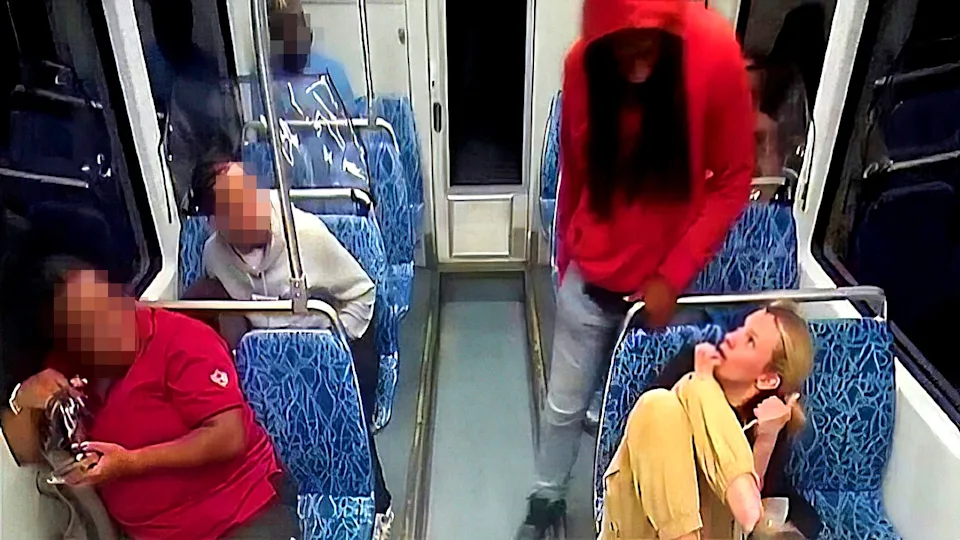
The case quickly attracted national attention after surveillance video from the train showed the attack and raised questions about whether more could have been done to protect passengers.
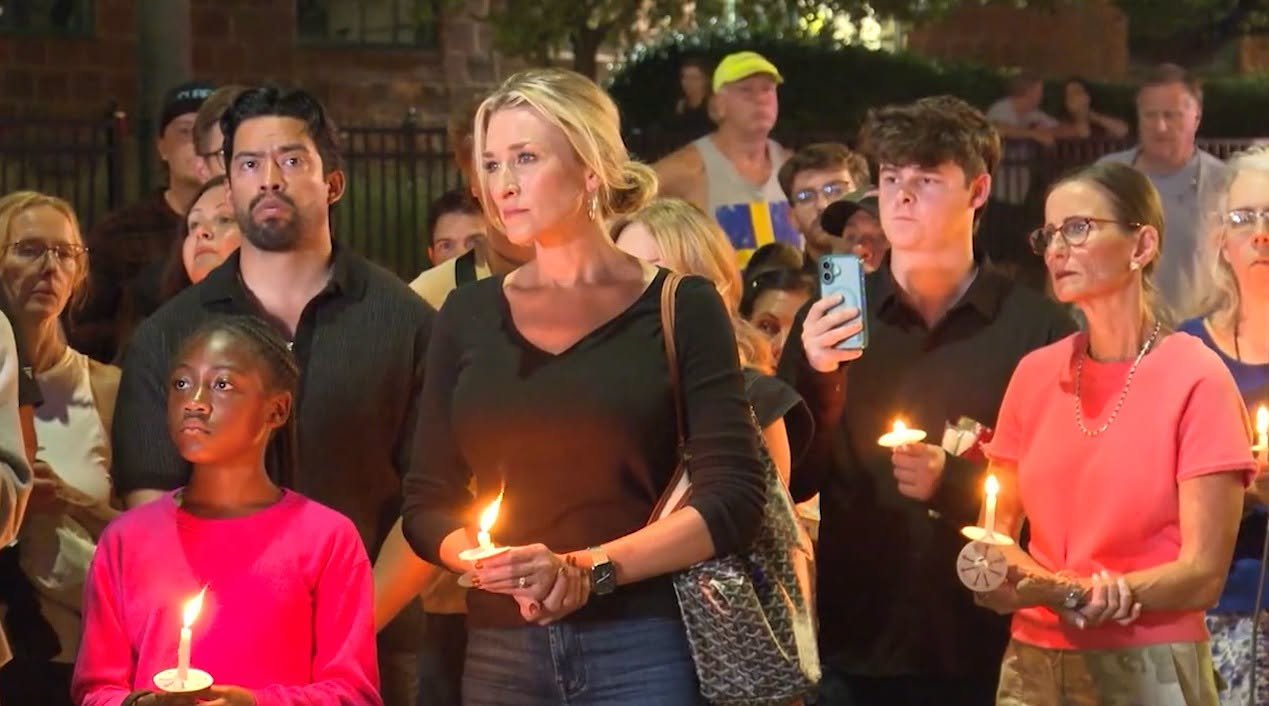
The focus was not limited to the accused attacker.
It also turned toward the transit system itself.
Investigators and reporters began examining how Brown entered the system, how long he had been traveling on CATS before the killing, what security personnel were doing that evening and whether warning signs had been missed.
One year later, those questions are now part of a civil lawsuit.
What Zarutska’s family says went wrong
The lawsuit argues that the attack was not simply an isolated act of violence that could not have been anticipated.
Instead, the family alleges that Charlotte and Professional Security Services knew, or should have known, about criminal activity occurring around the Blue Line and failed to implement reasonable safety measures.
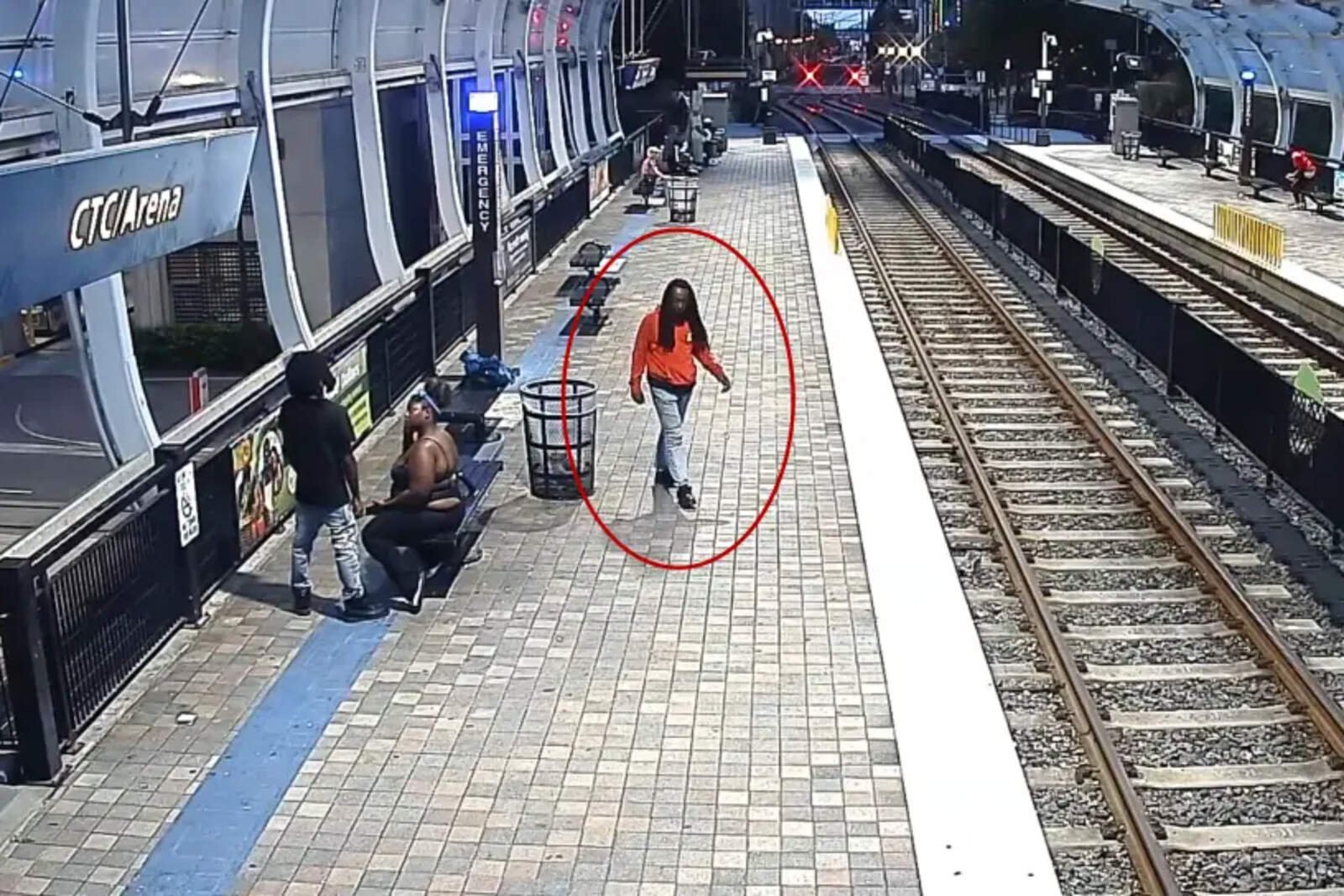
The complaint specifically points to three areas.
First is fare enforcement.
The lawsuit alleges that people could enter the transit system without being required to pass through physical barriers or demonstrate that they had paid for a ride.
Second is security staffing.
The family argues that the security contractor was not adequately staffed or deployed across the system.
Third is the lack of physical access controls.
Unlike transit systems that use turnstiles or other barriers, CATS light rail stations have historically allowed passengers to access platforms without passing through a controlled entrance.
The family’s attorney, Lauren Newton, described the situation as evidence of what she called “systemic failures” within CATS.
But one important distinction remains: the lawsuit’s claim that these failures made Zarutska’s death preventable is an argument the family must establish through litigation. It is not currently a finding by a court.

The security staffing question
One of the most specific allegations concerns how many security officers were actually available when Zarutska was killed.
According to the lawsuit, Charlotte’s amended contract with Professional Security Services provided funding for up to 219 security personnel for fiscal years 2025 and 2026.
The complaint alleges that only 183 positions had been filled at the time of Zarutska’s death.
The gap was even more pronounced among armed security personnel.
The lawsuit says the contract allowed for as many as 39 armed guards, while only 11 had been hired.
The family also alleges that there was no security guard aboard the train car where Zarutska was attacked.
The family’s attorney has argued that having an officer or security guard on the train could have changed the outcome.
That assertion, however, has not been established in court.
The lawsuit will have to address whether the alleged staffing shortages were legally significant and whether additional security would reasonably have prevented the attack.
Those are questions for the civil case to determine.
The fare enforcement issue gains new significance
The lawsuit was filed at almost the same time a North Carolina state audit brought renewed attention to CATS’ fare enforcement practices.
The State Auditor’s Office released its report on August 17, just days before the lawsuit.
The audit found that fare enforcement on the light rail system was limited and that citations for fare evasion fell from 4,763 in 2023 to 2,018 in 2025.
The report also found that CATS collected only $750 in fare-evasion fines during state fiscal year 2024 and $550 during fiscal year 2025.
Auditors estimated that fare evasion could be costing the transit system millions of dollars each year. Another finding was that CATS had $1.7 million in unspent safety and security funding.
Those findings do not establish that fare evasion caused Zarutska’s death.
But they are significant because the new lawsuit makes fare enforcement one of its central arguments.
The family alleges that the absence of effective enforcement made it possible for riders to enter and use the system without being checked.
Brown’s movements before the attack
The lawsuit also draws attention to the movements of the man accused of killing Zarutska.
According to reporting on the case, Brown had been using CATS transportation before the attack and was able to travel through the system without paying a fare.
Surveillance footage showed Brown on CATS transportation for an extended period before Zarutska boarded the train.
The lawsuit argues that this illustrates a broader weakness in the system: passengers could access the transit network without physical barriers and without consistent fare enforcement.
The family is not arguing that CATS caused Brown to attack Zarutska.
Rather, the civil complaint alleges that the transit system failed to provide reasonable protections against foreseeable risks.
That distinction will likely become important as the lawsuit moves forward.
The criminal case has also changed
While Zarutska’s family is pursuing a civil case, the criminal prosecution of Decarlos Brown has encountered a major legal obstacle.
Brown has been charged in connection with Zarutska’s death, but in June 2026 a judge found him incompetent to stand trial.
The determination followed psychiatric evaluations that concluded he was not currently capable of proceeding with the case.
Brown remains in custody while receiving treatment, and prosecutors have indicated that his competency could potentially be restored.
That means the criminal case is not moving toward trial in the ordinary way at this point.
The competency ruling also creates an important distinction between the two proceedings.
The criminal case focuses on Brown and whether he can be tried for Zarutska’s death.
The new civil lawsuit focuses on whether Charlotte and its security contractor failed in their duties and whether those alleged failures contributed legally to Zarutska’s death.
The two cases therefore examine different questions.
A broader debate over Charlotte’s transit system
Zarutska’s death became a catalyst for a much larger discussion about public transportation safety in Charlotte.
The questions have included how much security should be present on trains, how fare enforcement should work, whether physical barriers should be installed and how transit agencies should respond when people with serious criminal histories use public transportation.
The debate has also expanded into questions about mental health and the criminal justice system.
But the new lawsuit is narrower in one important respect.
It asks whether the City of Charlotte and its contracted security provider fulfilled their responsibilities to passengers.
The family argues that they did not.
What the state audit found
The timing of the lawsuit is particularly significant because the state audit provides independent documentation of some of the problems surrounding CATS.
The North Carolina State Auditor’s Office reported that fare enforcement was scarce and that the system had experienced significant losses associated with unpaid fares.
The report also examined security spending and staffing.
Those findings give the family’s lawsuit additional context, although they do not decide the legal claims now before the court.
The lawsuit and the audit are separate matters.
The auditors were examining the operation of the transit system.
The family is asking a court to determine whether alleged failures by the city and its contractor amounted to negligence and contributed to Zarutska’s death.
A year later, the questions remain
For Zarutska’s family, the lawsuit represents an attempt to seek accountability beyond the criminal case against the man accused of killing her.
They argue that the tragedy should lead to changes in the way Charlotte protects people who depend on public transportation.
The family is seeking damages of more than $25,000 and punitive damages against Professional Security Services, according to the lawsuit. The estate’s claims include wrongful death based on alleged negligent and inadequate security as well as gross negligence.
The family has also emphasized that the lawsuit is about more than financial compensation.
Their stated goal is to prevent another passenger from experiencing what happened to Zarutska.
Charlotte, meanwhile, has declined to comment on the active litigation.
That leaves the allegations to be tested in court.
A year after Zarutska’s death, the central questions have therefore changed.
The first question was who killed her.
Police identified Brown and charged him with murder.
Now another question is being asked: Could the transit system have done more to protect her?
The answer will not come from the anniversary of the tragedy or from the allegations alone.
It will depend on evidence, court proceedings and the legal arguments surrounding what Charlotte and its security contractor knew, what they were required to do and whether additional safety measures could reasonably have prevented the attack.
For now, Zarutska’s family is asking a court to examine those questions.
And as Charlotte marks one year since the death of a young Ukrainian woman who came to the United States looking for a safer life, the lawsuit has placed the city’s public transit system under renewed scrutiny.
The tragedy began with a fatal attack on a train.
One year later, the fight has moved into court — where the question is no longer only what happened to Iryna Zarutska, but whether the system around her failed to keep her safe.