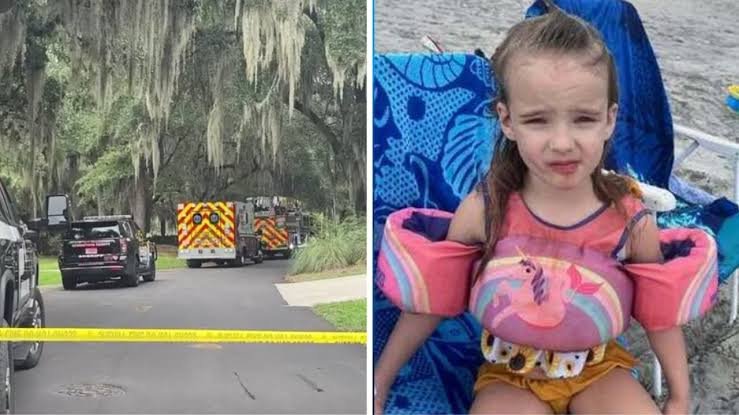
The investigation into the death of 5-year-old Saylor Hayes has taken another major turn, with her parents now back in South Carolina to face charges connected to the disappearance and death of their daughter.
John Herb Hayes III and Geordyn Nichole Hayes were arrested in Tennessee on September 1 after Saylor was found dead in a South Carolina waterway. Both were charged with unlawfully placing a child at risk and willfully abandoning a child.
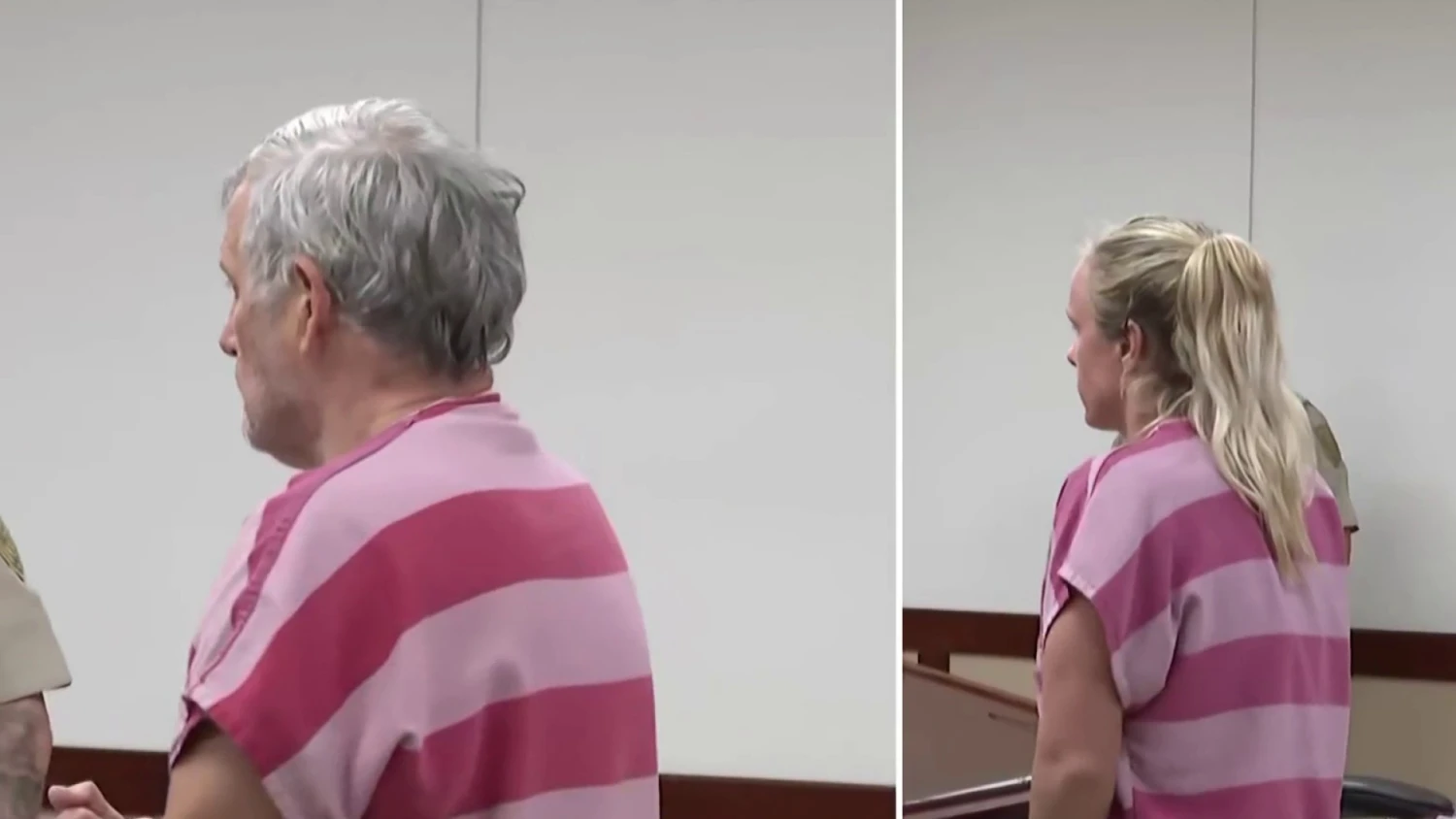
On Thursday, September 3, the couple appeared separately before a judge in Carter County, Tennessee. Neither requested an extradition hearing, and both waived their rights to additional proceedings and agreed to return to South Carolina. Authorities said they would be transferred to Georgetown County custody.
By Friday, September 4, South Carolina authorities had taken custody of the couple, marking the next stage in a case that began with a frantic search for a missing child and has since raised serious questions about the care and supervision Saylor received before she disappeared.
Saylor was reported missing on Sunday, August 30, after authorities said she wandered away from a rental home in the Hagley community of Pawleys Island.
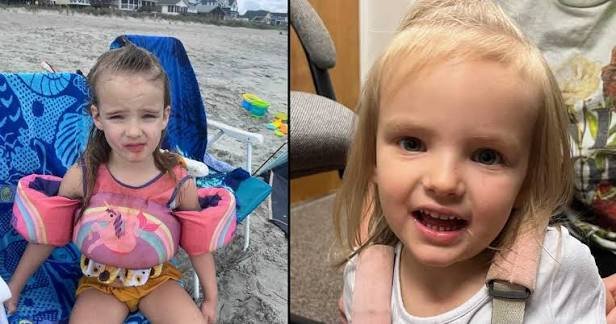
The 5-year-old had been vacationing with her family in the area.
According to authorities, Saylor was nonverbal, autistic, had a history of wandering and was known to be attracted to water. Those details became particularly significant as investigators reconstructed the circumstances surrounding her disappearance.
The initial search was extensive.
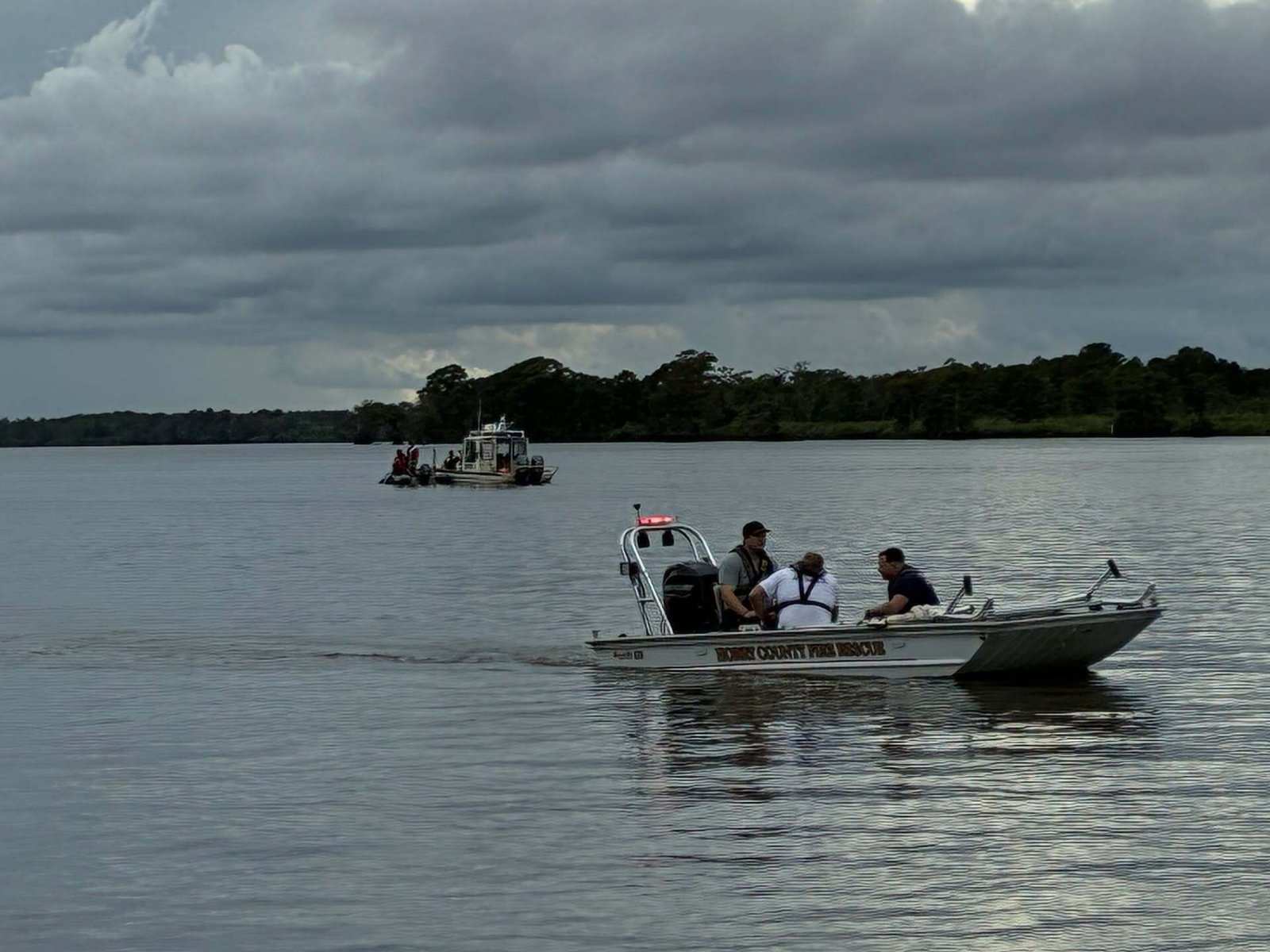
Georgetown County deputies, firefighters, marine patrol officers, K-9 teams, drones, aircraft and volunteers searched the surrounding neighborhood, roads, shoreline and waterways. Authorities also used equipment associated with Project Lifesaver, a program designed to help locate individuals who are at risk of wandering because of cognitive conditions or other special needs.
But investigators soon discovered that there was a critical problem.
Saylor was not wearing her Project Lifesaver transmitter when she disappeared.
The Washington County Sheriff’s Office in Virginia later determined that the transmitter assigned to Saylor was actually back at the family’s Virginia residence, inside a vehicle on the property.
According to the sheriff’s office, Saylor had been enrolled in the Project Lifesaver program since June 2024. The transmitter is designed to be worn continuously and is attached with a specialized band that cannot simply be unclasped. Authorities said the band must be physically cut to remove it.
That discovery became one of the most important developments in the investigation.
Search teams in South Carolina had been trying to detect Saylor’s assigned frequency, but they could not find it.
Virginia deputies were then asked to check the family’s home.
They detected the frequency there and traced it to the transmitter.
It was not with Saylor.
Authorities have said that if she had been wearing the device, it could potentially have helped search teams locate her sooner. The sheriff’s office has emphasized that the tracking technology itself worked as designed; the problem was that the transmitter was not with the child when she disappeared.
The search ended tragically Monday morning.
At about 9:45 a.m. on August 31, agents with the South Carolina Department of Natural Resources found Saylor’s body in the water near the area where she had last been seen.
The discovery came after hundreds of people and multiple agencies had spent hours searching for the little girl.
Authorities later said there were no visible signs of trauma on Saylor’s body during the initial examination. Her autopsy was scheduled for September 4, and investigators have not publicly released a final cause of death.
The circumstances surrounding the search have now become a central part of the criminal case against Saylor’s parents.
According to arrest warrants, investigators allege that John and Geordyn Hayes knew Saylor was not wearing the Project Lifesaver transmitter but nevertheless encouraged search efforts involving the tracking system.
The warrants also allege that the parents directed search efforts away from the nearby body of water where Saylor was ultimately found.
Those allegations are serious, but they remain allegations contained in the arrest warrants. The charges themselves are not a finding of guilt.
Georgetown County Sheriff Carter Weaver has stressed that the arrests followed evidence developed during the investigation and that both defendants are presumed innocent unless proven guilty in court.

The case has also raised questions about what happened at the vacation rental before Saylor disappeared.
According to the arrest affidavits, investigators believe the child was left without adequate supervision near a body of water. The documents describe Saylor as a severely nonverbal autistic child with a known history of wandering and an affinity for water.
Authorities allege that the circumstances created an unreasonable risk to her safety.
A 911 call released during the investigation provides another glimpse into the frantic moments after her disappearance.
John Hayes called emergency dispatchers and said his daughter had escaped from the rental property.
He told the dispatcher that Saylor was autistic and nonverbal and repeatedly expressed concern about finding her.
The call helped initiate the large-scale search that followed.
But the case became even more complicated as investigators examined information provided about the tracking device.
According to authorities, searchers were led to believe that Saylor had the Project Lifesaver equipment with her. When the equipment failed to detect her signal, investigators contacted officials in Virginia.
The transmitter was eventually located at the family’s home — not with Saylor in South Carolina.
That discrepancy is now part of the allegations against her parents.
The investigation has also uncovered previous legal issues involving Geordyn Hayes.
Newly released records show that she was arrested in Virginia in February in connection with allegations involving another child. According to the Washington County Sheriff’s Office incident report, she was charged with child abuse or neglect involving reckless disregard for life. The alleged victim was identified as a juvenile male.
Those earlier allegations involve a different case and should not be treated as proof that they caused or predicted Saylor’s death. However, they are part of the broader background investigators and reporters are now examining as the current case develops.
For the Hayes family, the legal proceedings have moved rapidly since Saylor’s body was recovered.
John and Geordyn were arrested in Carter County, Tennessee, on September 1, one day after investigators found Saylor.
They were not arrested in South Carolina because they were believed to have remained in Tennessee following the family’s trip, according to reporting on the case. Their return to South Carolina required an extradition process.
That process became much shorter when both parents waived their rights during Thursday’s hearing.
The court appearances lasted only a few minutes.
John Hayes could be heard asking a deputy after the proceeding whether he would have an opportunity to tell his side of the story. Geordyn Hayes also appeared in court before both were transferred for the next stage of the case.
Now that the parents are back in South Carolina custody, the focus is expected to turn toward the underlying criminal case.
Investigators still have to establish exactly what happened before Saylor walked away from the rental property, what supervision she was receiving at the time, what the parents knew about the missing transmitter, and whether their actions during the search contributed to the delay in locating her.
The final medical findings could also provide important information.
At the time of the latest reports, authorities had not publicly announced a final cause of death. That means it would be premature to state exactly how Saylor died or to claim that she drowned unless and until officials confirm it.
What investigators have established so far is the sequence of events.
Saylor disappeared from the Pawleys Island-area rental home on August 30.
A massive search began.
The Project Lifesaver transmitter assigned to her could not be detected in South Carolina.
Virginia authorities later located the transmitter at the family’s home.
Saylor was found dead in nearby water the following morning.
Her parents were arrested days later and accused of placing their child at risk and abandoning her.
And now, as of September 4, they are back in South Carolina custody.
The case has left many questions unanswered.
Why was Saylor’s tracking device not with her?
When exactly was it removed?
Who removed it?
Why did searchers receive information indicating that she had the transmitter?
What happened during the critical period between the time she disappeared and the moment her body was found?
And what will the autopsy reveal about her death?
Those questions are likely to become increasingly important as prosecutors and investigators move forward.
For now, however, the case remains an active investigation.
The charges against John and Geordyn Hayes do not establish that either parent caused Saylor’s death, and neither has been convicted. Their return to South Carolina simply marks the next step in a legal process that began with a missing-child emergency and quickly became a criminal investigation.
For the community that searched for Saylor, the tragedy is difficult to separate from the hours spent hoping she would be found alive.
Hundreds of people joined law enforcement in the search. Crews searched from the ground, water and air. Volunteers checked nearby properties and waterways.
But after nearly two days, the search ended with the discovery of a 5-year-old child who had never been far from the area where she disappeared.
Now investigators are left to reconstruct those final hours — not only to determine how Saylor died, but also to understand the decisions made before and during the search for her.
The parents are back in South Carolina.
The investigation continues.
And the answers surrounding Saylor Hayes’ final hours have yet to be fully revealed.