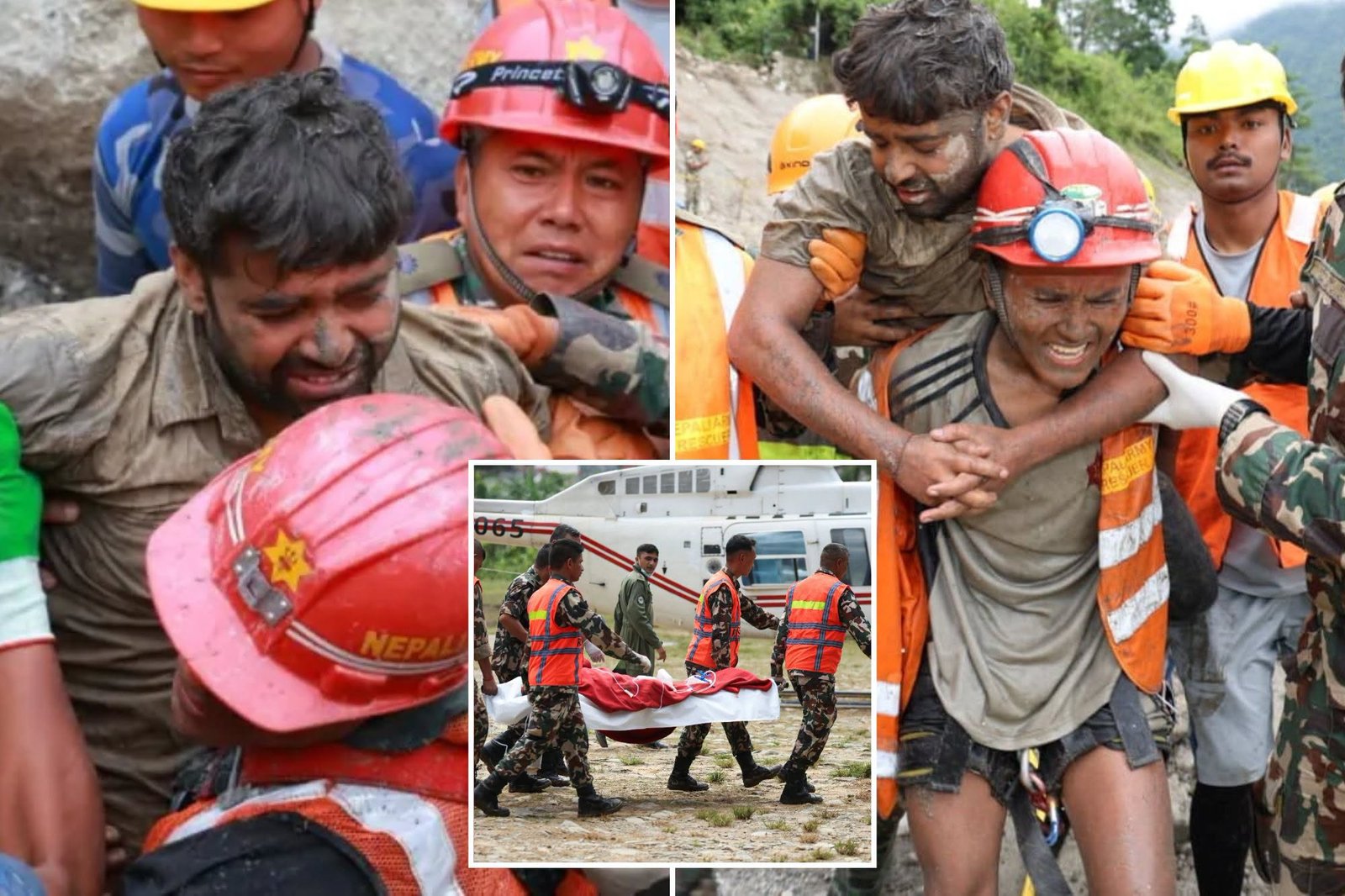
In a country still struggling to recover from one of its deadliest recent disasters, rescuers in Nepal achieved a remarkable breakthrough Friday: two workers were pulled alive from a buried hydropower tunnel after spending nine days trapped underground.
The rescue happened at the Upper Trishuli 3A hydropower project in Rasuwa district, where floodwaters and massive amounts of mud, rock and debris swept through the area on August 26.
The two survivors were identified as Sanjay Sah, 30, a mechanical foreman, and Kabir Maharjan, 45, a mechanical supervisor. Both were found deep inside the tunnel and brought out alive on September 4. They were then taken for medical treatment in Kathmandu.
Their rescue has provided a rare moment of hope after days of increasingly desperate searches for workers believed to be trapped across Nepal’s damaged hydropower facilities.
It also raised a new possibility for rescuers and families still waiting for news: if Sah and Maharjan survived nine days underground, others may still be alive.
A disaster that buried an entire hydropower complex
The crisis began on August 26, when a massive flood swept through the Trishuli River region.
The disaster followed an ice and rock collapse near the Nepal-Tibet border, sending an enormous surge of water, mud and debris downstream. The force of the flood damaged communities, infrastructure and several hydropower projects along the river.
At the Trishuli 3A project, workers inside underground structures were suddenly confronted with rapidly rising water and debris.
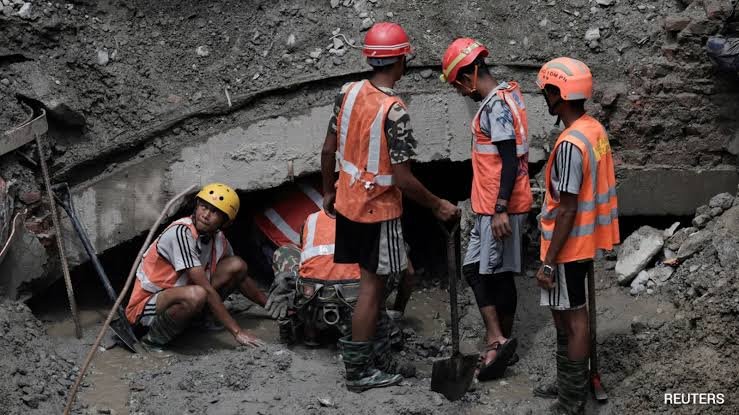
Access to parts of the facility became extremely difficult, leaving rescue teams facing blocked entrances and unstable conditions.
As the days passed, families of missing workers were left waiting for any indication that their relatives had survived.
Authorities estimated that hundreds of workers were missing across hydropower projects affected by the disaster, with a large number believed to be trapped underground. Reuters reported that around 900 workers were missing from affected hydropower projects, with roughly 500 believed to be trapped in tunnels.
Sah stayed behind as others tried to escape
The story of Sanjay Sah has added an extraordinary human element to the rescue.
Sah was working in the project’s control room when the flood began.
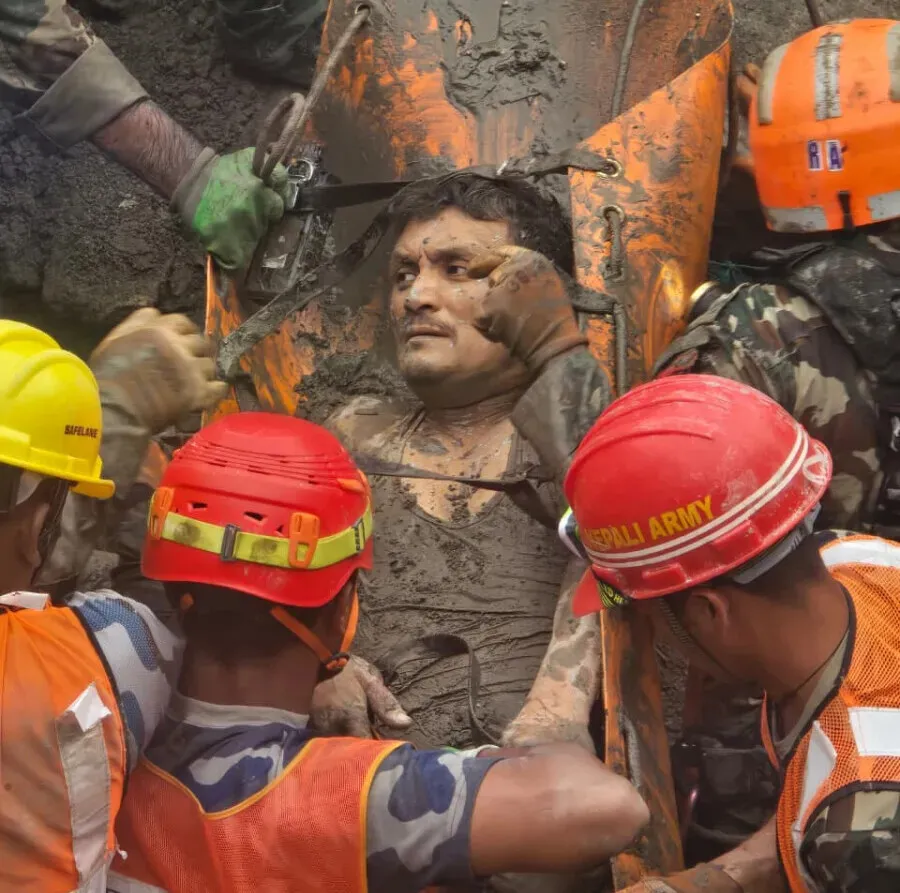
According to his account after being rescued, roughly 40 to 45 workers were at the site at the time. As water began entering the underground area, he focused on helping others get to safety.
That decision ultimately cost him his own opportunity to escape.
Sah told officials that he helped direct other workers toward safer areas but eventually became trapped himself.
He spent the following nine days underground.
His last conversation with his family came on the morning of August 26. His sister said they spoke for several minutes before he returned to his work.
His phone was later switched off.
For days, his relatives had little information about whether he was alive.
They continued contacting authorities and pushing for rescue efforts while waiting for news.
Then, on Friday, that news finally came.
Sah had survived.
Maharjan had arrived for maintenance work
Kabir Maharjan’s path into the tunnel was different.
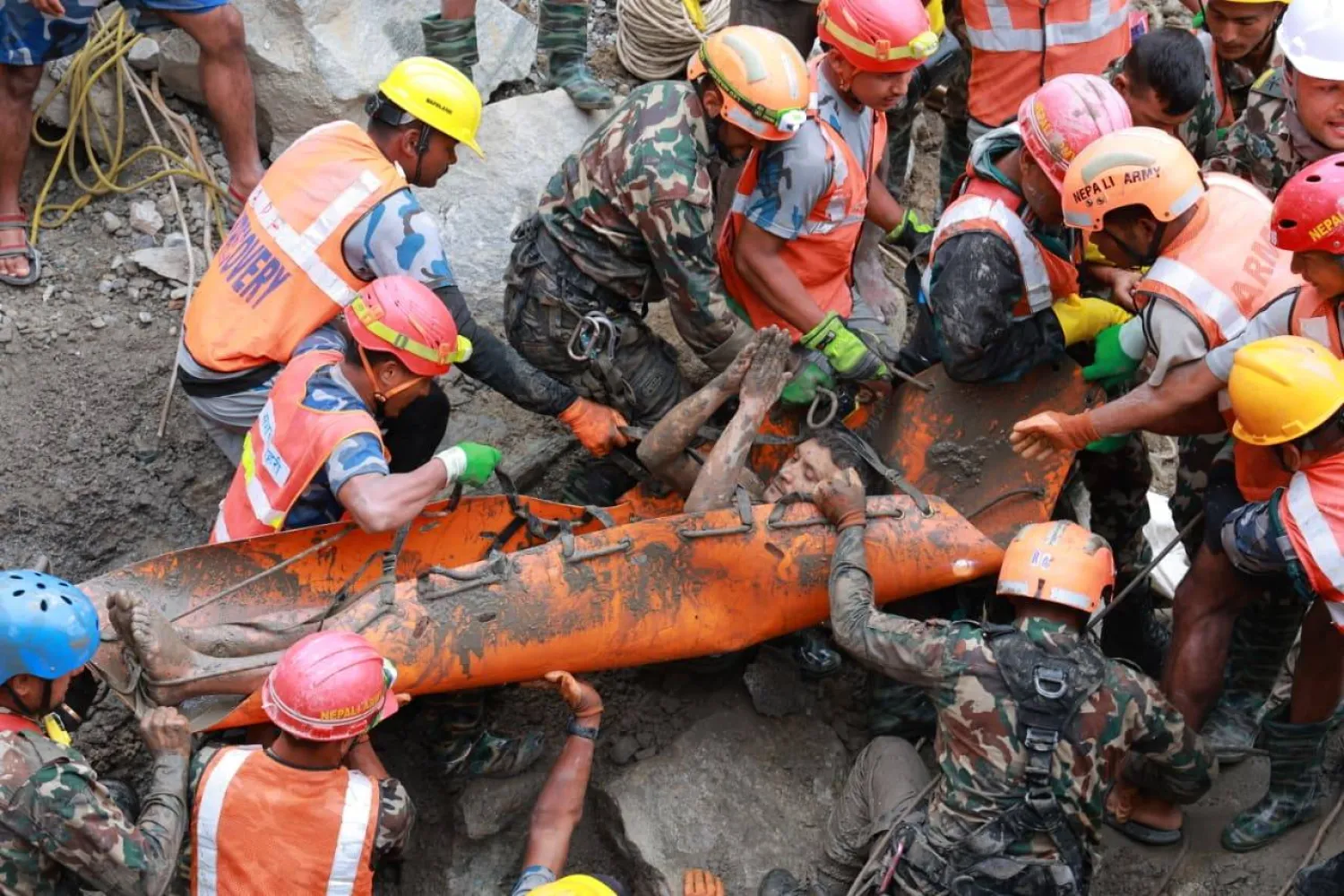
The 45-year-old mechanical supervisor was not permanently stationed at the Trishuli 3A project.
He had traveled there from the Kulekhani hydropower project for scheduled maintenance work shortly before the disaster. He had worked for the Nepal Electricity Authority for more than 15 years, according to his family.
Maharjan left home on August 25.
The following morning, his family tried to contact him after learning about the flooding.
His phone was off.
His wife, Hira Shobha, said their last conversation occurred at around 7:30 a.m. on August 26. Maharjan told her that he and his colleagues were going to have breakfast before heading underground to work.
He also warned her that his phone might not work once he went underground.
It was the last conversation she had with him.
For the next nine days, his family did not know whether they would ever see him again.
On Friday, they finally received the answer they had been hoping for.
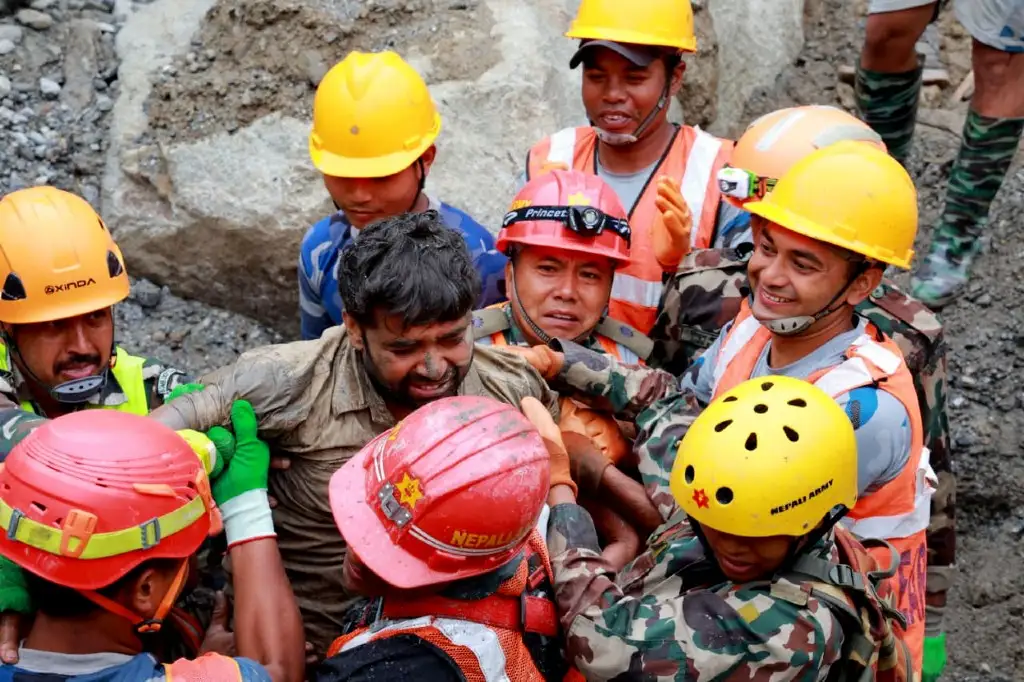
Maharjan was alive.
Rescuers heard voices from inside
The rescue operation had become increasingly urgent as crews worked through huge quantities of mud and debris blocking the tunnel.
Then came a crucial sign.
Rescuers reported hearing faint voices from inside the tunnel.
That discovery changed the atmosphere at the site.
Instead of searching only for possible survivors, teams now had a reason to believe people were definitely alive somewhere beyond the blockage.
Australian tunnel-rescue expert Arnold Dix, who was advising the operation, said rescuers believed they had received a faint response from inside after calling out to those trapped.
Rescue teams then continued clearing the tunnel.
They had reportedly worked through roughly 50 to 60 meters of debris in an effort to reach the trapped workers.
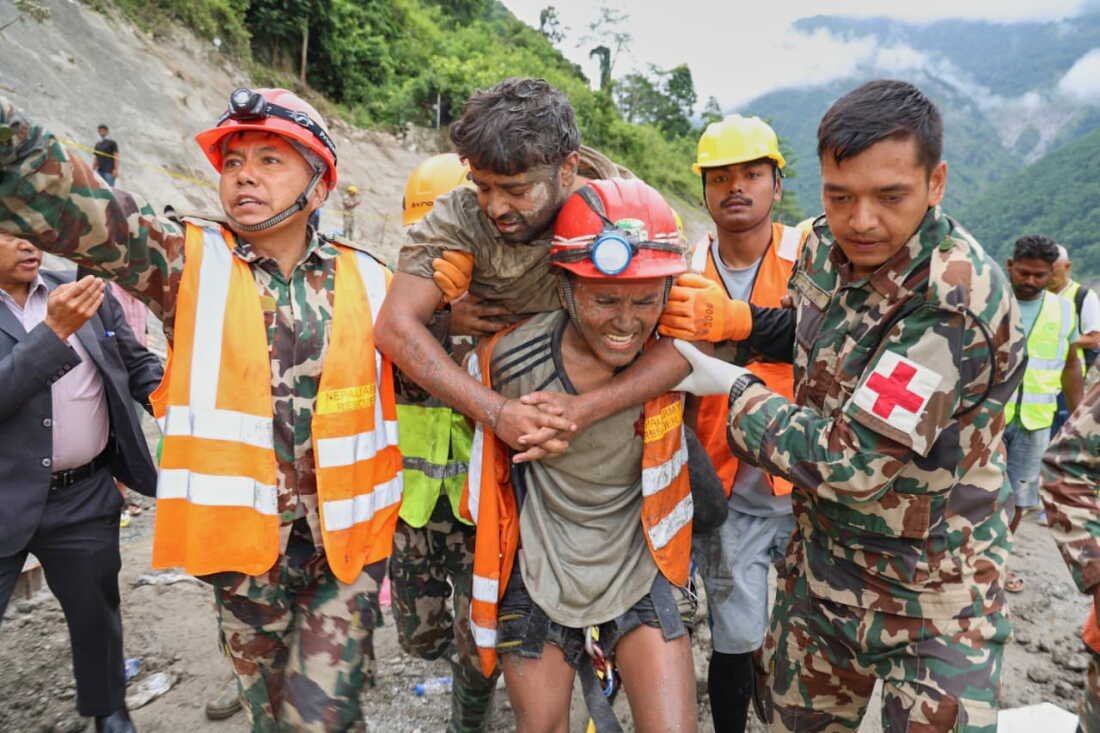
The breakthrough eventually came Friday.
Two men were brought out alive.
Images from the rescue showed workers covered in mud and being carried from the tunnel by members of the rescue teams.
After nine days in darkness, Sah and Maharjan were finally back in the open air.
“What day is it?”
One of the most striking details from the rescue came from Sah himself.
After being brought out, he reportedly asked:
“What day is it?”
For nine days, he had been cut off from the outside world.
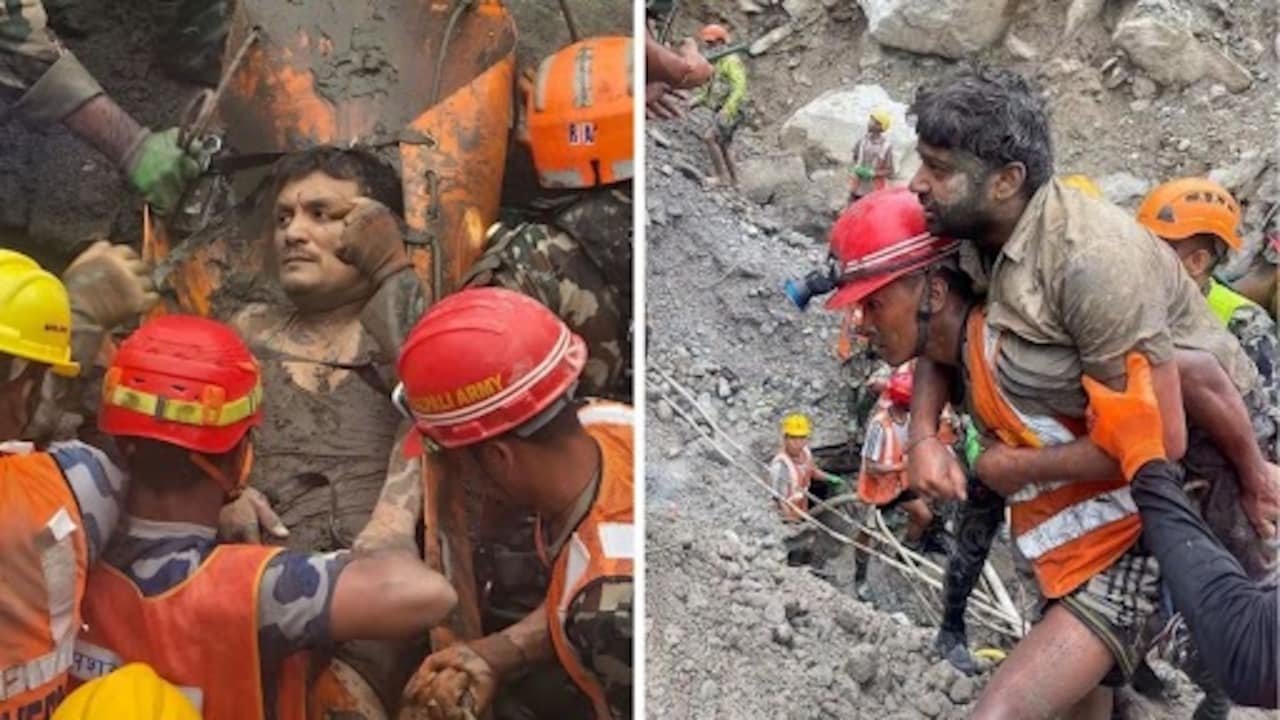
His question captured just how completely the two men had been separated from normal life while trapped underground.
Sah later explained that he spent much of his time praying and chanting the Hare Krishna Mahamantra, which he said helped him maintain hope during the ordeal.
His survival is particularly remarkable because he had been trapped without normal access to food, water or communication.
The fact that the men survived also suggests that there were survivable pockets of air within the underground structure.
Both survivors needed medical treatment
The rescue did not mark the end of their ordeal.
Both men received initial medical attention after being brought out of the tunnel.
They were subsequently transported to Kathmandu for further treatment.
Reports said Sah was in stable condition, while Maharjan was in more serious condition and was admitted to Birendra Sainik Hospital for intensive medical care.
The Nepal Electricity Authority said it would continue supporting their medical treatment.
For their families, however, the most important fact was much simpler.
They were alive.
Their rescue has renewed hope for others
The successful rescue comes at a critical moment for families still waiting for missing relatives.
Officials believe hundreds of workers remain unaccounted for in the hydropower sector following the disaster.
At Trishuli 3A alone, hundreds were reported missing, with many believed to have been inside or near underground structures when the flooding occurred.
The rescue of Sah and Maharjan does not mean other missing workers will necessarily be found alive.
But it has demonstrated that survival underground for nine days was possible.
That has given rescue teams another reason to keep searching.
Officials have continued working with the Nepal Army, Nepal Police, Armed Police Force and technical specialists to investigate damaged tunnels and locate possible survivors.
International specialists have also been assisting with the operation.
A moment of hope inside a national tragedy
The rescue of the two men stands in sharp contrast to the scale of destruction caused by the August 26 disaster.
More than 1,200 people have been reported dead in Nepal, while thousands more remain missing. The disaster has also destroyed homes and damaged major infrastructure across affected areas.
The human toll has been enormous.
Families have spent days searching for relatives.
Communities have been digging through debris.
Rescue teams have worked around the clock in dangerous conditions.
And hydropower workers have remained among those facing some of the most difficult rescue conditions because entire sections of underground facilities were buried or blocked by flood debris.
Against that backdrop, seeing two workers emerge alive after nine days was an extraordinary moment.
For the families of Sah and Maharjan, it was the moment they had been waiting for.
For other families, it may be a reason to continue hoping.
The search is not over
The rescue teams still have work ahead of them.
Authorities continue searching the damaged hydropower facilities for other missing workers, while engineers and rescue specialists assess the safest ways to reach areas that remain blocked.
The condition of the tunnels remains a major concern, and rescuers must balance the urgency of reaching possible survivors with the danger posed by unstable structures and additional debris.
But Friday’s rescue has changed one important thing.
The question is no longer simply whether anyone could have survived underground for nine days.
Now there is proof that two people did.
Sanjay Sah went into the tunnel on August 26 expecting to do his job and help his colleagues.
Kabir Maharjan arrived for routine maintenance work.
Neither man knew that the next time they would see daylight would be nine days later.
They emerged covered in mud, exhausted and injured — but alive.
And as rescuers continue searching the tunnels of Nepal’s devastated hydropower projects, their survival has given families still waiting for answers something they desperately needed: a reason not to give up hope.
The rescue operation remains ongoing, and authorities have not yet determined the fate of all those still missing.