More than three decades after losing her daughter, May Martinez traveled from Florida to Tennessee expecting to witness the final chapter of a case that had remained with her family for years.
Instead, she left Nashville with even more questions.
Martinez is the mother of Colleen Slemmer, a 19-year-old Job Corps student whose case led to Christa Pike receiving a sentence of execution in 1996.
Pike, now 50, was scheduled to be executed at Riverbend Maximum Security Institution in Nashville on September 30, 2026.
But the procedure did not go as planned.
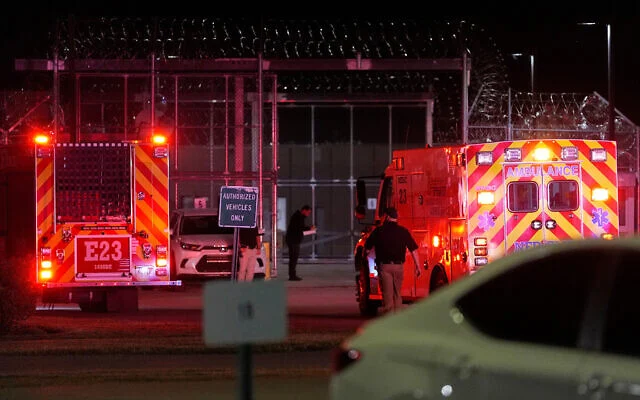
Pike was given two doses of pentobarbital, according to her attorneys and court filings. Witnesses later reported that she appeared to remain conscious and was still breathing after the medication was administered.
She was eventually taken from the prison to a hospital, where her attorneys said she remained in critical condition, unconscious and on a ventilator.
For Martinez, watching the procedure unfold was an experience she said she will not easily forget.
She and her husband, Raul Martinez, had traveled roughly 11 hours from their home in Florida to Nashville.
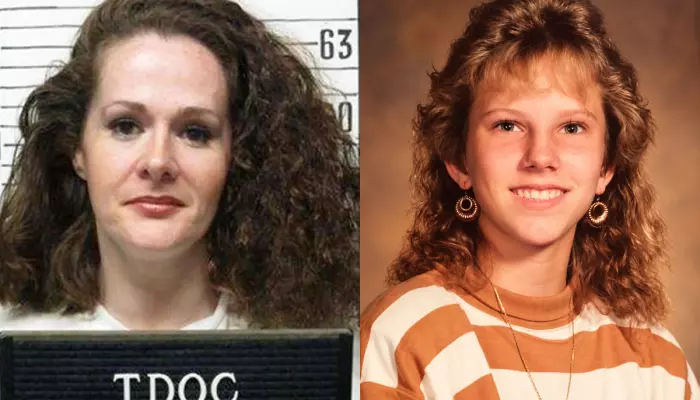
They had waited years for the scheduled execution.
But as she watched through the viewing window, Martinez said she saw Pike moving and appearing to remain responsive.
Speaking with ABC affiliate WJXX while traveling back to Florida, Martinez said she became overwhelmed and broke down in tears.
She also said that no one from the state had apologized to her following what happened.
“I think that the state owes me a big apology,” Martinez said.
For Martinez, the issue was not simply that the procedure failed.
It was what the moment represented for her family after more than 30 years of waiting.
A case that began in 1995
Colleen Slemmer was 19 when she was killed in January 1995.
She and Pike were both enrolled in the Job Corps program in Knoxville at the time.
According to court records and testimony from the original case, Pike and her then-boyfriend, Tadaryl Shipp, were convicted in connection with Slemmer’s killing.
Pike was 18 at the time.
The case eventually led to a sentence that placed Pike on Tennessee’s death row and kept the legal proceedings going for decades.
Pike’s scheduled execution on September 30 would have made her the first woman Tennessee had executed in more than 200 years.
For Slemmer’s family, the date had therefore carried enormous significance.
It was supposed to bring an end to a legal process that had stretched across much of their lives.
Instead, the procedure became another unexpected chapter.
What happened inside the execution chamber?
The scheduled procedure was already facing legal uncertainty before it began.
An appeals court issued a stay shortly before the planned execution, but the U.S. Supreme Court later cleared the way for Tennessee to proceed.

The execution eventually went forward that evening.
According to reports from witnesses and Pike’s legal team, officials administered pentobarbital but encountered serious problems during the procedure.
Her attorneys later said she experienced significant injuries to both arms and that hospital staff were treating complications associated with the medication.
They also said Pike had previously raised concerns about the difficulty of establishing an IV because of her medical conditions and small veins.
Witnesses described hearing Pike breathing loudly after the medication had been administered.
The curtains to the viewing area were eventually closed, but Pike was later transported to a hospital.
The Tennessee Department of Correction has said it followed the state’s established protocol.
Gov. Bill Lee subsequently ordered an independent review into what happened.
He also announced that Tennessee’s remaining scheduled execution for 2026 would not proceed while the state examines the incident.

“Nobody apologized”
For Martinez, the state’s response has become another source of frustration.
She told WJXX that she asked what would happen next after it became apparent that the procedure had not gone according to plan.
According to Martinez, she was told that officials did not yet know what would happen with Pike.
The response left Martinez struggling to understand why, after so many years, her family was once again facing uncertainty.
She said she felt as though the state had failed to provide the closure she had expected.
“I didn’t get justice for my daughter,” Martinez later told the Associated Press.
Her comments reflect a complicated position.
Martinez had traveled to Tennessee expecting the state to carry out Pike’s sentence. At the same time, she witnessed a procedure that appeared to go far differently from what anyone in the room had anticipated.
That left her grieving, frustrated and searching for answers.
Tennessee now faces its own questions
The failed execution has prompted scrutiny of Tennessee’s execution procedures.
Gov. Lee has ordered a third-party review designed to determine what went wrong.
The governor said the state needs answers about why the established procedure produced a different outcome.
The Tennessee Department of Correction has maintained that its staff followed the protocol in place.

At the same time, Pike’s attorneys have asked the state to preserve evidence connected to the procedure, arguing that the material will be important in determining what happened inside the execution chamber.
The situation has also led to a broader pause in Tennessee’s execution schedule.
The state’s corrections commissioner, Frank Strada, announced his resignation on October 3, saying his departure was in the public interest and would allow the review to proceed without interference. Reuters reported that the incident was the second execution-related failure involving Tennessee this year.
That means the consequences of the failed procedure now extend well beyond Pike and Slemmer’s families.
State officials are facing questions about medical preparation, execution protocols and how the state responds when a scheduled procedure does not go as expected.
Pike remains in hospital
As of the latest reports, Pike remains hospitalized.
Her attorneys said she has not regained consciousness and is receiving treatment after the procedure.
They have also asked Gov. Lee to commute her sentence.
Her long-term medical condition remains uncertain, and officials have provided limited information about her treatment because of medical privacy concerns.
That creates another unusual legal question.

The state had prepared to carry out Pike’s sentence on September 30. Instead, she was transferred to a hospital and remains under medical care.
What happens next could depend on the results of the independent review, future court proceedings and Pike’s medical condition.
A mother still waiting for answers
For May Martinez, however, the latest developments are deeply personal.
She did not travel to Tennessee simply to watch a legal procedure.
She traveled because she wanted to honor the memory of her daughter.
Colleen was 19 when her life was taken from her, and Martinez has spent decades carrying that loss.
Now, after watching the execution attempt fail, she has returned home with a feeling that the story is still unfinished.
Her daughter cannot be brought back, and no legal proceeding can change what happened in 1995.
But Martinez says she wanted the state to fulfill the sentence that had been imposed decades earlier.
Instead, she witnessed a procedure that ended with Pike being taken to a hospital.
The state now has to determine exactly why.
For Tennessee officials, the independent review could provide answers about what happened inside the execution chamber and whether changes are needed.
For Pike’s attorneys, the focus is on her medical condition and preserving evidence from the procedure.
And for Colleen Slemmer’s family, the question is much more personal: after waiting more than 30 years, what happens now?
For the moment, there is no simple answer.
The review is underway, Tennessee’s execution schedule has been paused, and Christa Pike remains under medical care.
Meanwhile, May Martinez is back in Florida — still carrying the memory of the daughter she lost and still waiting for the sense of closure she believed September 30 would finally bring.
The story that began with Colleen Slemmer in 1995 has now entered another unexpected chapter, one that has raised new questions about Tennessee’s execution system while leaving both families facing an uncertain next step.