
Nearly two decades after three-year-old Madeleine McCann disappeared from a holiday apartment in Praia da Luz, Portugal, the investigation remains active, and a series of new developments in 2026 has once again placed German national Christian Brückner at the center of international attention. British detectives continue to work with authorities in Portugal and Germany, while a new dossier containing information linked to Brückner has reportedly been passed to Scotland Yard as investigators attempt to determine whether the latest material can move the long-running case closer to a prosecutable conclusion.
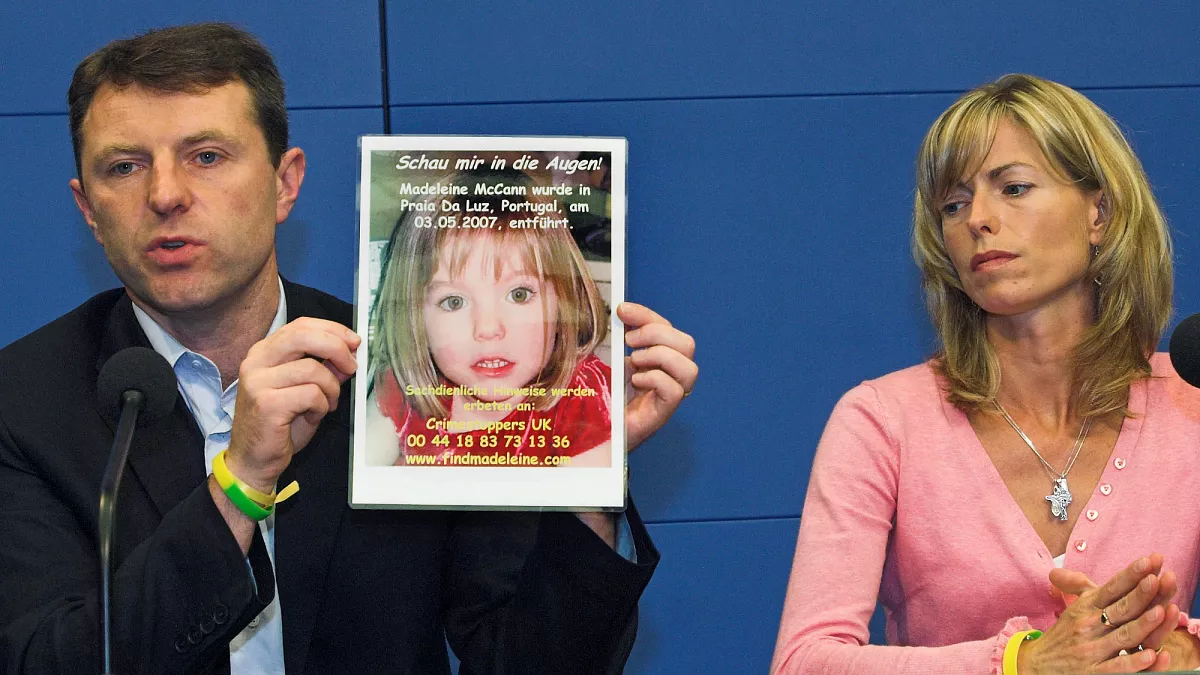
Madeleine disappeared on the evening of May 3, 2007, while she was on holiday with her parents, Kate and Gerry McCann, and her younger twin siblings. The family was staying at the Ocean Club resort in Praia da Luz, in Portugal’s Algarve region. Madeleine was three years old when she vanished from the apartment while her parents were dining with friends at a nearby restaurant.
Her disappearance immediately triggered one of the largest missing-child investigations in modern British history. Search teams, police officers, volunteers and international investigators spent weeks searching the surrounding area, while Madeleine’s photograph was distributed around the world. Despite the enormous effort, she was never found.

The investigation eventually crossed several jurisdictions. Portuguese authorities initially led the case, while British investigators later established Operation Grange to conduct a detailed review and subsequently pursue specific lines of inquiry. The Metropolitan Police confirms that Operation Grange remains an ongoing investigation and that British detectives continue to work with law-enforcement colleagues in Portugal and Germany. The Home Office continues to provide funding for the operation.
The case changed dramatically in 2020 when German prosecutors publicly identified Christian Brückner as their main suspect. German authorities said they believed Madeleine had been killed and that they had evidence connecting Brückner to her disappearance. Portuguese authorities subsequently gave Brückner formal suspect status in 2022.
Brückner’s connection to the case has been examined for years. He lived in the Algarve region around the time Madeleine disappeared and had connections to Praia da Luz. Investigators have also examined his telephone records, vehicles, residences and movements in an attempt to establish whether he was involved in Madeleine’s disappearance.
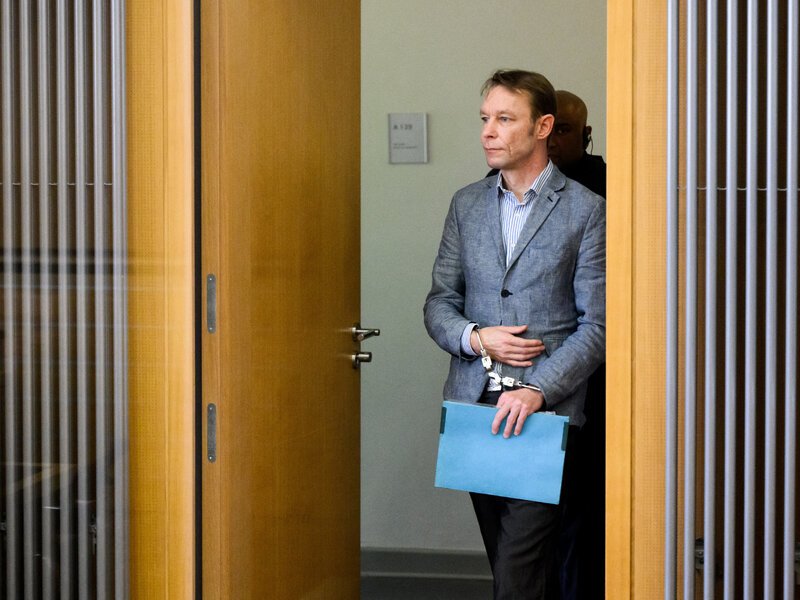
German prosecutors have said they believe Madeleine is dead, but Brückner has never been charged with her disappearance or murder. He has denied involvement in the case. That legal distinction remains crucial: although he is regarded by investigators as a central suspect, no court has found him responsible for Madeleine’s disappearance.
Brückner’s criminal history has also attracted considerable attention. He was convicted in Germany of the rape of a 72-year-old woman in Portugal in 2005 and served a seven-year prison sentence for that offense. He was released from prison in September 2025 after completing that sentence. His release created a new challenge for investigators because he was no longer behind bars on the unrelated conviction while remaining a suspect in the Madeleine investigation.
Before his release, Scotland Yard reportedly attempted to interview Brückner. He declined the request. The refusal did not end the British investigation, but it demonstrated the difficulty investigators face in pursuing a suspect who has not been charged in the McCann case.
Since his release, Brückner has continued to attract intense media attention. His movements have been monitored and he has remained under scrutiny because of his status in the Madeleine investigation. In June 2026, he was reportedly involved in a confrontation with police outside a supermarket in Germany. According to reporting, officers were injured during the incident, although the episode is separate from the investigation into Madeleine’s disappearance. Brückner’s lawyer criticized the police response, while authorities continued dealing with the legal issues surrounding his post-release supervision.
The most important development for the Madeleine case itself, however, has come from the continuing cooperation between German and British authorities.
In July 2026, reports emerged that German investigators had provided Scotland Yard with a new dossier containing information considered potentially significant to the investigation. The material reportedly concerns evidence associated with Brückner and is now being assessed by British detectives. The existence of the dossier does not mean that prosecutors have suddenly obtained enough evidence to charge Brückner, but it represents a notable development because it indicates that investigators continue to exchange information nearly 20 years after Madeleine disappeared.

The new material comes after years of forensic searches and investigative reviews.
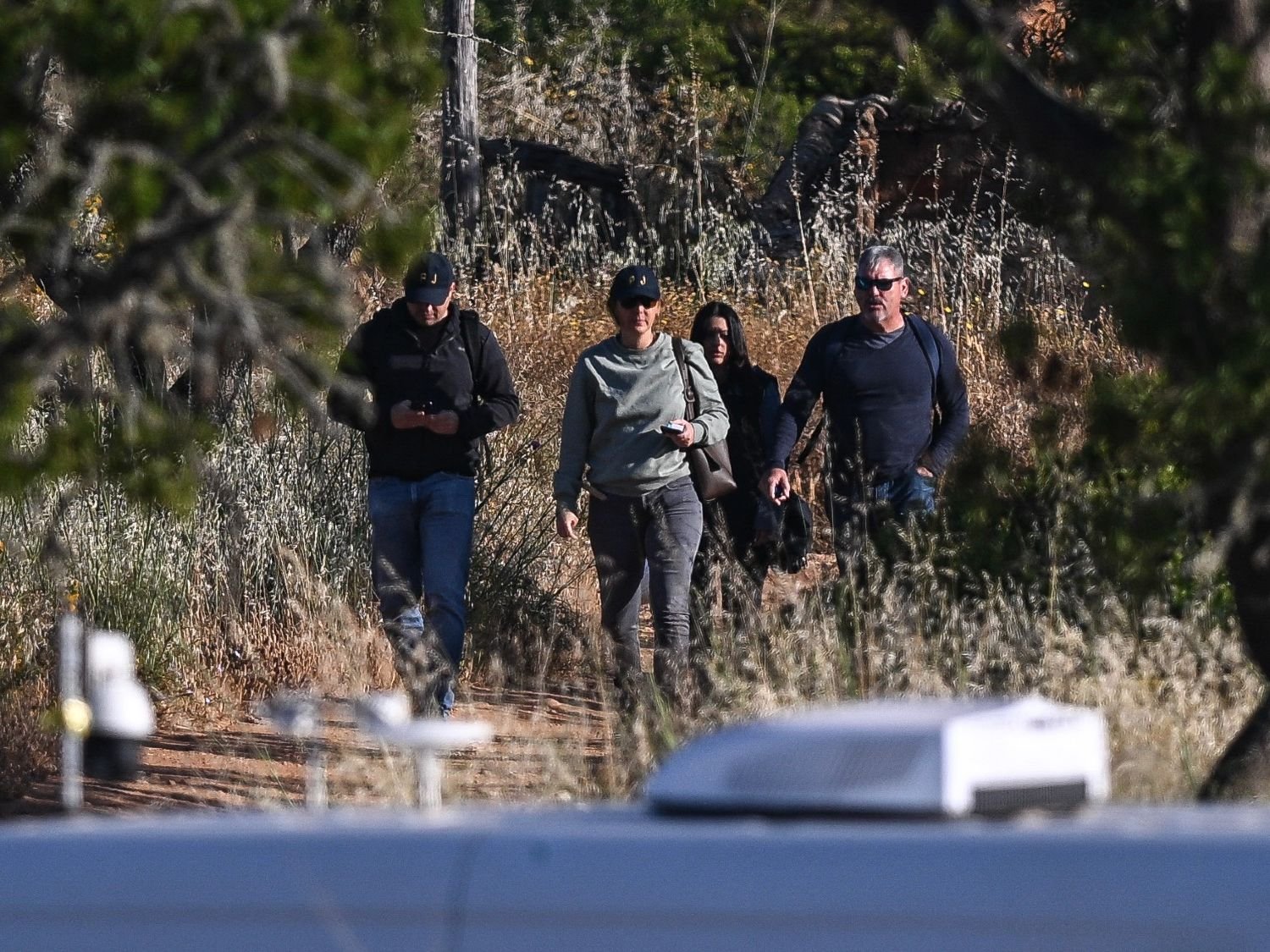
In June 2025, Portuguese police carried out searches in the Algarve at the request of German authorities. The operation focused on areas around Lagos and Praia da Luz and involved specialist equipment and searches of land believed to be relevant to the German investigation. Authorities were particularly interested in areas connected to places where Brückner had lived or spent time around the period of Madeleine’s disappearance.
The searches were significant because German prosecutors have long worked on the assumption that Madeleine is dead. Investigators have examined several possible locations where evidence relating to her disappearance might have been concealed or destroyed. However, no publicly announced discovery from those searches has established where Madeleine is or provided a definitive public explanation of her fate.
The lack of a body remains one of the most difficult aspects of the investigation.
Without Madeleine’s remains, investigators have had to build their case through circumstantial evidence, witness testimony, telephone records, historical information, forensic material and the reconstruction of movements around Praia da Luz. That makes the strength and reliability of each individual piece of evidence particularly important.
The latest dossier therefore matters not simply because it is new, but because investigators will need to determine whether the information can be independently corroborated and whether it strengthens the existing evidence against Brückner.
British detectives also face a complicated legal question concerning the possibility of bringing Brückner before a British court.
Reports in May 2026 suggested that Scotland Yard was interested in pursuing a UK trial if sufficient evidence could be assembled to support charges relating to Madeleine’s disappearance. However, extraditing a German citizen from Germany to Britain presents legal difficulties following Brexit. Germany has constitutional restrictions concerning the extradition of its citizens to countries outside the European Union, meaning any attempt to bring Brückner to Britain would have to navigate the relevant German and British legal frameworks.
This means that even if British prosecutors eventually determine that there is enough evidence to consider charges, the legal process could be complicated and lengthy.
For now, investigators remain focused on evidence rather than predictions.
That is particularly important because the Madeleine McCann case has generated an extraordinary amount of speculation over the years. Numerous theories have circulated online and through the media, many of which have never been substantiated. Investigators have repeatedly had to distinguish genuine leads from false sightings, unreliable claims and information generated by public interest in the case.
Operation Grange has continued to perform that filtering process for years. According to the Metropolitan Police, the operation began as an investigative review in 2011 before becoming a formal investigation in 2013. British detectives have continued working with Portuguese and German authorities to pursue specific lines of inquiry.
The continued existence of Operation Grange is itself significant. The investigation has survived numerous changes in leadership, repeated searches and the passage of almost two decades. British authorities have continued to provide funding even though Madeleine has never been located.
For Kate and Gerry McCann, the uncertainty has lasted throughout their daughter’s entire childhood and into what would now be her adulthood.
Madeleine would be 23 years old in 2026.
Her parents have spent almost 20 years without knowing what happened to her. Although investigators in Germany believe she died, the family has never received the definitive answer that would come from finding Madeleine or establishing exactly what happened to her.

That is why each new development continues to attract international attention.
The arrival of new information in London does not necessarily mean that a breakthrough is imminent. Investigators must still examine the material, test its reliability and determine whether it can be connected to evidence already held by police. A dossier can contain valuable intelligence without providing sufficient evidence for a criminal charge.
The same caution applies to Brückner himself.
He remains a suspect, not a convicted murderer in the Madeleine case. His previous criminal convictions are unrelated to Madeleine’s disappearance, and they cannot legally substitute for evidence establishing his responsibility for what happened to the child.
Nevertheless, investigators continue to regard him as a central figure in the case because of his historical connection to the Algarve, his presence in the area around the time Madeleine disappeared and information developed by German authorities over the years.
The current investigation therefore appears to be moving toward a new stage rather than toward an immediate conclusion.
British detectives have new information to assess. German authorities continue to investigate evidence surrounding their suspect. Portuguese authorities remain involved because the disappearance occurred on Portuguese territory. And Operation Grange remains active nearly 15 years after British police first became involved.
The challenge is now to turn years of intelligence into evidence capable of surviving legal scrutiny.
If the latest dossier contains genuinely new and independently verifiable information, it could help investigators fill some of the gaps that have prevented charges from being brought. It could potentially clarify Brückner’s movements, strengthen existing evidence or identify previously overlooked witnesses or forensic leads.
But until authorities publicly confirm such a breakthrough, it would be premature to say that the case has been solved or that Brückner will necessarily face charges.
For nearly 20 years, the Madeleine McCann investigation has repeatedly moved between moments of renewed hope and periods of silence. The latest developments represent another moment when investigators are taking a fresh look at evidence, but the central mystery remains unresolved.
Madeleine disappeared in Praia da Luz on May 3, 2007.
She has never been found.
Christian Brückner remains the principal suspect identified by German and Portuguese authorities, but he has not been charged in connection with Madeleine’s disappearance. British detectives continue to investigate, and a new dossier reportedly delivered to Scotland Yard could provide another opportunity to examine evidence that may have remained unresolved for years.
For Madeleine’s family and for investigators who have spent years searching for answers, the objective remains unchanged: establish what happened to the three-year-old girl who disappeared from her holiday apartment and, if possible, determine who was responsible.
As August 2026 begins to unfold, the Madeleine McCann case is therefore not closed. It remains an active international investigation, with British, German and Portuguese authorities still working to turn nearly two decades of unanswered questions into evidence that can finally provide a definitive answer.